
How Is Chainmesh Manufactured for Australian Security Fencing?
Learn how chainmesh is manufactured for durable Australian security fencing, from steel wire and coatings to weaving and quality control.
Introduction
Chainmesh looks simple: steel wire woven into a familiar diamond pattern. But there is considerably more happening behind the scenes.
How chainmesh is manufactured can influence its strength, corrosion resistance, consistency and suitability for demanding security applications. Wire diameter, mesh aperture, protective coating and edge finish all play a part in creating a fencing product designed for its intended environment.
Australian manufacturer Supaguard Fencing supplies a complete range of chainlink security fencing products, including chain link mesh, wire, gates, pipe and fittings. Supaguard states that its products comply with the requirements of Australian Standard AS 2423-2002.
So, how does steel wire become a roll of security fencing?
Here’s what happens.
TLDR - Quick Guide
The chainmesh manufactured for security fencing begins with carefully specified steel wire and ends as an interconnected diamond-pattern mesh ready to become part of a complete fencing system.
In broad terms, manufacturing involves:
- Selecting wire of the required diameter and specification.
- Applying or selecting the required corrosion-resistant finish.
- Feeding wire through chainmesh manufacturing machinery.
- Forming the wire into a repeating zigzag profile.
- Interweaving each strand with the previous strand.
- Creating the specified diamond aperture.
- Finishing the upper and lower edges with the required selvedge.
- Producing the mesh to the required height and roll specification.
- Checking dimensions and consistency.
- Matching the finished mesh with suitable posts, rails, gates and fittings.
Australian suppliers commonly offer chainmesh in galvanised steel and PVC-coated options, while wire gauges and aperture sizes can vary according to the application.
Detailed Breakdown: How Is Chainmesh Manufactured?
1. It Starts With the Steel Wire
Before a diamond is woven, manufacturers need the right wire.
Wire diameter is an important specification because it contributes to the physical characteristics of the finished mesh. Australian fencing suppliers commonly identify 2.5 mm and 3.15 mm among frequently used chainmesh wire sizes.
The correct choice depends on the fencing specification and intended use.
A boundary around a sporting facility, for example, may have different requirements from a security perimeter around an industrial property. This is why chainmesh manufactured for one application shouldn't automatically be treated as interchangeable with every other chainmesh product.
2. The Wire Is Protected Against Corrosion
Bare steel and long-term exposure to Australia's weather aren't exactly best mates.
Protective coatings therefore play an important role in chainmesh manufacturing.
Galvanised chainmesh uses a zinc coating to help protect the underlying steel against corrosion. PVC-coated steel is another available option, providing a protective outer layer as well as a different appearance. Australian chainmesh suppliers offer both galvanised and PVC-coated products for fencing applications.
The required coating should be considered alongside the project's environment, expected service conditions and fencing specification.
This stage matters because a security fence isn't installed for next Tuesday. It needs to continue performing through sun, rain and ongoing exposure.
3. The Wire Is Formed Into Its Characteristic Shape
Here's where ordinary wire starts looking like chainmesh.
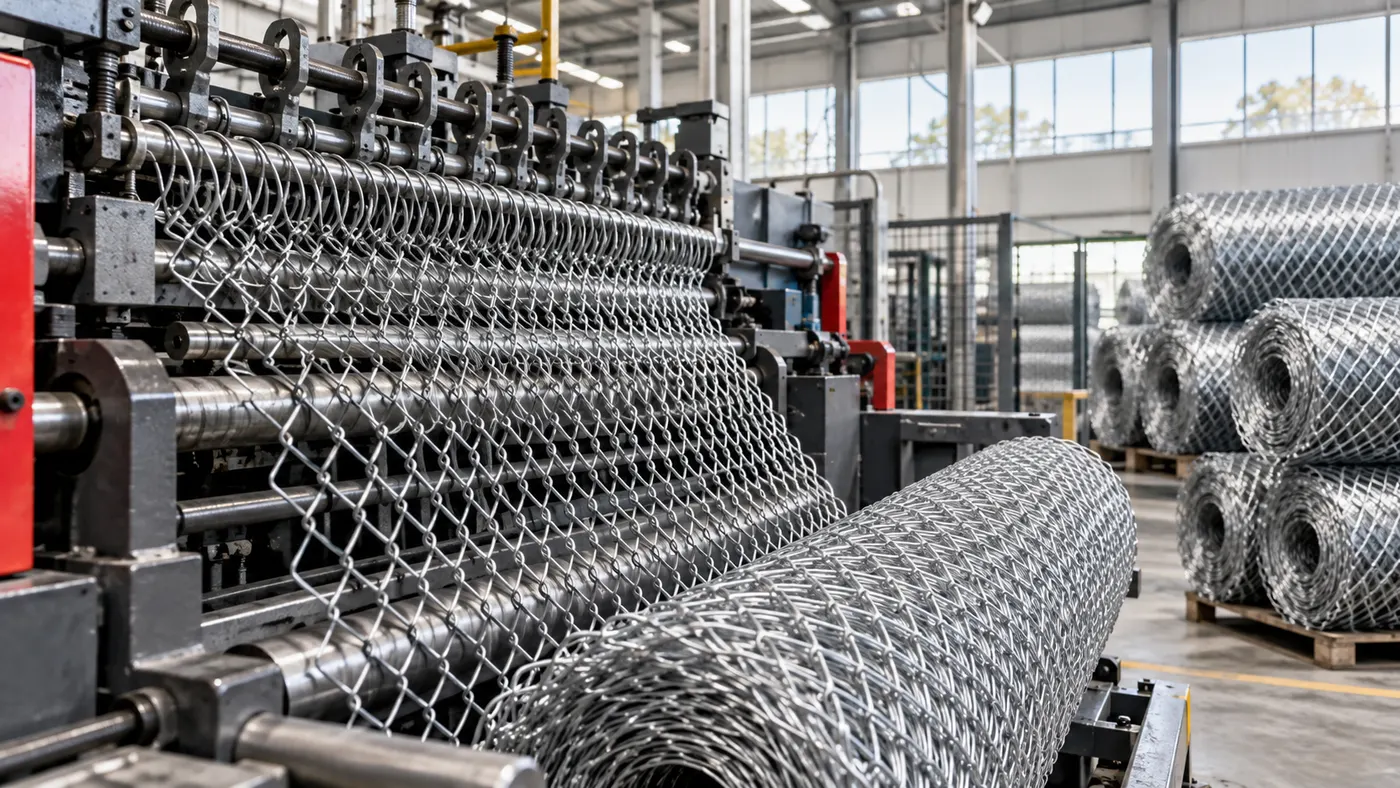
Specialised machinery bends the wire into a repeating zigzag or spiral-like profile. Rather than welding horizontal and vertical wires together, chainmesh relies on individual shaped strands that interlock with neighbouring strands.
The process is repeated continuously as additional wire enters the machine.
This manufacturing method creates one of chainmesh fencing's defining characteristics: flexibility without sacrificing a continuous physical barrier.
It also produces that instantly recognisable diamond pattern.
4. Individual Strands Are Woven Together
Once shaped, each new wire strand is woven or twisted through the previous strand.
Think of two corkscrew-like pieces being turned together. Continue that process strand after strand and a sheet of interconnected mesh begins to form.
That interwoven construction is fundamentally different from welded mesh.
Because the wires aren't simply crossing one another at welded intersections, the completed chainmesh can retain flexibility while forming a continuous fence fabric.
This makes chainmesh manufactured this way highly adaptable for long perimeter runs and sites where practical security, visibility and versatility all matter.
5. The Diamond Aperture Is Controlled
Not every chainmesh diamond is the same size.
The opening between wires is generally described as the mesh aperture. One Australian manufacturer notes that 50 mm is a standard aperture while smaller options including 45 mm, 38 mm, 32 mm and 25 mm are available for particular applications.
Why does that matter?
Because changing the aperture changes the characteristics and potential applications of the finished mesh.
Smaller apertures may be specified where objects need to be contained or excluded. Sports fencing is a good example: fencing intended to contain smaller balls may require a smaller mesh opening than a general-purpose perimeter.
The key is specification rather than guesswork.
6. The Mesh Edges Are Finished
Look closely at the top or bottom of chainmesh and you'll notice that the wire ends don't simply stop randomly.
They require a deliberate selvedge, or edge finish.
Common configurations include:
- Knuckle/knuckle
- Knuckle/barb
- Barb/barb
Australian chainmesh manufacturers identify these as available client-specified configurations.
A knuckled finish folds the wire ends over, creating a smoother edge. A barbed finish leaves twisted wire ends projecting outward and can be selected where the fence design calls for a more security-oriented edge.
The appropriate configuration depends on the fence design, location, accessibility and project requirements.
7. Chainmesh Is Produced to the Required Dimensions
Manufacturing also determines the physical dimensions of the finished roll.
Chainmesh can be manufactured in numerous heights, wire diameters, apertures, coatings and edge configurations. Australian manufacturers advertise considerable variation; for example, SWI lists manufacturing heights between 0.9 m and 3.6 m, while Doogood states its equipment can manufacture several diamond sizes with mesh heights up to 4.2 m.
That versatility is one reason chainmesh appears across so many Australian environments, including:
- Industrial facilities
- Warehouses
- Construction sites
- Schools
- Sporting facilities
- Car parks
- Infrastructure sites
- Commercial properties
- Storage compounds
Rather than being one universal product, chainmesh manufactured for security fencing can be specified around the demands of the site.
Manufacturing Is Only Half the Security Equation
Good mesh doesn't create a complete security fence by itself.
A chainmesh fencing system also depends on the components supporting and securing it.
That can include Pipe for the fence framework and suitable Fittings for connecting and securing components. The complete system needs to work together rather than treating the mesh as an isolated product.
Then there's access.
Supaguard supplies Gates alongside its chainlink fencing range. Choosing an appropriate gate configuration is particularly important because an otherwise secure perimeter isn't much use if its access point doesn't suit the opening or operating requirements.
For projects still deciding on gate configuration, see Single vs Double Chainwire Gates for guidance on the differences between the two arrangements.
You can also explore Commercial Chainwire Gate Features to understand what matters when specifying gates for commercial fencing.
Why Manufacturing Quality Matters for Security Fencing
Chainmesh is often selected because it combines practical perimeter protection with visibility and adaptability.
But those advantages depend on consistency.
Poorly controlled manufacturing can potentially result in irregular apertures, inconsistent dimensions or other characteristics that make the product less suitable for the intended installation.
Quality manufacturing focuses on repeatability:
Consistent wire. Consistent aperture. Consistent coating. Consistent dimensions.
Australian infrastructure specifications demonstrate why those details matter. Main Roads Western Australia's current fencing specification, for example, references AS 2423 for wire products and coatings and AS 1725 for chainwire used in relevant fencing work.
Supaguard states that its chainlink security fencing products comply with AS 2423-2002, providing customers with a clear reference point when assessing its fencing range.
Choosing Chainmesh for Australian Conditions
Understanding how chainmesh is manufactured makes specifying it easier.
Rather than asking only, "How much chainmesh do we need?", consider:
What wire diameter is specified?
What mesh aperture is appropriate?
Is galvanised or PVC-coated mesh required?
What mesh height does the project need?
What edge finish is appropriate?
What posts, rails and fittings will support it?
What gate configuration suits the access point?
What Australian Standards or project specifications apply?
Those questions turn chainmesh from a generic roll of wire into part of a properly considered fencing system.
For security-critical, infrastructure or specialised projects, specifications should always be confirmed against the applicable project requirements and relevant Australian Standards rather than assuming one chainmesh configuration suits every site.
Key Takeaways
The answer to how chainmesh is manufactured comes down to a surprisingly clever process: steel wire is specified, protected against corrosion, mechanically shaped and continuously interwoven to create a flexible diamond-pattern mesh.
But manufacturing isn't simply about making diamonds.
Wire diameter, aperture, coating, dimensions and selvedge all affect the characteristics of the finished product. Those variables allow chainmesh to be adapted to commercial, industrial, sporting and security environments across Australia.
And the mesh is only one part of the equation. A complete chainmesh fence relies on appropriately specified posts, pipe, fittings and gates to create a functioning perimeter.
If you're planning a chainlink security fencing project and need help selecting suitable components, Contact Supaguard Fencing to discuss the requirements of your application.
FAQs
How is chainmesh manufactured?
Chainmesh is manufactured by forming steel wire into a repeating profile and interweaving individual strands to create diamond-shaped openings. The manufacturing process controls characteristics such as wire diameter, aperture, mesh dimensions and edge finish. Protective coatings such as galvanising or PVC coating can provide additional corrosion resistance depending on the product specification.
What type of wire is used to manufacture chainmesh?
Chainmesh security fencing is commonly manufactured from steel wire, with galvanised and PVC-coated options available. Australian fencing suppliers commonly offer wire sizes including 2.5 mm and 3.15 mm for various applications. The appropriate wire specification depends on the intended fence, environment and project requirements.
Why does chainmesh have diamond-shaped openings?
The diamonds are created by the way shaped wire strands interweave with one another during manufacturing. This construction produces a continuous mesh that combines flexibility, visibility and practical perimeter protection. Aperture size can also be varied to suit different fencing applications.
Is galvanised chainmesh suitable for Australian security fencing?
Galvanised chainmesh is widely used for Australian fencing because its zinc coating helps protect steel from corrosion. However, the appropriate coating and mesh specification depend on environmental exposure, security requirements and the relevant project specification. Some applications may instead call for PVC-coated wire or other specified finishes.
What other components are needed for a chainmesh security fence?
A complete chainmesh fence generally requires supporting posts or pipe, rails or wires where specified, fittings and suitable gates or access points. The exact component combination varies according to fence height, layout, application and security requirements. Matching these components to the mesh helps create a complete fencing system rather than treating chainmesh as a standalone product.
Products and a project to match.
Chain Mesh
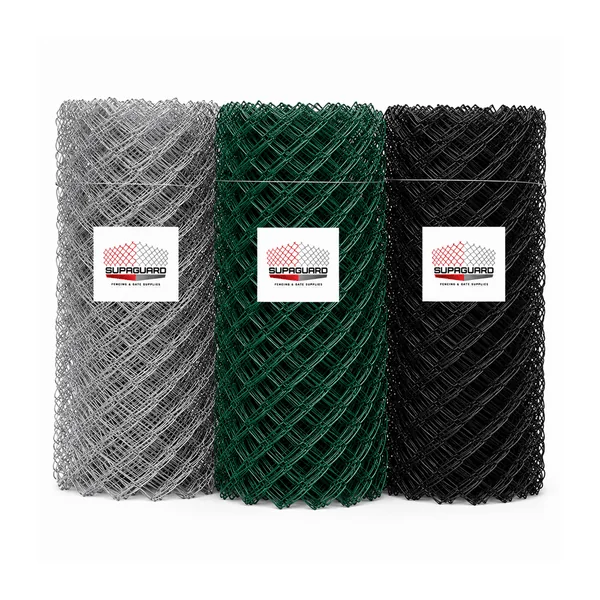
Chain link mesh in 25 to 60 mm apertures and 2.24 to 3.15 mm wire for security, temporary, tennis court and golf screen fencing. Galvanised, black or green PVC.
 Sport
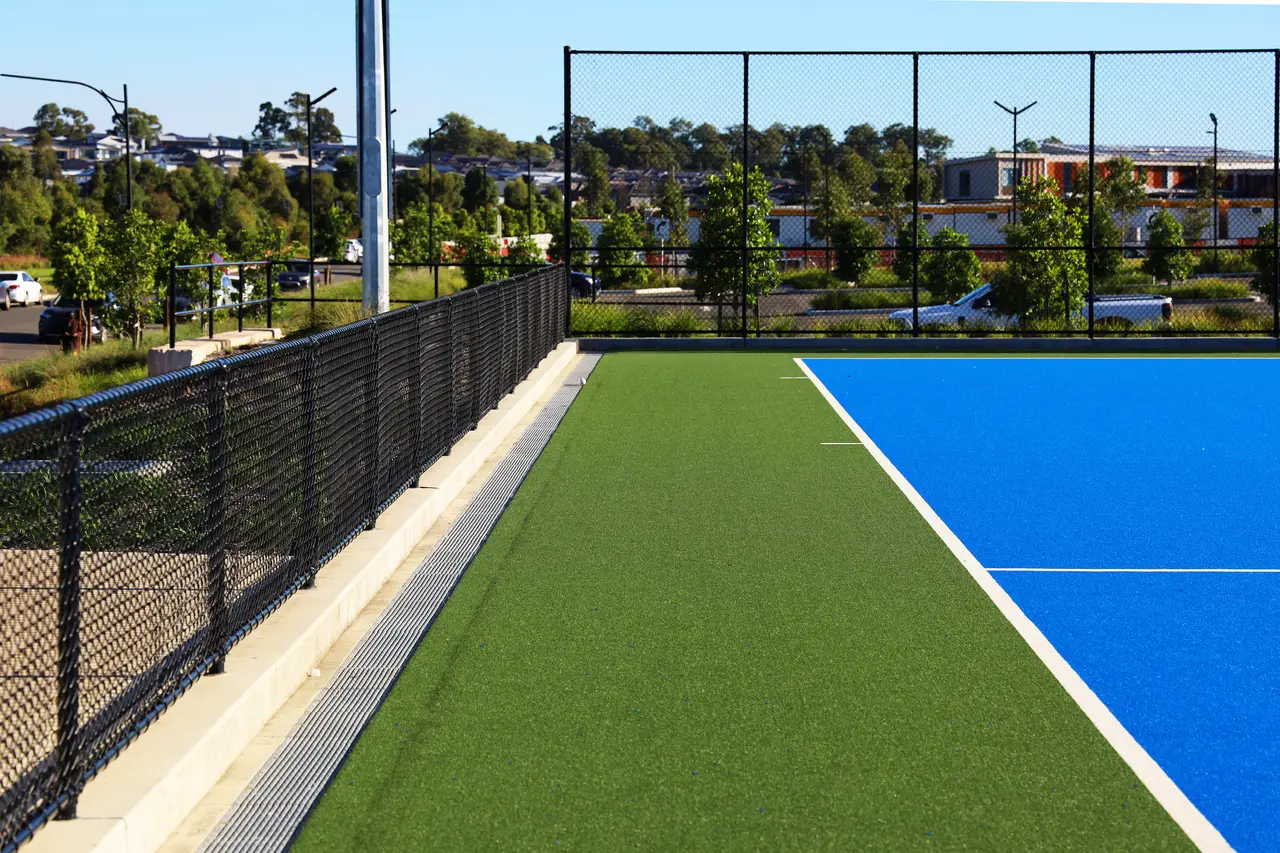
Ball-stop fencing for a synthetic hockey pitch and sports fields
Australia
High ball-stop chainwire around a synthetic hockey pitch, playing fields and cricket practice nets, black-coated so the fence line disappears against the play.
More from the blog.
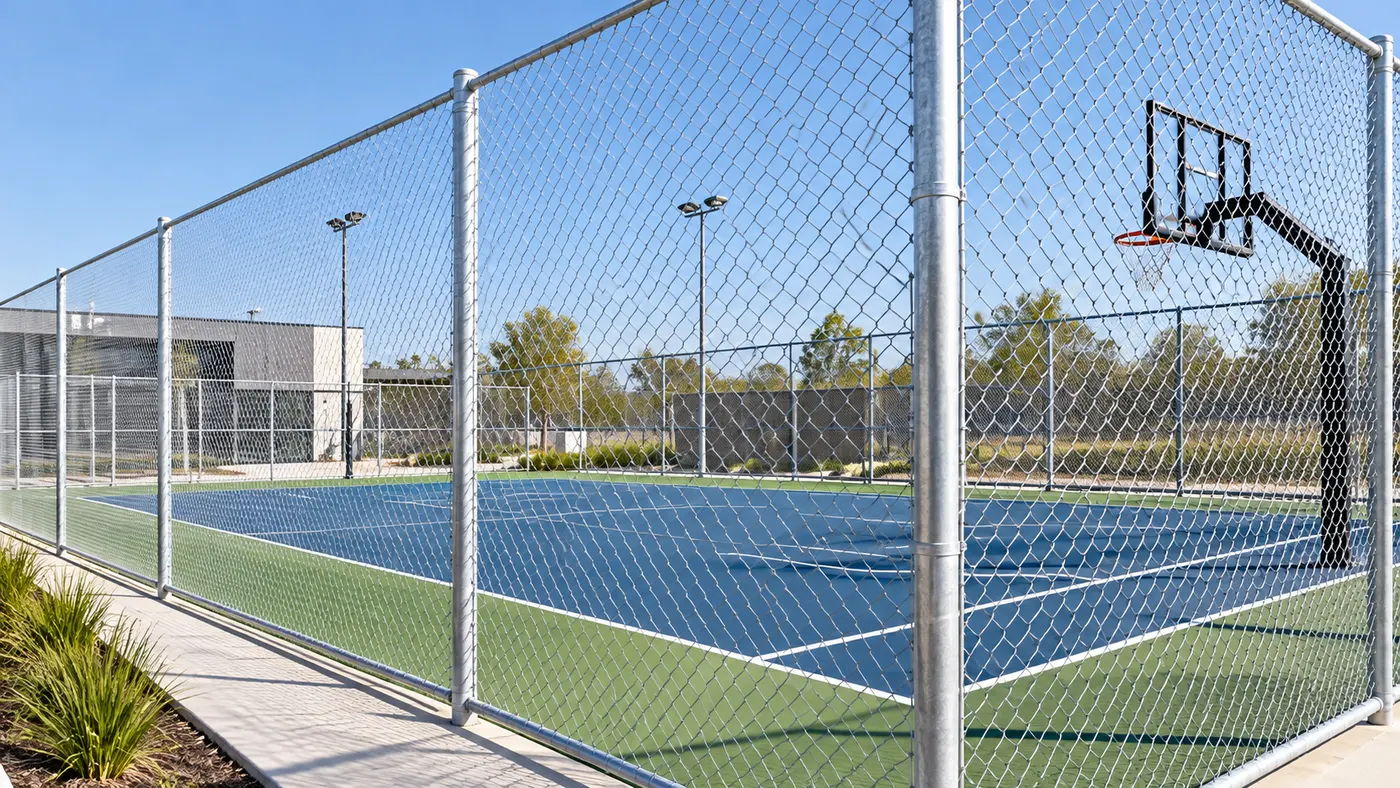 Sports Fencing
What Chainwire Mesh Specifications Work Best for Sports Courts?
2 Oct 2026
Compare chainwire mesh specifications for Australian sports courts, including mesh size, wire diameter, height, coatings and framing.
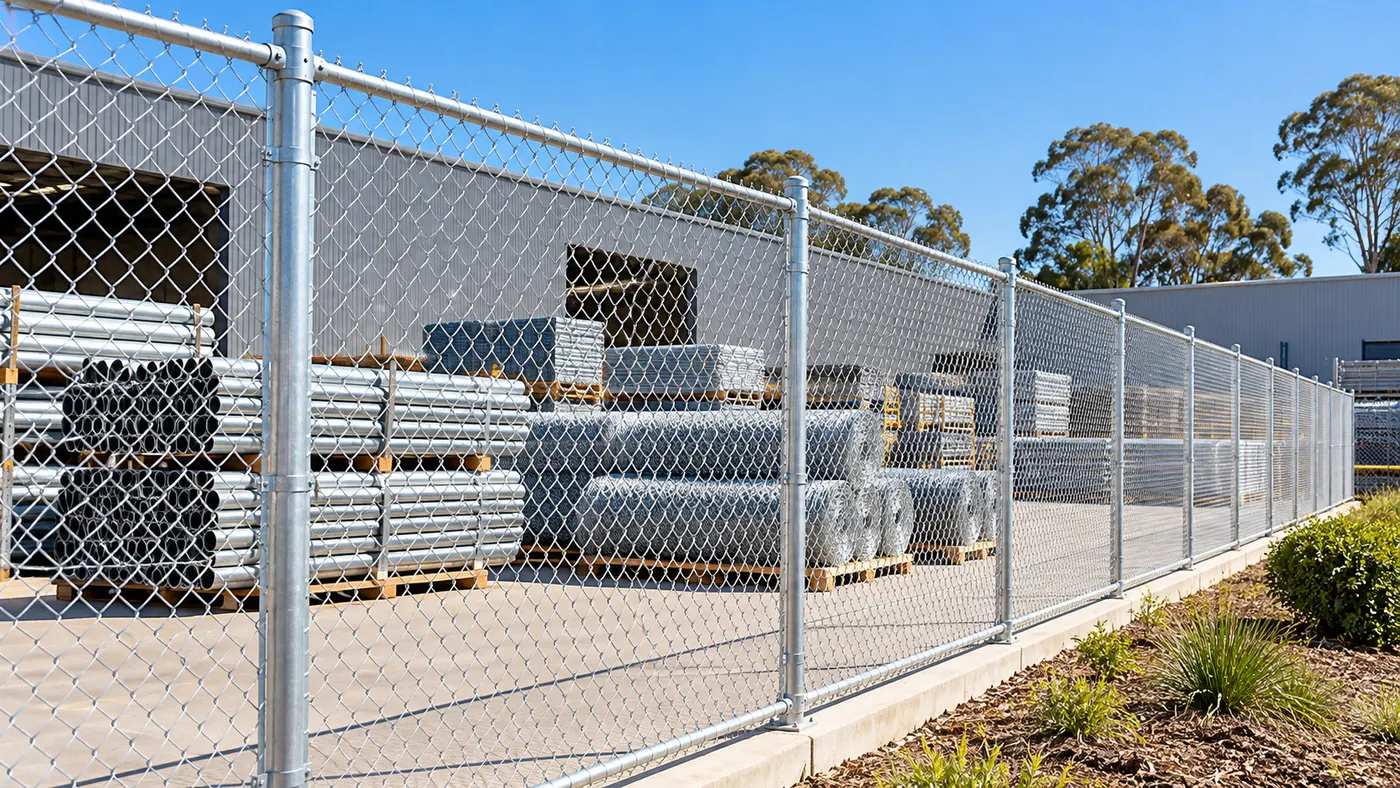 Australian-Made Security Fencing
What Makes Australian Made Security Fencing Worth Choosing?
1 Nov 2026
Discover why Australian made security fencing is worth choosing for durability, reliable supply, quality materials and long-term protection.
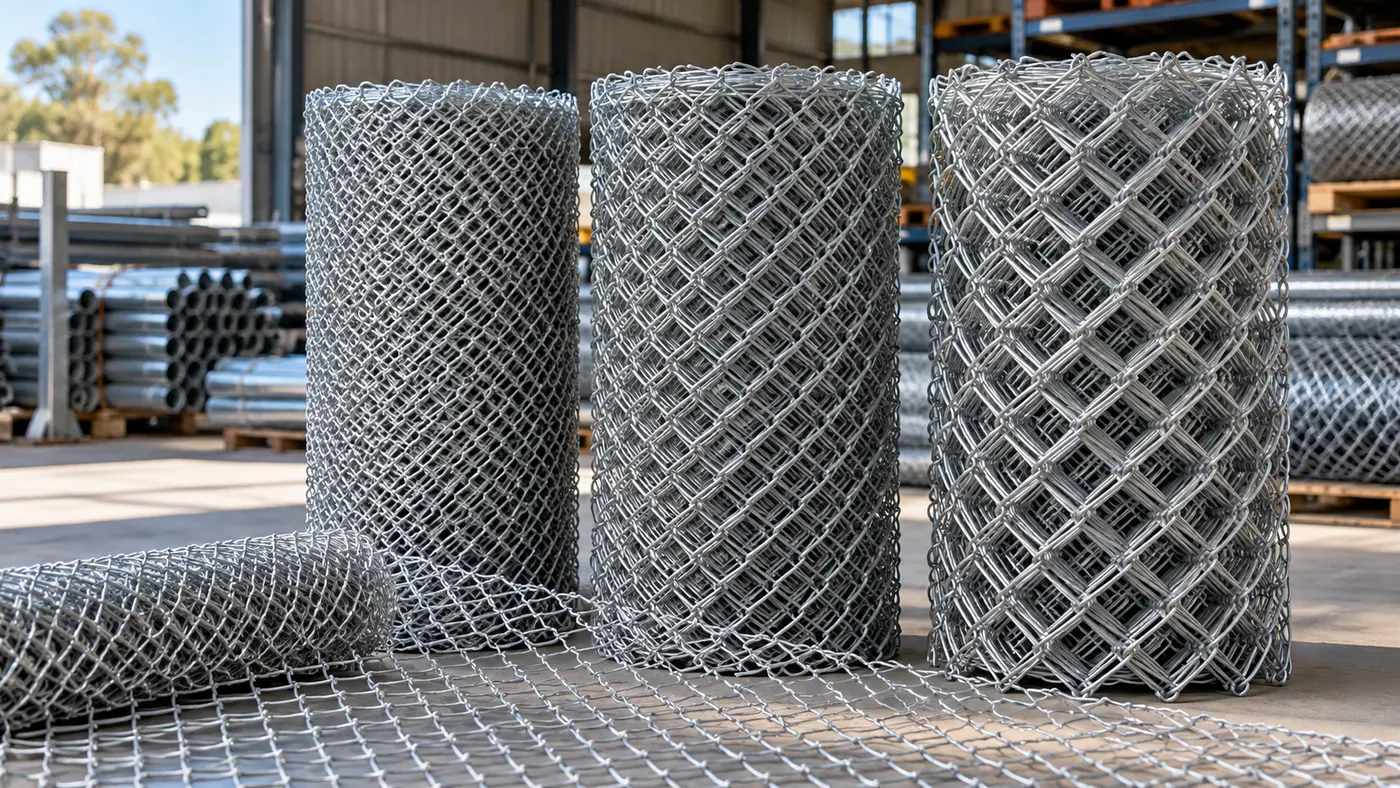 Custom Mesh Manufacturing
When Should You Order Custom Chainwire Mesh Sizes?
2 Nov 2026
Learn when custom chainwire mesh sizes make sense for security, sports, industrial and non-standard fencing projects.
Tell us about the fence.
One business day. That's how fast we come back with pricing once we have your quantity, finish and postcode.
Buying regularly? Apply for a credit account