
What Chainwire Mesh Specifications Work Best for Sports Courts?
Compare chainwire mesh specifications for Australian sports courts, including mesh size, wire diameter, height, coatings and framing.
Introduction
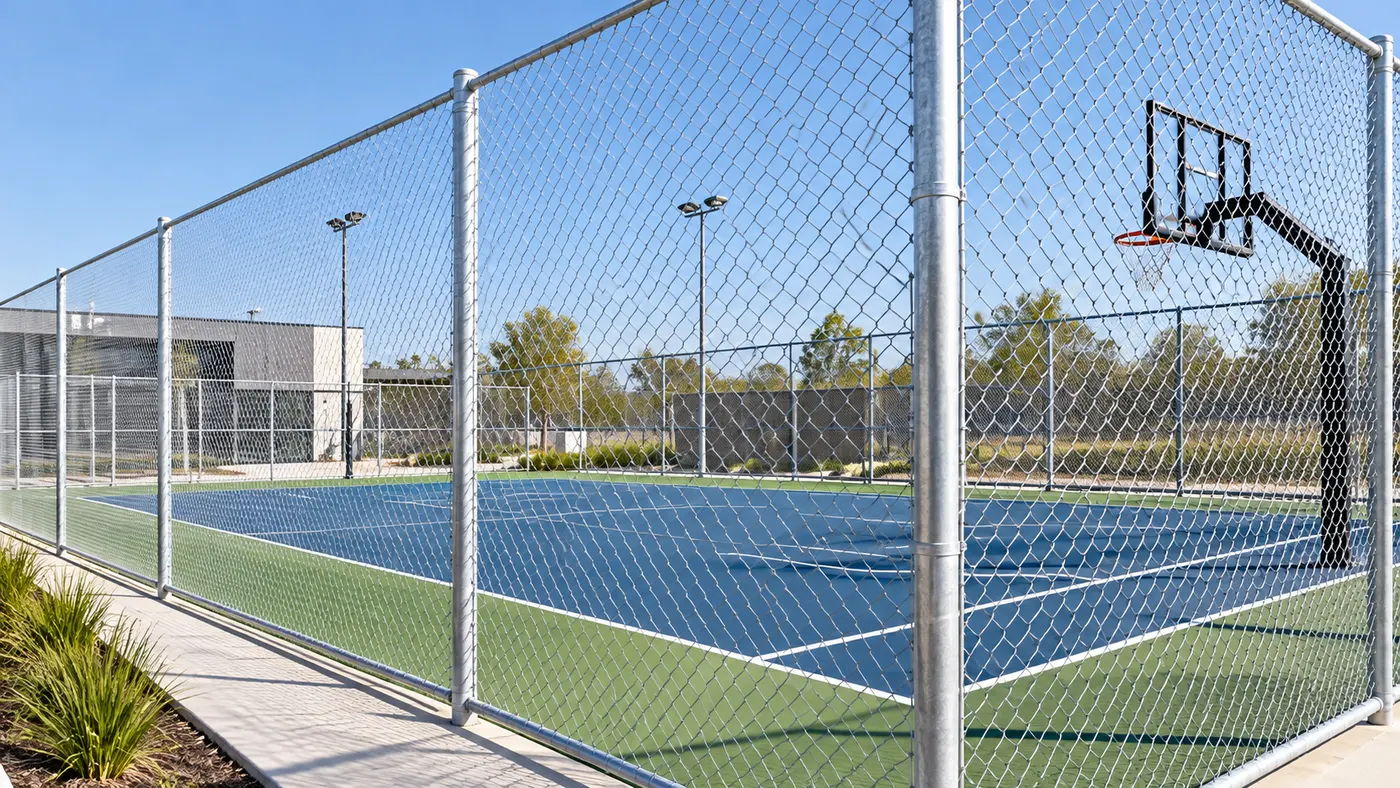
A sports court fence has a deceptively tough job.
It needs to keep balls where they belong, define the playing area, withstand repeated impacts and weather exposure, and provide enough visibility for players and spectators. Choose the wrong chainwire mesh specifications, and an otherwise well-built court can end up with fencing that's too weak, has openings that are too large or simply isn't suited to the sport.
That's where specification matters.
Supaguard Fencing manufactures and supplies chainlink security fencing products for Australian applications, with options covering mesh, wire, gates, pipe and associated components.
For sports courts, however, there's no magic specification that suits every project. Tennis courts, school games courts, cricket enclosures and multi-sport facilities can have different requirements.
Here's what you need to consider.
TLDR - Quick Guide
When choosing chainwire mesh specifications for sports courts, focus on five things:
- Mesh aperture: 45 mm is particularly relevant to tennis court fencing.
Wire diameter: 2.5 mm and 3.15 mm are commonly specified for court fencing, with heavier wire providing greater strength.
Fence height: This depends on the sport, court design and surrounding environment.
Wire finish: Heavy galvanised and PVC-coated options can provide corrosion protection.
Supporting structure: Posts, rails, cables, gates and fittings need to suit the mesh and overall court design.
Tennis Australia's technical guidance states that the Australian Standard for tennis court fencing adopted a 45 mm diamond, although 50 mm mesh is used in some states. It also identifies 2.5 mm and 3.15 mm wire for court fencing and notes that heavier wire provides greater strength and potentially longer fence life.
For commercial tennis courts, the Sports & Play Industry Association's Code of Practice goes further, identifying 3600 mm-high × 45 mm pitch × 3.15 mm wire as its preferred heavy-duty chain link fabric configuration.
That's a useful benchmark—not a universal prescription for every sports facility.
Detailed Breakdown: Understanding Chainwire Mesh Specifications
1. Start With the Sport
Before choosing wire thickness or debating galvanised versus PVC-coated mesh, answer a simpler question:
What's being contained?
A tennis ball behaves very differently from a football. A school multi-purpose court has different traffic patterns from a private tennis court, and a cricket practice enclosure presents another set of requirements entirely.
Australian Standard AS 1725 reflects these differences through separate parts covering commercial tennis courts, private/residential tennis courts, cricket net fencing enclosures and general sports ground fencing.
That means the best chainwire mesh specifications should begin with the facility's actual use—not simply whatever mesh happens to be available.
2. Mesh Aperture: Why Diamond Size Matters
The mesh aperture, sometimes called pitch, describes the size of the diamond-shaped opening.
For tennis courts, 45 mm is an important benchmark.
Tennis Australia's technical manual states that the Australian Standard for tennis court fencing adopted a 45 mm diamond, while noting that 50 mm has also been used where 45 mm mesh isn't manufactured as a standard size.
Commercial Australian suppliers similarly list 45 mm chainwire specifically for tennis applications.
Why not just use the largest and cheapest aperture available?
Because sports fencing isn't merely a boundary. It often needs to contain the ball effectively while maintaining visibility through the enclosure.
Smaller apertures may also be appropriate for specialised sporting applications. The right answer depends on ball size, playing conditions and project specifications.
Supaguard's Chain Link Mesh range is the logical starting point when matching mesh to the intended fencing system.
3. Wire Diameter: 2.5 mm vs 3.15 mm
Wire diameter is another major decision.
Tennis Australia's technical guidance identifies both 2.5 mm and 3.15 mm wire for court fencing and specifically notes that heavier wire produces stronger mesh with a longer anticipated fence life.
Australian manufacturers likewise offer tennis mesh in combinations including:
- 45 mm × 2.5 mm
- 45 mm × 3.15 mm
- Approximately 50 mm × 2.5 mm
For a lightly used private facility, the priorities won't necessarily be identical to those of a busy commercial or community court.
For heavy-duty commercial tennis applications, SAPIA's Code of Practice identifies 3.15 mm core wire with 45 mm pitch as its preferred configuration.
That's an important distinction.
Rather than thinking "thicker is always better," select chainwire mesh specifications according to expected impact, usage, required service life and the applicable project standard.
4. How High Should Sports Court Chainwire Be?
Height is where the sport and court layout become especially important.
A low boundary fence might define an area, but it won't do much when a tennis ball sails over it.
For commercial tennis courts, SAPIA identifies 3600 mm as its preferred heavy-duty chain link fabric height. Australian tennis fencing products are also commonly available at heights such as 2400 mm, 3000 mm and 3600 mm.
But sports court fencing does not universally need to be 3.6 metres high.
For example, the NSW Department of Education's technical requirements specify a nominal 2400 mm chain link fabric fence for secondary school games courts.
The takeaway is simple: height follows application.
Court dimensions, the sport, neighbouring property, spectator areas and the likelihood of balls leaving the playing area should all inform the final design.
5. Galvanised or PVC-Coated Chainwire?
Australia doesn't exactly give outdoor steel an easy life.
Sun, rain, moisture and general weather exposure mean corrosion resistance deserves serious consideration when selecting chainwire mesh specifications.
Two common options are:
Heavy galvanised chainwireA zinc coating protects the underlying steel and is widely used for durable outdoor fencing.
PVC-coated chainwirePVC provides an additional protective layer while also changing the visual appearance of the fence.
For tennis courts, black or dark green PVC-coated mesh can offer another advantage: visibility. Tennis Australia's guidance notes that black or dark green mesh and structures blend into the surroundings more effectively than galvanised fencing and can improve a court's appearance.
SAPIA's commercial tennis guidance lists heavily galvanised, PVC and fusion-bonded coatings among its preferred heavy-duty configurations.
So coating isn't just cosmetic.
It can affect durability, maintenance and how visually prominent the fence feels around the playing area.
6. Don't Forget the Selvedge
The edge of chainwire mesh is called the selvedge.
For sports courts, smoothness around areas accessible to players matters. Commercial tennis fencing products commonly use knuckle-knuckle (KK) edges, meaning the wire is folded over at both edges rather than leaving projecting barbed ends.
SAPIA's preferred commercial tennis court specification similarly identifies knuckled both ends for chain link fabric.
It's a small specification on paper.
On a court where people regularly move close to the fence, it isn't a small detail.
The Mesh Is Only Part of the Sports Court Fence
You can choose excellent mesh and still end up with a disappointing fence.
Why?
Because chainwire needs a supporting system.
The framework can include posts, stays, rails and tensioning components that keep the fabric correctly positioned and strained. Supaguard supplies Pipe for chainlink fencing systems as well as the associated Fittings needed to bring those components together.
SAPIA's commercial tennis guidance specifies that chain link should be secured to the playing side of the posts and strained taut. It also states that the chain link or bottom rail should sit close enough to the playing surface to retain tennis balls.
That last detail is easy to overlook.
A beautifully specified 45 mm mesh isn't doing much ball containment if there's a tennis-ball-sized escape route underneath it.
Gates Need the Same Level of Attention
Every court needs access, making Gates another important part of the overall specification.
Gate width, number of leaves, frame strength, hardware and positioning should reflect how the facility is actually used.
Will only players enter?
Does maintenance equipment need access?
Could emergency or service vehicles require a wider opening?
For commercial sites where access control forms part of a broader perimeter strategy, Supaguard's guide to Commercial Security Fencing Products provides additional considerations.
Facilities with stricter access or perimeter requirements can also explore High Security Fencing Products when assessing security beyond ordinary ball containment.
What About Australian Standards?
This is where specifications need to get project-specific.
The AS 1725 series addresses chain link fabric fencing across several applications. AS 1725.2 covers commercial tennis court fencing, AS 1725.3 covers private/residential tennis courts, and AS 1725.5 covers general sports ground fencing.
These standards address considerably more than mesh alone. Depending on the relevant part, requirements can cover areas such as coatings, pipe grades and fencing design options.
There can also be additional engineering considerations.
AS 1725.1 notes that applications involving factors such as high wind loading, crowd control or safety barriers can introduce other structural requirements.
So a specification copied from another court isn't automatically the correct specification for yours.
A Practical Sports Court Specification Checklist
Before ordering, work through the complete system rather than concentrating solely on mesh.
Mesh
What aperture does the sport require?
Is 45 mm appropriate?
Should the wire be 2.5 mm or heavier-duty 3.15 mm?
What coating suits the environment?
Is a knuckle-knuckle edge required?
Fence Structure
What overall height is needed?
What post and pipe sizes are specified?
Are top or bottom rails required?
Are intermediate cables required?
How will the chainwire be tensioned?
Access
How many gates are required?
What opening widths are needed?
Will maintenance equipment require access?
Are additional security measures necessary?
Site Conditions
Is the site exposed to severe weather?
Are there unusual wind loads?
Is the court used commercially, privately or by a school/community?
Are spectators likely to gather against the fencing?
Which Australian Standard and project requirements apply?
That's a far better approach than choosing chainwire mesh specifications based on price alone.
Key Takeaways
The best chainwire mesh specifications for sports courts depend on the sport, usage level, environment and applicable standards.
For tennis courts specifically, 45 mm aperture mesh with 2.5 mm or 3.15 mm wire is strongly represented in Australian guidance, while SAPIA identifies 3600 mm × 45 mm × 3.15 mm as its preferred heavy-duty commercial tennis court fabric.
But don't stop at those three numbers.
Coating, selvedge, fence height, tension, posts, rails, gates and fittings all contribute to the finished result. A successful sports enclosure is a complete fencing system, not simply a roll of chainwire stretched around a court.
For help selecting components for your project, Contact Supaguard Fencing to discuss your application and required fencing specifications.
FAQs
What chainwire mesh specifications are best for tennis courts?
Australian tennis guidance identifies a 45 mm diamond aperture, with 2.5 mm and 3.15 mm wire used for court fencing. For heavy-duty commercial tennis courts, SAPIA identifies 3600 mm-high, 45 mm-pitch mesh manufactured from 3.15 mm core wire as its preferred configuration. The final specification should still account for the court design, usage and applicable standards.
Is 2.5 mm or 3.15 mm chainwire better for sports fencing?
Both 2.5 mm and 3.15 mm wire can be used for court fencing, but the heavier 3.15 mm wire provides greater strength. Tennis Australia's technical guidance also associates heavier wire with a longer anticipated fence life. The appropriate choice depends on usage, budget, exposure and the required service duty.
How high should chainwire fencing be around a sports court?
There is no single height suitable for every sports court because containment requirements vary by sport and facility. SAPIA identifies 3600 mm as its preferred heavy-duty commercial tennis court chain link height, while NSW school games-court requirements provide an example of a 2400 mm nominal fence. The relevant sport, site conditions and project standards should determine the final height.
Is PVC-coated chainwire suitable for sports courts?
Yes, PVC-coated chainwire is an established option for sports and tennis court fencing. Tennis Australia's guidance notes that black or dark green PVC-coated mesh can blend into the environment better than galvanised fencing while providing an additional level of protection. The coating should be selected according to environmental exposure, appearance and project specifications.
Which Australian Standards apply to chainwire sports fencing?
The AS 1725 series contains different parts for different chain link fencing applications. AS 1725.2 addresses commercial tennis courts, AS 1725.3 addresses private/residential tennis courts, and AS 1725.5 covers general sports ground fencing. The applicable standard should be confirmed for the specific facility rather than assuming all sports courts follow an identical specification.
Products and a project to match.
Chain Mesh
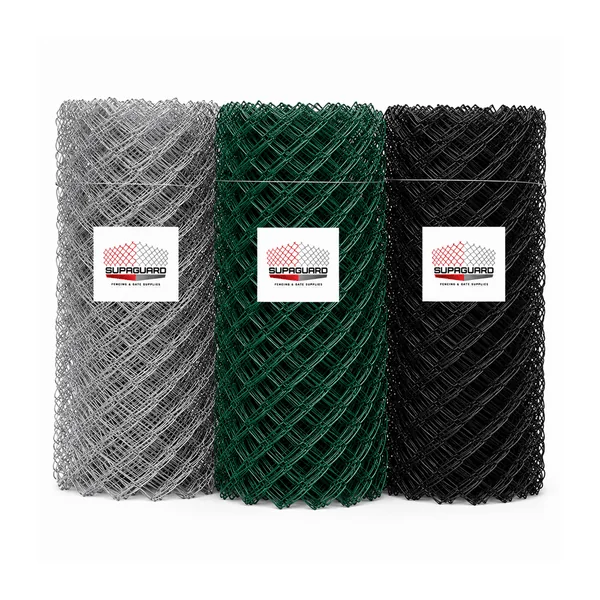
Chain link mesh in 25 to 60 mm apertures and 2.24 to 3.15 mm wire for security, temporary, tennis court and golf screen fencing. Galvanised, black or green PVC.
 Sport
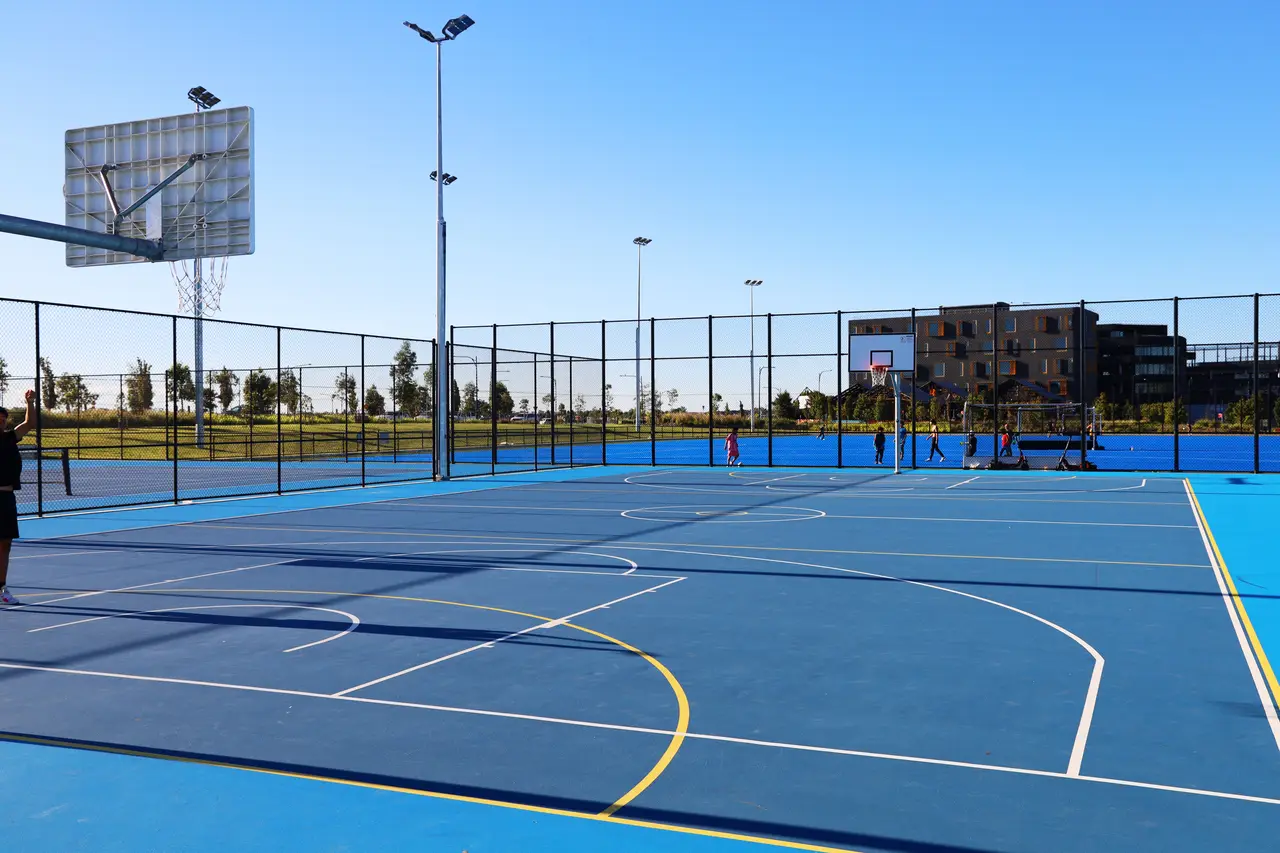
Court and parkland fencing for a community sports facility
Australia
Netball, basketball and tennis courts plus a futsal cage and parkland paths, fenced in one black system so the precinct reads as a single facility.
More from the blog.
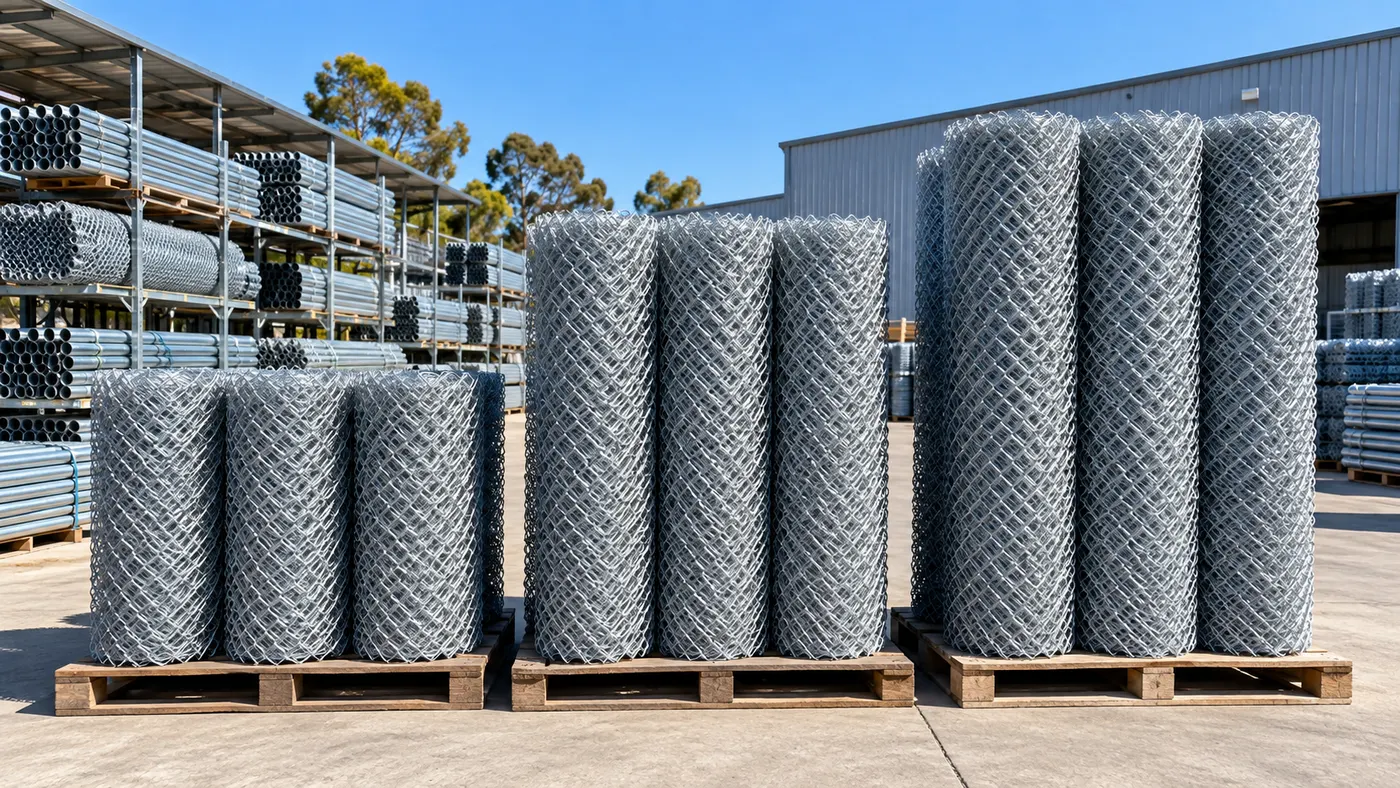 Chainwire Mesh Procurement
How to Choose Chainwire Mesh Roll Sizes for Large Projects
2 Nov 2026
Learn how to choose Chainwire Mesh Roll Sizes for large fencing projects based on fence length, height, mesh, wire diameter and site needs.
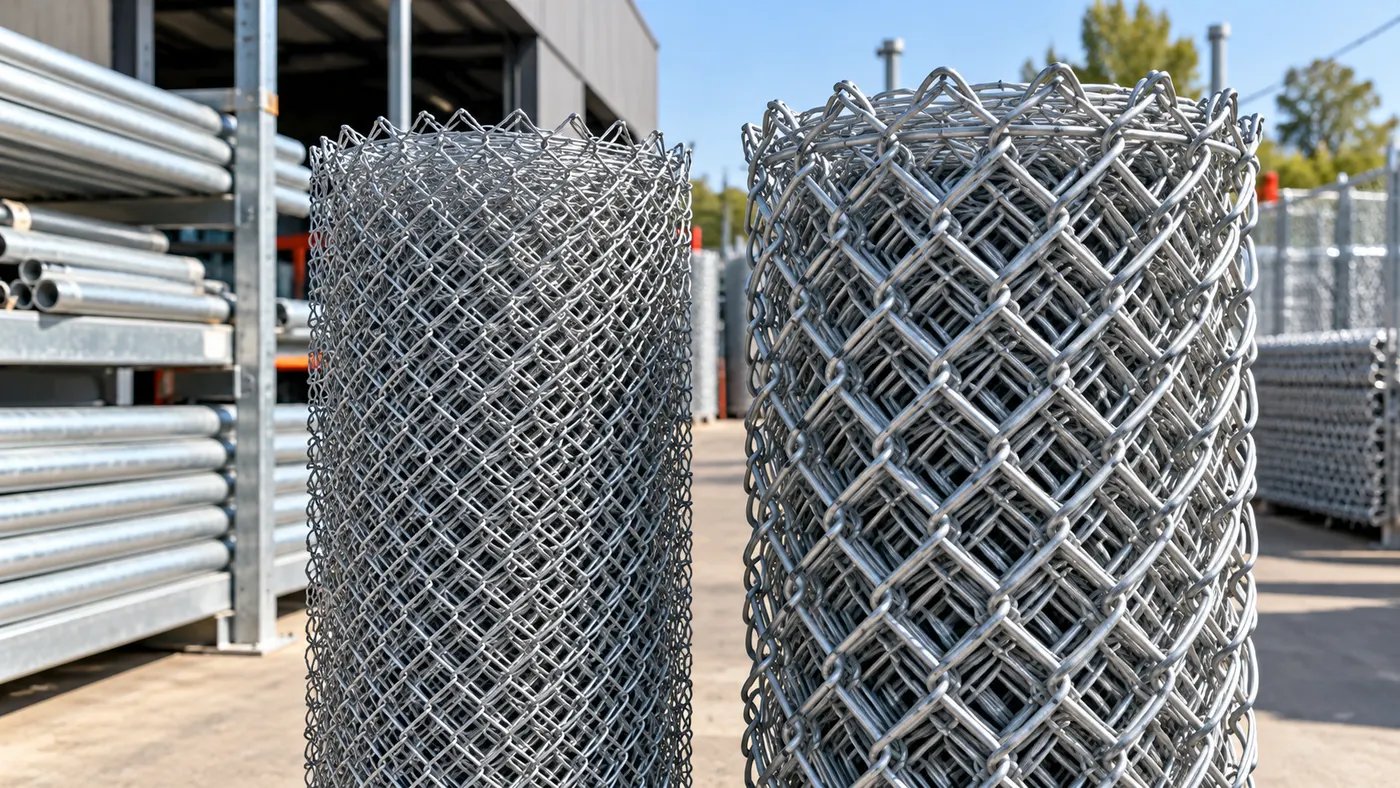 Chainwire Mesh
2.5mm vs 3.15mm Chainwire Mesh: Which Wire Diameter Do You Need?
3 Oct 2026
Compare 2.5mm vs 3.15mm chainwire mesh for strength, weight, security and common applications to choose the right fencing wire diameter.
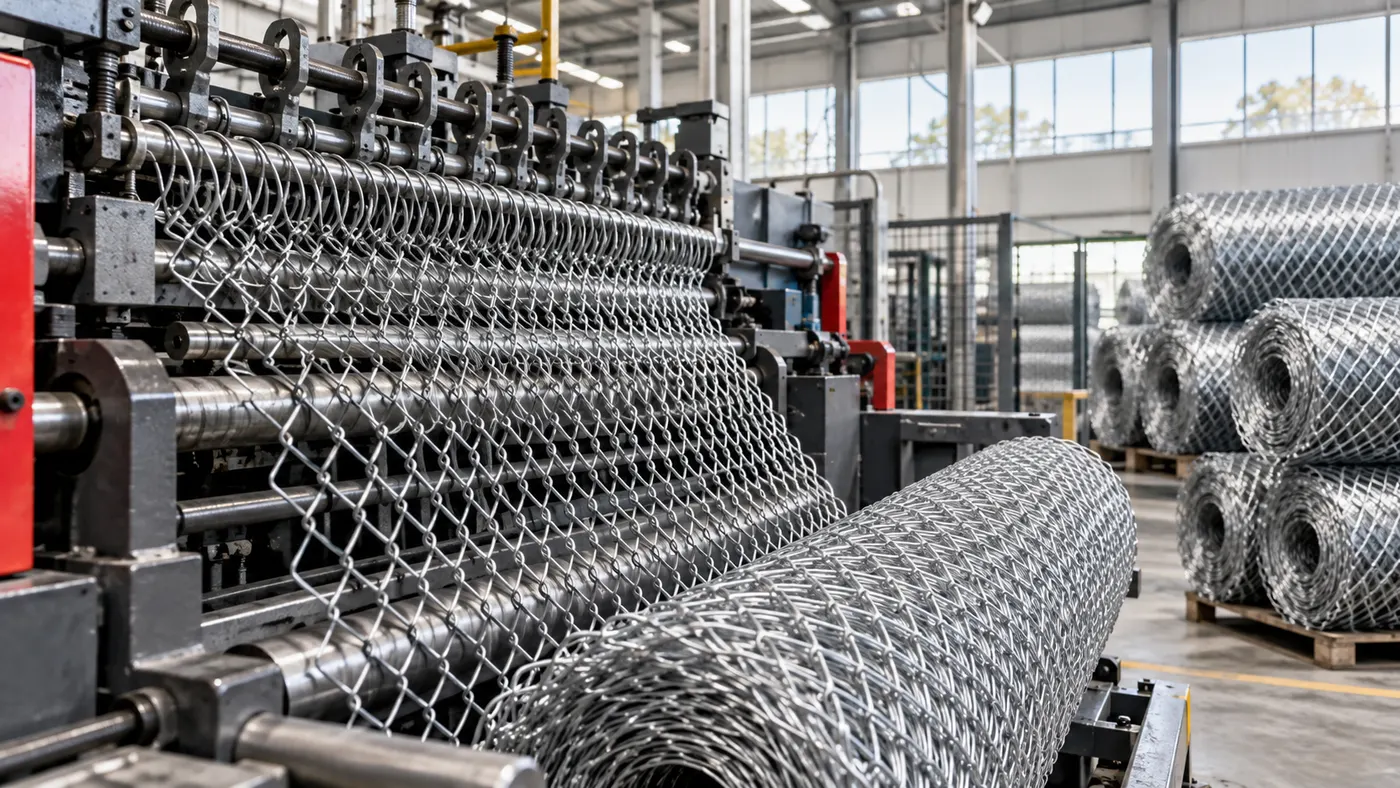 Manufacturing
How Is Chainmesh Manufactured for Australian Security Fencing?
1 Oct 2026
Learn how chainmesh is manufactured for durable Australian security fencing, from steel wire and coatings to weaving and quality control.
Tell us about the fence.
One business day. That's how fast we come back with pricing once we have your quantity, finish and postcode.
Buying regularly? Apply for a credit account