
When Should You Order Custom Chainwire Mesh Sizes?
Learn when custom chainwire mesh sizes make sense for security, sports, industrial and non-standard fencing projects.
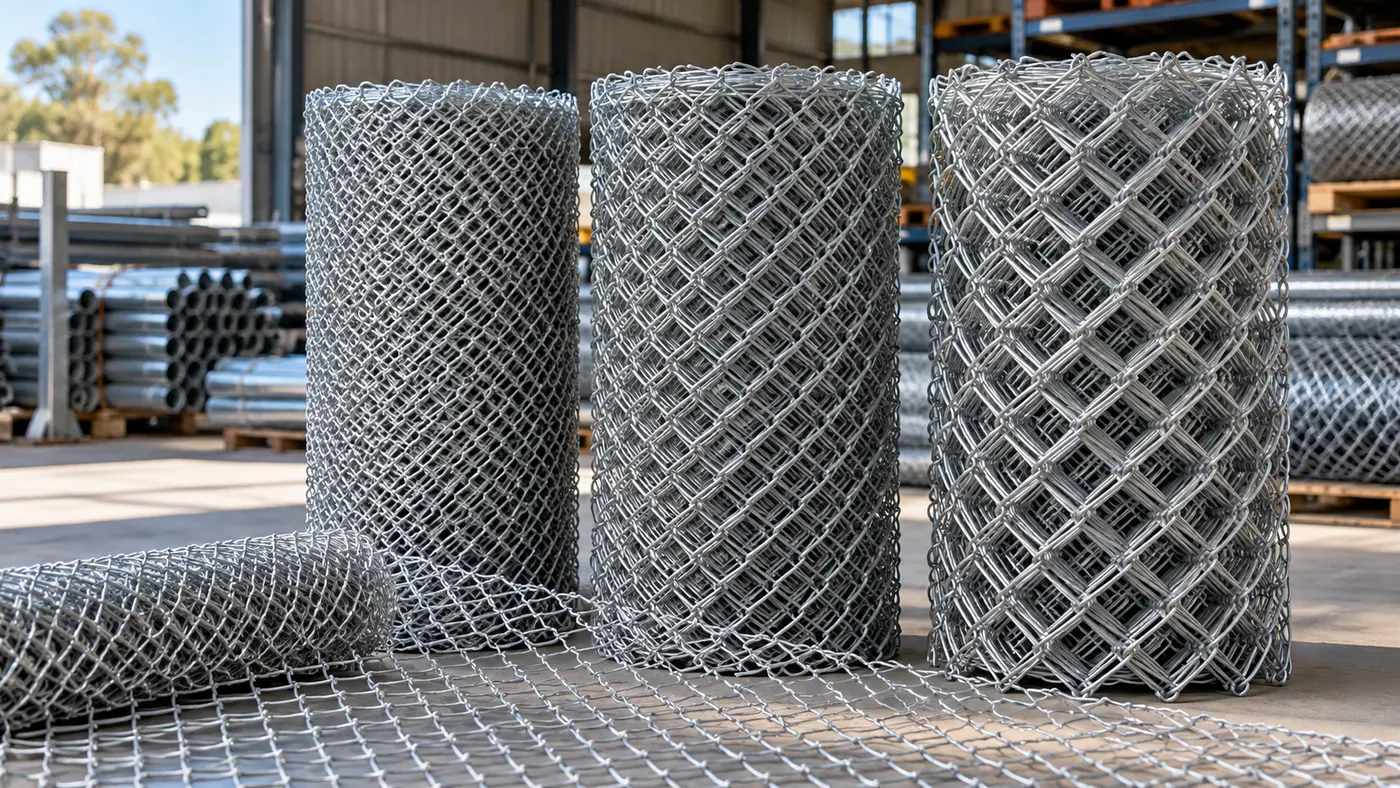
Chainwire mesh is highly adaptable, but that does not mean every fencing project fits neatly into a standard specification. An unusual boundary, specific security requirement, sporting enclosure, industrial facility, existing fence extension, or project drawing may require dimensions that are not available as a conventional stock configuration.
That is where custom chainwire mesh sizes can become valuable.
Customisation is not simply about ordering an unusual fence height. Chainwire specifications can involve mesh opening size, wire diameter, height, roll length, finish, and selvedge configuration. Each variable can affect how well the finished fencing system suits its intended application.
Supaguard's current chain mesh range includes numerous combinations of these specifications, while its in-house fabrication capabilities extend to non-standard mesh heights, diamond sizes, finishes, gates, panels, posts, and tubular framework.
Understanding when a standard product is sufficient—and when a custom specification is justified—can help contractors, builders, facility managers, and project teams avoid unnecessary compromises.
TLDR – Quick Guide
Standard chainwire mesh is suitable for many commercial, industrial, security, recreational, and sporting applications.
Custom chainwire mesh sizes become useful when standard specifications do not match project requirements.
Customisation can involve more than fence height.
Mesh opening or diamond size can influence security, visibility, and suitability for the application.
Wire diameter is another important part of the overall specification.
Projects may also require a particular galvanised or coated finish.
Selvedge configuration should be considered when specifying chainwire.
Non-standard heights may be required for unusual boundaries or project drawings.
Smaller mesh openings may be considered when reducing climbing opportunities is a priority.
Sporting enclosures can require different mesh specifications from general boundary fencing.
What Are Custom Chainwire Mesh Sizes?
Chainwire Size Involves Several Measurements
When people hear "custom mesh size," they may think only about the height of the fence.
Chainwire specification is more detailed.
Depending on the product and project, important variables can include:
- Mesh height
- Diamond or mesh opening
- Wire diameter
- Roll length
- Selvedge type
- Finish
Supaguard'schain link mesh range provides a useful example of how these specifications work together across different fencing applications.
Changing one variable can affect whether a mesh is appropriate for a particular project, so the entire specification should be considered together.
Custom Does Not Necessarily Mean Completely Unique
Sometimes a project requires only one non-standard characteristic.
For example, the required finish and wire specification may already be available, while the project calls for an unusual height.
In another situation, the height may be conventional but the required diamond opening is not.
The purpose of customisation is to address those specific requirements without unnecessarily changing the parts of the specification that already work.
When Is a Standard Chainwire Mesh Size Enough?
General Boundary Fencing Often Fits Established Specifications
Many conventional boundaries do not require custom manufacturing.
If an appropriate standard mesh already provides the required height, opening, wire diameter, finish, and roll configuration, ordering custom material may add complexity without providing a meaningful benefit.
Before requesting a custom product, compare the project requirements against the supplier's full standard range.
Supaguard's chain mesh catalogue contains a broad variety of configurations intended for different fencing applications.
Standard Products Can Simplify Project Planning
Using an established specification can make it easier to coordinate:
- Mesh
- Posts
- Rails
- Gates
- Tie wire
- Fittings
- Accessories
- This matters because chainwire fencing works as a complete system.
Selecting an unusual mesh without considering the supporting framework can create avoidable compatibility issues later in the project.
When Should You Consider a Custom Mesh Height?
The Required Fence Line Does Not Match Standard Heights
Project drawings sometimes specify a finished fence height that is not available as a suitable standard mesh option.
That can occur on:
- Commercial properties
- Industrial sites
- Infrastructure projects
- Utility compounds
- Sporting facilities
- Educational properties
- Specialised security installations
In those circumstances, substituting the nearest available height may not satisfy the design intent.
A custom height allows the mesh to be produced for the actual requirement.
Existing Fencing Can Create Non-Standard Requirements
Extensions and upgrades introduce another challenge.
A new section may need to align with an existing fence, gate, post system, or boundary treatment.
If the existing installation uses an unusual height, forcing a standard replacement into the area may create inconsistent lines or require unnecessary site modifications.
Accurate measurements are especially important before ordering mesh intended to integrate with existing infrastructure.
When Should You Consider a Custom Diamond Size?
Mesh Opening Affects How the Fence Performs
The diamond-shaped opening is one of the defining characteristics of chainwire mesh.
Different opening sizes influence:
- Climbability
- Visibility
- Airflow
- Material use
- Suitability for particular applications
- Overall fencing specification
Supaguard's existing guidance onchoosing chain link mesh size for security explains that smaller openings can reduce available handholds and footholds, while larger openings can offer greater visibility and suit lower-risk applications.
The appropriate opening should therefore be determined by what the fence needs to accomplish.
Higher-Security Projects May Need Different Openings
A general property boundary and a security-sensitive facility do not necessarily require the same mesh.
Where climbing resistance is an important objective, a smaller opening may be considered as part of the broader security design.
However, mesh opening alone does not determine fence security.
Height, wire specification, posts, gates, access controls, installation quality, and other perimeter measures all contribute to overall performance.
When Does Wire Diameter Matter?
Mesh Opening and Wire Diameter Are Different Specifications
It is important not to confuse diamond size with wire diameter.
Diamond size describes the opening created by the woven mesh. Wire diameter describes the thickness of the wire forming that mesh.
Both need to be considered when selecting a product.
A project may require a particular opening for security or application reasons while also specifying a particular wire diameter for structural or durability requirements.
Stronger Requirements Need a Complete Specification
It would be a mistake to assume that choosing smaller diamonds automatically produces the right fencing system.
A project specification should consider:
- Mesh opening
- Wire diameter
- Height
- Framework
- Finish
- Gates
- Fittings
- Installation requirements
The most suitable combination depends on the project rather than one measurement in isolation.
When Do Sports Facilities Need Custom Chainwire Mesh?
Sports Enclosures Have Different Priorities
Chainwire mesh is widely suited to sporting environments because it can create a physical enclosure while retaining visibility through the fence.
However, sports fencing may need to account for:
- Fence height
- Ball containment
- Visibility
- Court layout
- Gate locations
- Player and spectator areas
- Surrounding structures
A general-purpose boundary specification may not automatically suit a tennis court or other sports enclosure.
Height Can Be a Major Factor
Sporting facilities frequently require taller mesh than ordinary property boundaries.
Supaguard's existing range includes tennis-court mesh configurations at heights such as 3000 mm and 3600 mm, demonstrating how application-specific sporting specifications can differ from conventional perimeter fencing.
If the facility design falls outside established options, custom dimensions may be worth discussing.
When Do Industrial Sites Need Custom Chainwire Mesh?
Industrial Boundaries Can Have Unusual Layouts
Industrial sites often contain infrastructure that makes fencing more complicated than enclosing a simple rectangular property.
A fence may need to work around:
- Buildings
- Loading areas
- Equipment
- Storage compounds
- Utility infrastructure
- Vehicle access points
- Restricted areas
- Existing perimeter systems
- These constraints can create non-standard dimensions or transitions.
Custom mesh, gates, posts, or panels can help the fencing system follow the actual site design.
Security Requirements May Differ Within One Property
Not every section of an industrial facility necessarily has the same risk profile.
A general boundary may require one specification while a high-value storage area or controlled compound requires another.
This is why the project should be assessed as a system rather than automatically using one mesh configuration everywhere.
When Do Custom Gates Need to Match Custom Mesh?
Gates Are Part of the Perimeter
A secure fence can lose much of its effectiveness if its access points are poorly specified.
Gate planning should therefore happen alongside mesh selection.
Consider:
- Gate opening width
- Gate height
- Mesh specification
- Frame construction
- Hinge configuration
- Vehicle access
- Pedestrian access
- Locking requirements
- Finish
When a fence uses a non-standard height or mesh specification, a compatible custom gate may also be appropriate.
Opening Size Must Be Measured Carefully
Gate dimensions are especially sensitive to measurement errors.
The required opening, gate frame, posts, hinges, and hardware must work together.
Supaguard currently fabricates custom-size chainwire gates in single- and double-leaf configurations, making coordinated fabrication possible when stock gate dimensions do not suit the project.
When Should Finish Be Customised?
Appearance May Matter on Visible Boundaries
Galvanised chainwire is widely associated with practical commercial and industrial fencing, but appearance may be more important in schools, sporting facilities, commercial developments, and other highly visible locations.
Supaguard currently offers chain mesh in galvanised, black, and green finishes across parts of its range.
The appropriate option depends on both the application and the available specification.
Environment and Project Requirements Matter Too
Finish should not be selected on appearance alone.
Exposure conditions, project requirements, maintenance expectations, surrounding materials, and desired appearance should all be considered.
Supaguard's existing comparison of galvanised and coated mesh explains that durability, corrosion resistance, appearance, and maintenance are among the factors worth evaluating when selecting a finish.
What Is Selvedge and Why Does It Matter?
Selvedge Describes How Mesh Wire Ends Are Finished
At the upper and lower edges of chainwire mesh, the wire ends can be finished in different ways.
Common configurations include:
- Knuckle-Knuckle
- Knuckle-Barbed
- Barbed-Barbed
Supaguard's current chain mesh range includes different selvedge configurations depending on the product specification.
The correct choice depends on the application and project requirements.
Do Not Treat Edge Configuration as an Afterthought
Selvedge is easy to overlook when buyers focus on height and diamond size.
However, it forms part of the complete mesh specification and should be confirmed before ordering.
This becomes particularly important when preparing a custom order, where assumptions can lead to the wrong product being fabricated.
Should Custom Chainwire Match an Existing Fence?
Matching Can Simplify Extensions
When extending an existing fence, consistency is often desirable.
Before ordering, identify the existing:
- Height
- Diamond opening
- Wire diameter
- Finish
- Selvedge
- Post configuration
- Gate configuration
- Do not assume the existing mesh uses today's most common stock specification.
Older installations or purpose-built projects may use dimensions that differ from current standard products.
Exact Matching May Not Always Be Necessary
There are also situations where the new section serves a different purpose and does not need to duplicate the existing fence exactly.
For example, a newly secured compound inside a larger property might require a different security specification from the outer boundary.
The important point is to make that decision intentionally rather than discovering the mismatch after materials arrive.
What Should You Measure Before Ordering Custom Chainwire Mesh?
Start With Accurate Site Dimensions
Custom manufacturing leaves less room for assumptions.
Before requesting a quote, establish the dimensions and project requirements as accurately as possible.
Useful information can include:
- Total fence length
- Required mesh height
- Required diamond size
- Wire diameter
- Preferred finish
- Selvedge
- Required roll lengths
- Number and dimensions of gates
- Site location
- Application
- Relevant drawings or specifications
The more complete the information, the easier it is for a supplier to assess the requirement.
Check Drawings Against Site Conditions
A drawing is valuable, but real-world site conditions also matter.
Existing structures, level changes, access limitations, corners, services, and other physical conditions may affect the fencing system.
Where dimensions are critical, confirm measurements before fabrication rather than relying on assumptions.
Should You Customise Mesh or Change the Fence Design?
Customisation Should Solve a Real Constraint
Not every awkward measurement requires custom mesh.
Sometimes changing post spacing, adjusting the layout, or using an existing mesh configuration may provide a simpler solution without compromising the project.
That is why it is useful to discuss the complete fencing requirement rather than requesting a custom dimension in isolation.
Compare the Options Before Ordering
Ask:
- Is an appropriate standard mesh already available?
- Does the project specification genuinely require the custom dimension?
- Can the design accommodate a standard height?
- Does the custom mesh need matching gates or posts?
- Are there standards or project requirements that must be satisfied?
- Will customisation affect ordering or lead time?
- These questions help determine whether custom fabrication adds genuine project value.
What Standards Should Be Considered?
Confirm Requirements for the Particular Project
Fencing requirements can vary according to application, project documentation, contracts, and relevant standards.
Supaguard identifies its current chain mesh range as compliant with AS 2423:2002 and AS 1725:2010.
However, specifying a custom size should not be taken to mean that every possible custom configuration automatically satisfies every project requirement.
The applicable specification should be confirmed for the particular job.
Project Documentation Should Guide Selection
Commercial, industrial, government, infrastructure, and sporting projects may include detailed requirements prepared by engineers, architects, builders, consultants, or clients.
Those documents can dictate dimensions, materials, coatings, and other characteristics.
Where formal specifications exist, custom chainwire should be ordered against those requirements rather than substituted based solely on general fencing conventions.
What Information Should You Give a Chainwire Supplier?
Describe the Application First
Instead of beginning with "I need custom mesh," explain what the fencing is for.
For example:
- Industrial perimeter
- Security compound
- Tennis court
- School
- Warehouse
- Commercial property
- Infrastructure site
- Existing fence extension
The intended application gives the supplier context for interpreting the requested specification.
Provide the Complete Specification
Then provide the known technical details.
This may include:
- Height: How tall does the mesh need to be?
- Diamond: What opening size is required?
- Wire: What wire diameter is specified?
- Finish: Is galvanised, black, green, or another available treatment required?
- Selvedge: What edge configuration is needed?
- Length: How much mesh is required?
- Gates: Are custom pedestrian or vehicle access points required?
- Location: Where will the order be supplied?
- Providing these details reduces the risk of assumptions during quoting.
When Should You Talk to Supaguard About Custom Chainwire?
When the Standard Range Does Not Fit the Job
Supaguard manufactures chainlink products and provides in-house custom fabrication for non-standard requirements.
Its custom capabilities currently include:
- Non-standard mesh heights
- Non-standard diamond sizes
- Different finishes
- Custom chainwire gates
- Security panels
- Posts
- Sliding and swing gates
- Tubular framework
This makes custom fabrication particularly relevant when a project drawing or site condition falls outside the normal product range.
Get the Specification Confirmed Before Fabrication
Custom products should be based on confirmed dimensions and requirements.
If you are uncertain whether the project actually needs custom mesh, discuss the application, quantity, finish, dimensions, and site requirements before finalising the order.
You cancontact Supaguard to discuss a non-standard fencing project and determine whether an existing product or custom-fabricated solution is more appropriate.
Key Takeaways
Custom chainwire mesh sizes are useful when standard products do not adequately match a project's requirements.
Standard chainwire remains appropriate for many conventional fencing projects.
Customisation can involve height, diamond size, finish, and other specifications.
Mesh height is only one part of a chainwire specification.
Diamond opening can influence climb resistance, visibility, and application suitability.
Wire diameter should be considered separately from mesh opening.
Security fencing should be designed as a complete system.
Smaller mesh openings may reduce available handholds and footholds.
Sporting facilities can require taller or application-specific chainwire.
Industrial sites may have non-standard layouts that justify custom fabrication.
Existing fences should be measured carefully before ordering extensions.
Custom gates may be needed when standard opening dimensions do not suit the site.
Gate specifications should complement the surrounding fence.
Frequently Asked Questions
When should I order custom chainwire mesh sizes?
Consider custom chainwire when the required height, diamond opening, finish, or other specification cannot be appropriately met by available standard products. Customisation can be particularly useful for specialised security, sporting, industrial, infrastructure, and existing-fence projects. Confirm the complete project specification before placing a custom order.
Can chainwire mesh be made in a custom height?
Supaguard states that its in-house fabrication capabilities include non-standard mesh heights for projects that fall outside its stock range. The appropriate height should be determined from the project design, application, and any applicable specifications. Accurate dimensions should be confirmed before fabrication begins.
Does a smaller chainwire mesh opening provide better security?
Smaller openings can reduce available handholds and footholds, which may make climbing more difficult. However, mesh opening is only one part of security fencing, alongside height, wire specification, framework, gates, access control, and installation quality. The complete perimeter should therefore be considered rather than relying on diamond size alone.
What information do I need when ordering custom chainwire?
Be prepared to provide the required height, diamond opening, wire diameter, total quantity, finish, selvedge, application, and site location where known. Gate requirements, drawings, existing-fence dimensions, and other project specifications may also be useful. Providing complete information helps the supplier determine whether a standard configuration or custom solution is more appropriate.
Is custom chainwire necessary for every unusual fencing project?
No, because Supaguard already carries numerous standard chainwire configurations for different applications. In some cases, an existing product or a minor design adjustment can satisfy the project without custom manufacturing. Discussing the complete fencing requirement with the supplier can help determine the most suitable approach.
Products and a project to match.
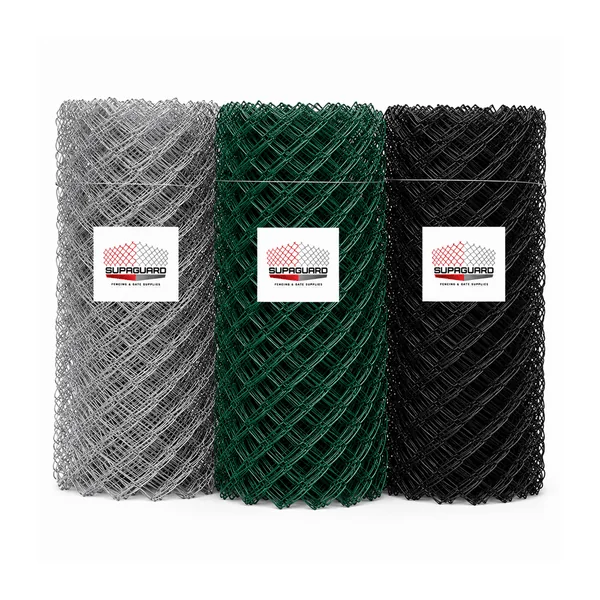
Chain Mesh
Chain link mesh in 25 to 60 mm apertures and 2.24 to 3.15 mm wire for security, temporary, tennis court and golf screen fencing. Galvanised, black or green PVC.
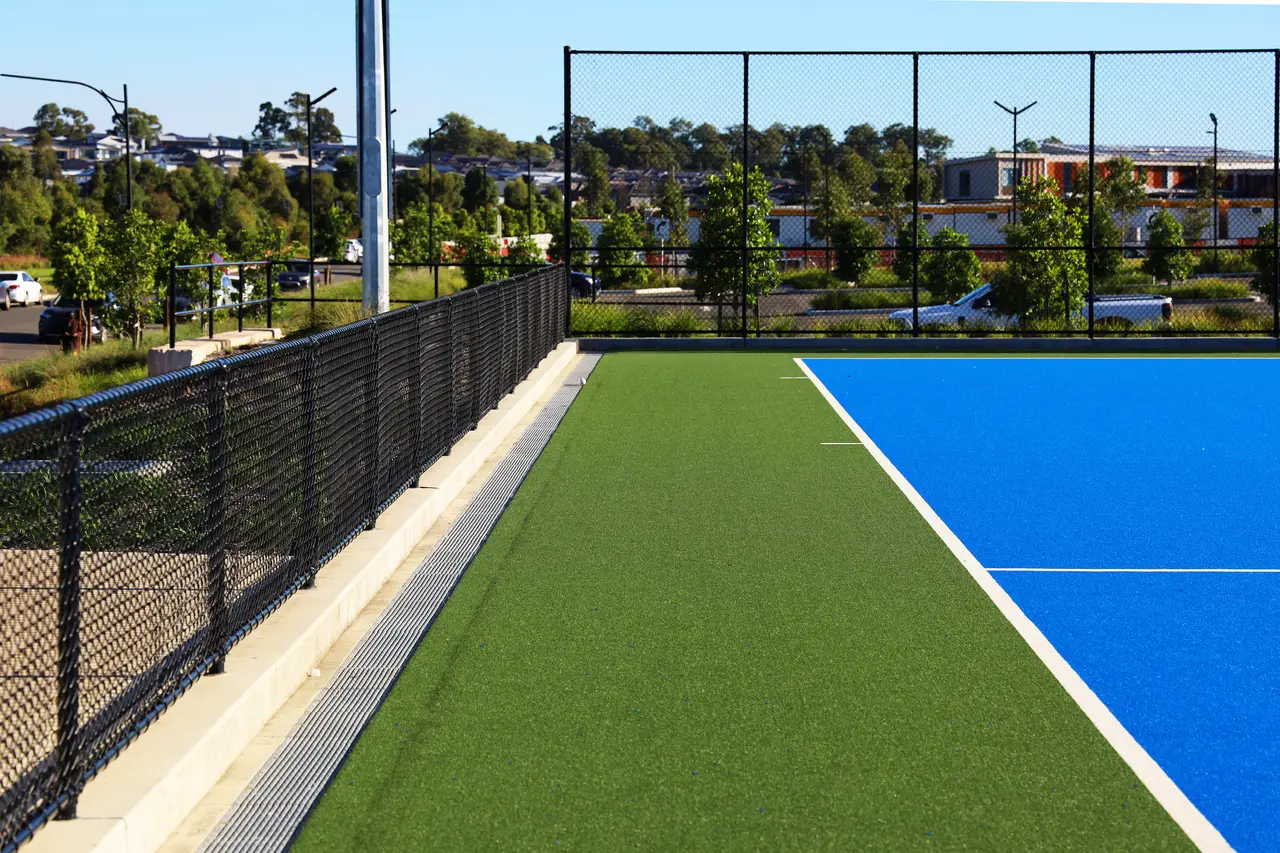 Sport
Ball-stop fencing for a synthetic hockey pitch and sports fields
Australia
High ball-stop chainwire around a synthetic hockey pitch, playing fields and cricket practice nets, black-coated so the fence line disappears against the play.
More from the blog.
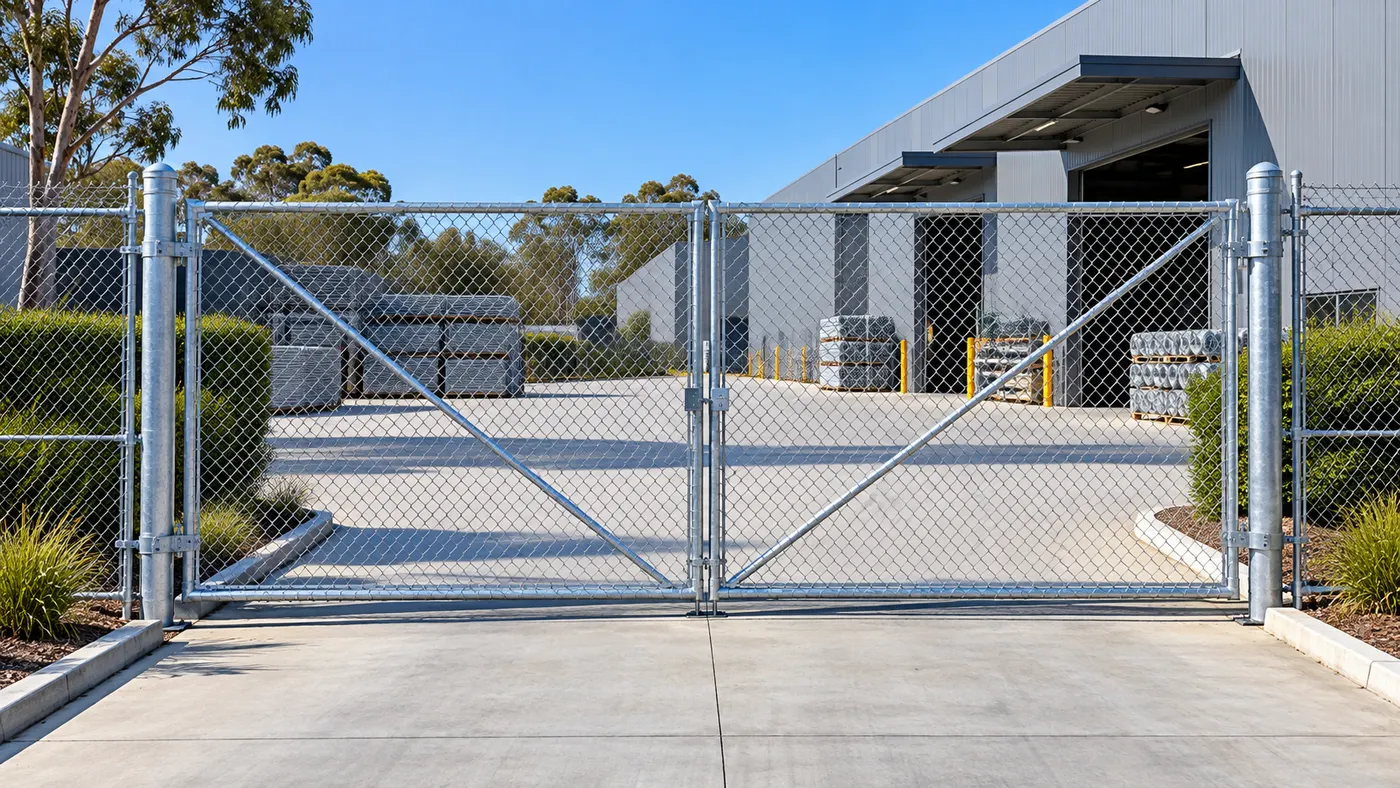 Custom Security Gates
When Should Commercial Sites Order Custom Security Gates?
2 Nov 2026
Learn when custom security gates for commercial sites make sense for unusual openings, heavy traffic, access control and perimeter security.
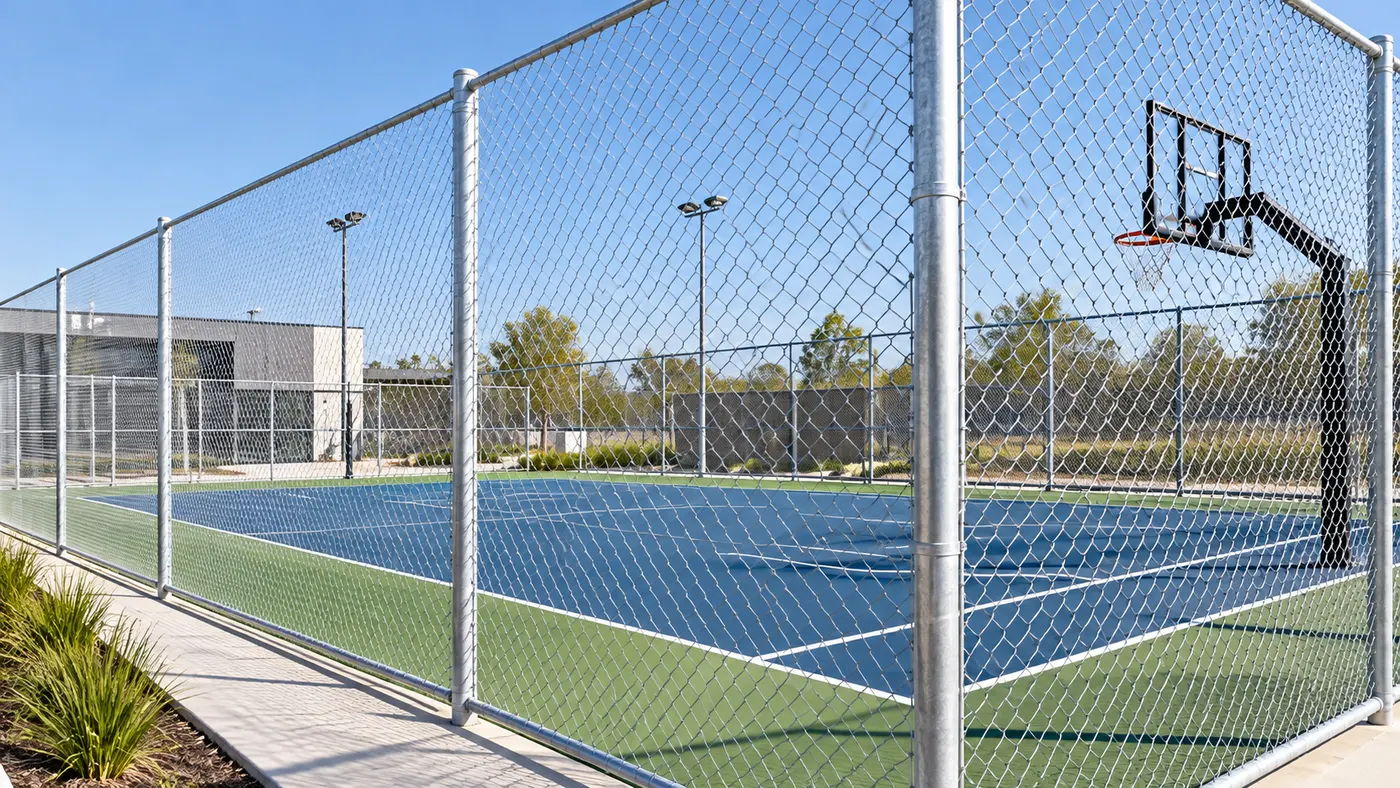 Sports Fencing
What Chainwire Mesh Specifications Work Best for Sports Courts?
2 Oct 2026
Compare chainwire mesh specifications for Australian sports courts, including mesh size, wire diameter, height, coatings and framing.
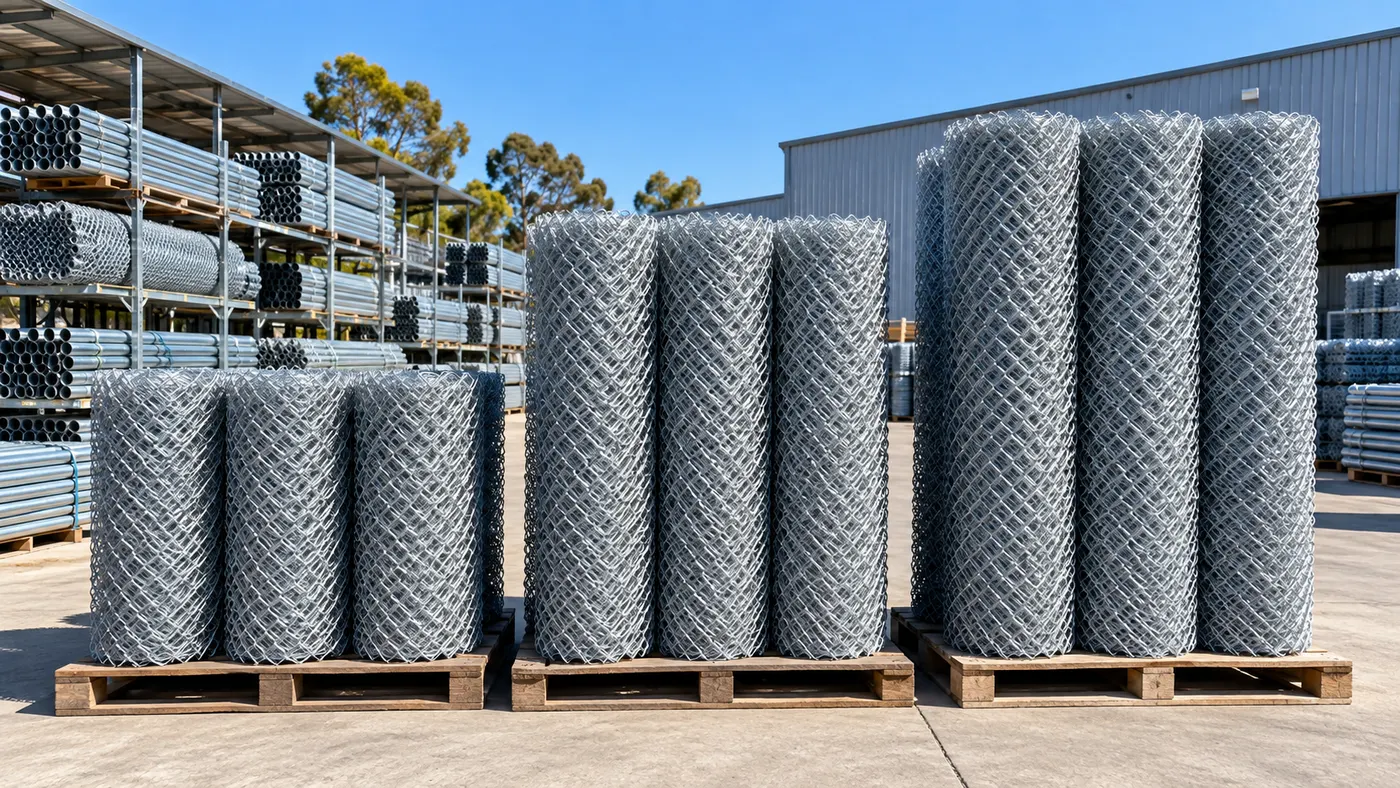 Chainwire Mesh Procurement
How to Choose Chainwire Mesh Roll Sizes for Large Projects
2 Nov 2026
Learn how to choose Chainwire Mesh Roll Sizes for large fencing projects based on fence length, height, mesh, wire diameter and site needs.
Tell us about the fence.
One business day. That's how fast we come back with pricing once we have your quantity, finish and postcode.
Buying regularly? Apply for a credit account