
How to Choose Chainwire Mesh Roll Sizes for Large Projects
Learn how to choose Chainwire Mesh Roll Sizes for large fencing projects based on fence length, height, mesh, wire diameter and site needs.
Focus Keyphrase: Chainwire Mesh Roll Sizes
How to Choose Chainwire Mesh Roll Sizes for Large Fencing Projects
Introduction
Why Roll Size Matters More on Large Projects
On a short residential fence, a small measuring error may mean purchasing a modest amount of additional material. Across hundreds of metres of fencing, however, small errors can multiply.
Ordering the wrong roll height can create a much larger problem because the mesh may not suit the planned fence at all. Ordering the wrong quantity can cause installation delays, while excessive over-ordering may increase material costs and leave substantial unused stock.
Large projects therefore benefit from treating chainwire as part of a complete fencing system.
Supagard supplieschain link fencing for applications where buyers may need to coordinate mesh with posts, fittings and other fencing components. Establishing the project's requirements before calculating rolls provides a much stronger basis for ordering.
TLDR – Quick Guide
Start with an accurate plan of the entire fence line.
Measure individual fence runs rather than relying only on the property's overall perimeter.
Separate gates and other openings from continuous mesh sections.
Confirm the required finished fence height before choosing roll height.
Do not assume every section of a large site requires the same fence height.
Check available roll dimensions against the actual product being ordered.
Calculate mesh quantity from usable fence runs rather than rough site dimensions.
Round purchasing quantities up to complete rolls where necessary.
Allow for practical cutting, terminations and site-specific waste.
Avoid adding an arbitrary waste percentage without considering the layout.
Long straight runs may use material more efficiently than numerous short sections.
Corners, gates and level changes can affect material planning.
What Are Chainwire Mesh Roll Sizes?
Roll Size Usually Involves Height and Length
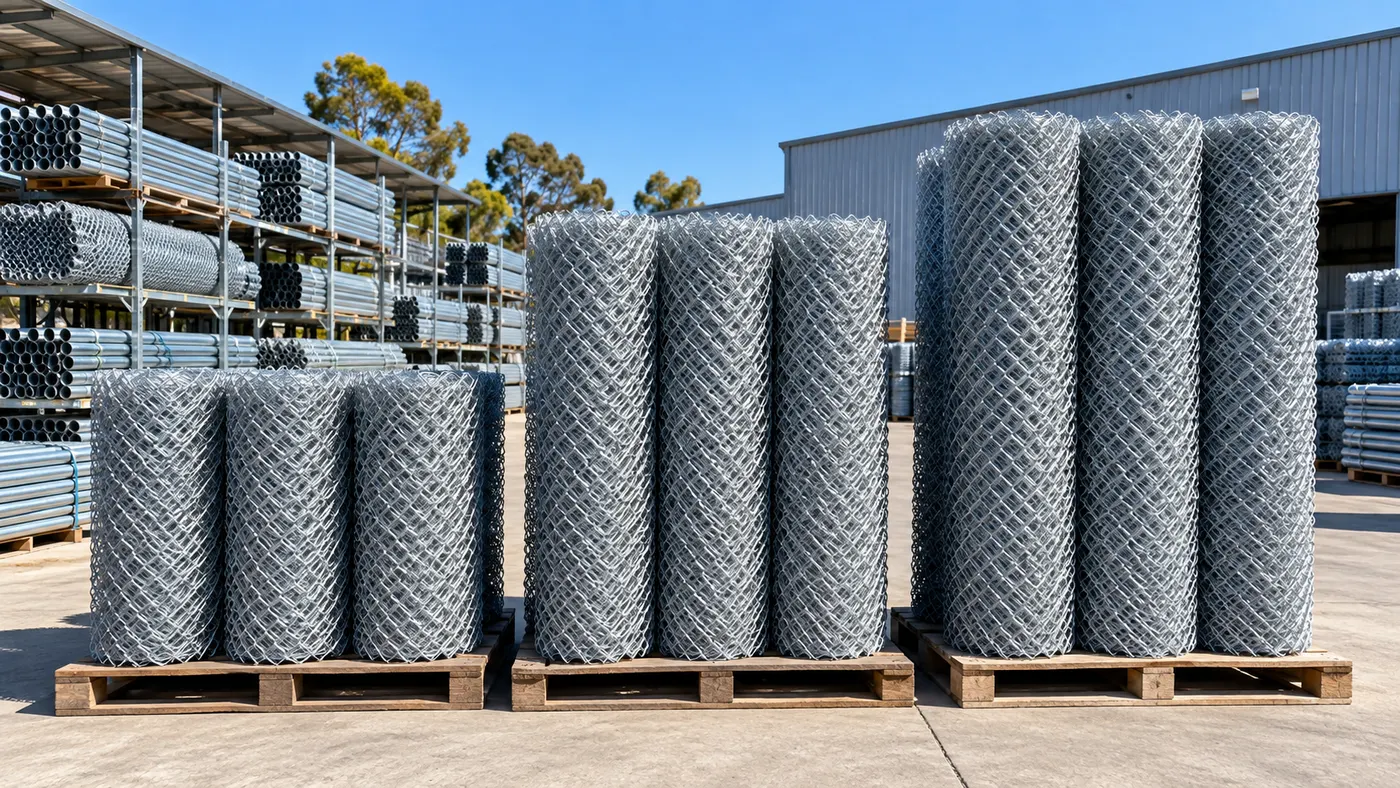
When discussing chainwire mesh rolls, two dimensions are particularly important: the height of the mesh and the length supplied in the roll.
The roll height generally corresponds to the vertical mesh required for the fence. The roll length determines how much linear fence can potentially be covered before another roll is needed.
For example, a project requiring a taller security fence needs mesh manufactured at an appropriate height. Purchasing a longer roll does not compensate for selecting an unsuitable mesh height.
Product Specifications Must Be Checked Before Ordering
Do not base a large material order on an assumed "standard" roll dimension.
Suppliers can offer different combinations of mesh height, roll length, mesh opening, wire diameter and finish. Availability may also vary according to the particular product specification.
For that reason, calculations should begin with the dimensions of the chainwire product actually being considered.
How Do You Measure a Large Chainwire Fencing Project?
Break the Fence Into Individual Runs
A site plan is much more useful than a single perimeter measurement.
Divide the proposed fence into identifiable sections, such as:
- Northern boundary
- Southern boundary
- Eastern boundary
- Western boundary
- Internal compounds
- Equipment enclosures
- Sports areas
- Access corridors
- Gate sections
- Measure each continuous run separately.
This makes it easier to see where mesh will begin and terminate and where different specifications may be necessary.
Record Corners and Direction Changes
A 300-metre fence is not necessarily one continuous 300-metre run.
It could consist of numerous shorter sections interrupted by corners, buildings, gates or changes in direction. Those interruptions influence how rolls are allocated and where mesh needs to terminate.
Detailed measurements are therefore more useful than simply knowing the site's total boundary length.
Identify Openings Before Calculating Mesh
Vehicle gates, pedestrian gates and other openings should be identified on the plan before the final mesh calculation.
If a boundary measures 100 metres but includes a large vehicle entrance, the continuous mesh requirement for that section will differ from the overall boundary measurement.
At the same time, gate areas require their own components, so they should not simply disappear from the project schedule.
How Do You Calculate the Number of Chainwire Rolls Needed?
Start With the Required Linear Metres
Once continuous fence runs have been measured, calculate the total length that actually requires chainwire mesh.
A simple planning calculation is:
- Required mesh length ÷ usable roll length = base number of rolls
If the result is not a whole number, the purchasing quantity generally needs to be rounded up because a fraction of an additional roll still requires another roll to be supplied.
Calculate Using the Actual Roll Length
Suppose a project needs 430 metres of a particular mesh specification and the selected product is supplied in 20-metre rolls.
The base calculation would be:
- 430 ÷ 20 = 21.5 rolls
That means the project would require at least 22 complete rolls before considering project-specific cutting, waste or contingency.
This is only an example of the calculation method. Always substitute the actual roll length of the Supagard product being ordered.
Should You Add Extra Chainwire Mesh for Waste?
Some Allowance Can Be Sensible
Ordering exactly the theoretical measured length leaves little flexibility for site conditions.
Additional material may be needed because of:
- Cutting
- Terminations
- Irregular boundaries
- Installation adjustments
- Damaged material
- Changes discovered on site
- Measurement tolerances
The appropriate allowance depends on the project's layout rather than a universal percentage.
Avoid Automatically Applying the Same Waste Factor
A project consisting largely of long, straight fence runs may use rolls efficiently.
A complicated installation containing many short sections, corners, transitions and irregular boundaries may produce more offcuts.
Instead of automatically adding the same percentage to every project, examine where rolls will actually start and finish.
Why Does Fence Height Affect Roll Selection?
Mesh Height Should Match the Intended Fence
Fence height is one of the first specifications to establish.
Different applications can require different heights depending on access control, containment, sporting use, site design and project specifications.
Selecting the height before ordering prevents a situation where substantial quantities of mesh arrive that cannot achieve the intended finished fence.
One Site May Need Multiple Heights
Large projects do not necessarily use one fence specification throughout.
An external security boundary may differ from an internal partition, equipment enclosure or other controlled area.
Divide these areas into separate material schedules rather than combining every metre into one roll calculation.
How Does Mesh Opening Affect Your Order?
Mesh Opening and Roll Size Are Different Specifications
Roll size tells you the physical dimensions of the supplied mesh.
Mesh opening describes the size of the diamond-shaped openings within the chainwire.
These specifications need to be considered separately.
Security Requirements Can Influence Mesh Choice
Different mesh openings can suit different applications.
A project where access restriction is particularly important may call for a different mesh specification from a general boundary fence. Sports facilities can also have application-specific considerations involving ball containment, fence location and playing conditions.
Supagard's guide to choosingchain link mesh size for security provides additional context for evaluating mesh openings rather than selecting a product based on roll dimensions alone.
Why Does Wire Diameter Matter?
Wire Diameter Influences Mesh Characteristics
Wire diameter describes the thickness of the wire used to manufacture the mesh.
It is separate from both mesh opening and roll dimensions.
Two rolls can have similar overall dimensions while using different wire diameters, giving them different physical characteristics.
Large Projects Should Specify Wire Diameter Early
Do not calculate hundreds of metres of chainwire and only later decide which wire diameter is required.
Changing the specification after quantities have been calculated can affect product availability, cost and potentially other components within the fencing system.
Project requirements should establish the appropriate wire specification before procurement is finalised.
How Do You Choose Between Different Mesh Specifications?
Begin With the Application
Ask what the fence is expected to accomplish.
Possible applications include:
- Property boundaries
- Commercial premises
- Industrial compounds
- Equipment areas
- Storage yards
- Sports facilities
- Schools
- Utility areas
- Controlled-access zones
The intended use influences decisions about height, mesh opening, wire diameter, finish and supporting structure.
Avoid Selecting on Price Alone
A lower-cost mesh is not necessarily the most economical option if it does not suit the project's requirements.
Likewise, specifying a heavier product than the project requires can add unnecessary cost across a large installation.
The goal is to match the specification to the application.
What Other Materials Should Be Planned With Chainwire Rolls?
Chainwire Is Only One Part of the Fence
Large projects can require substantial quantities of supporting materials.
Depending on the system design, these can include:
- Intermediate posts
- Corner posts
- End posts
- Gate posts
- Rails
- Bracing
- Tensioning components
- Tie wire
- Fittings
- Caps
- Fasteners
- Gates
- Concrete or footing materials
- A complete project schedule should therefore extend beyond the mesh itself.
- Coordinate Wire and Accessories
Supagard's broaderwire range can help buyers consider supporting wire requirements alongside the chainwire mesh itself.
Planning these materials together reduces the risk of having enough mesh on site but missing components required to tension, secure or complete the installation.
How Do Gates Affect Chainwire Roll Calculations?
Confirm Gate Widths Early
Gate openings interrupt continuous fence runs.
Their widths should therefore be established before calculating the final mesh requirement.
This is particularly important for large vehicle entrances, where treating the entire boundary as continuous mesh could significantly overstate the quantity required.
Remember That Gates Need Their Own Materials
Subtracting an opening from the mesh calculation does not mean the gate area requires no materials.
Gate leaves, frames, posts, hinges, latches and associated hardware need to be accounted for separately according to the system design.
Large projects benefit from maintaining a dedicated gate schedule alongside the mesh schedule.
How Should Corners Be Handled?
Corners Divide Fence Runs
Corners create natural termination and tensioning points.
When planning roll usage, identify each change in direction rather than assuming material can simply be allocated based on total perimeter.
A detailed plan helps installers decide where each roll can be used efficiently.
Short Offcuts May Still Be Useful
An offcut from one run may suit another short section.
On a large site, careful allocation of usable offcuts can reduce unnecessary waste.
However, this should be planned rather than assumed, because the piece must still match the required height, mesh opening, wire diameter and finish.
How Does Uneven Ground Affect Mesh Planning?
Site Conditions Matter
Real sites are rarely as simple as a drawing.
Slopes, retaining walls, drainage structures, changes in elevation, existing buildings and other obstacles can influence the finished fence.
A site inspection can identify conditions that basic perimeter measurements may miss.
Determine How Level Changes Will Be Managed
The fence design may need to respond to slopes or stepped sections.
That can influence mesh installation and potentially create additional cutting or termination points.
Projects with substantial elevation changes should therefore be reviewed carefully before final quantities are ordered.
How Should Large Projects Be Divided Into Fencing Zones?
Group Areas With Matching Specifications
One of the easiest ways to manage a large chainwire order is to divide the site into specification zones.
For example:
- Zone A: external boundaryZone B: internal compoundZone C: sports areaZone D: service enclosure
- Each zone can then have its own:
- Fence height
- Mesh opening
- Wire diameter
- Finish
- Total linear metres
- Roll quantity
- Posts
- Gates
- Accessories
- This approach greatly reduces the risk of mixing incompatible materials.
- Give Each Specification a Clear Identifier
Where several chainwire types are being delivered to the same site, label them clearly in the material schedule.
Installers should be able to identify which rolls belong to which section without relying on guesswork.
That becomes increasingly important as project scale grows.
Should You Use the Same Chainwire Everywhere?
Standardisation Can Simplify Procurement
Using a common specification across appropriate parts of a project can simplify ordering, storage and installation.
It may also make surplus material from one run usable elsewhere.
However, standardisation should not override genuine functional requirements.
Different Areas Can Need Different Performance
A low-risk internal divider does not necessarily need to match a higher-security external boundary.
Likewise, a sports enclosure can have different requirements from an industrial perimeter.
Use common specifications where practical, but let the intended function determine where variation is necessary.
How Can You Reduce Chainwire Waste on Large Projects?
Create a Roll Allocation Plan
Once roll lengths and fence runs are known, map how rolls could be distributed.
Suppose several runs require:
- 48 metres
- 37 metres
- 22 metres
- 14 metres
Rather than treating each section independently, planners can consider whether usable material remaining from one run can contribute to another compatible section.
The exact approach depends on installation requirements and how the mesh is tensioned and terminated.
Keep Specifications Separate
An offcut is only useful elsewhere if it matches the required specification.
Material of the correct height but wrong wire diameter or mesh opening cannot automatically substitute for another product.
Accurate labelling and storage make reuse easier.
How Should Chainwire Mesh Be Stored on a Large Site?
Plan Storage Before Delivery
Large mesh orders can occupy substantial space.
Before delivery, determine where rolls can be stored safely without interfering with traffic, machinery or installation activities.
The storage location should also make it practical to move the required rolls to their installation zones.
Avoid Unnecessary Handling
Repeatedly moving large quantities of material can increase labour and the chance of damage.
Where practical, coordinate deliveries with the planned installation sequence.
For staged projects, this can be more manageable than placing every roll in one location at the beginning.
Should You Order All Chainwire at Once?
There Are Advantages to a Single Confirmed Specification
Ordering a project's mesh after specifications and measurements have been finalised can simplify procurement and help ensure material consistency.
It also reduces the risk of discovering later that a required product is unavailable when subsequent stages begin.
However, the best delivery strategy depends on site storage, project schedule and supplier arrangements.
Staged Delivery May Suit Large Sites
Projects with limited storage or several construction phases may benefit from staged delivery.
For example, external fencing may be installed before internal enclosures.
The purchasing quantity can still be planned for the whole project while physical deliveries are coordinated around construction stages.
What Mistakes Should You Avoid When Ordering Chainwire Mesh?
Measuring Only the Site Perimeter
A perimeter figure does not show gates, internal fencing, obstacles, different heights or separate specification zones.
Use detailed fence runs instead.
Assuming All Rolls Are the Same Size
Always confirm the dimensions of the product being ordered.
Do not build a project estimate around a roll length that has not been verified.
Ignoring Mesh and Wire Specifications
Two rolls with identical external dimensions may not be equivalent.
Mesh opening, wire diameter and finish matter.
Forgetting Supporting Materials
Having all required chainwire on site is not useful if installation stops because posts, tensioning components or fittings are missing.
Create a complete fencing material schedule.
Ordering Before the Design Is Finalised
Late changes to gates, heights or fence locations can substantially change material quantities.
Whenever possible, calculate final procurement quantities from approved project information.
How Can Contractors Create a Chainwire Material Schedule?
Record the Important Information for Every Fence Run
A practical schedule can include columns for:
- Zone
- Fence run
- Length
- Height
- Mesh opening
- Wire diameter
- Finish
- Roll length
- Number of rolls
- Posts
- Gates
- Accessories
- Notes
- This creates a single reference point for estimating, purchasing and installation.
- Reconcile the Schedule With the Site Plan
The total quantities in the schedule should correspond with the approved fence layout.
Check every boundary, internal run and gate.
For large projects, a second review can help identify duplicated sections or omitted runs before the purchase order is issued.
How Should You Compare Chainwire Quotes?
Compare Like With Like
A lower quote may reflect a different mesh specification rather than simply a better price.
When comparing suppliers, confirm:
- Roll dimensions
- Mesh opening
- Wire diameter
- Coating or finish
- Quantity
- Associated components
- Delivery arrangements
A price comparison is meaningful only when the products and scope are genuinely comparable.
Consider the Complete Project Requirement
Mesh cost is only one component of the fencing budget.
Posts, gates, wire, fittings, freight, installation and site preparation can all contribute to the overall project cost.
A complete materials approach provides a clearer picture than comparing roll prices in isolation.
How Can Supagard Help With Large Chainwire Projects?
Start With a Defined Specification
Large orders are easier to discuss when the buyer already has a basic project schedule.
Useful information includes the total fence length, required heights, mesh openings, preferred wire diameters, finishes, gate locations and any unusual site conditions.
Even where some specifications remain undecided, providing accurate site information can make product selection more productive.
Match the Mesh to the Project
Supagard's chainwire range allows project planners to approach fencing as a system rather than treating every roll as interchangeable.
For large commercial, industrial, sporting or infrastructure-style projects, the key is to match the mesh dimensions and construction to the intended application while coordinating the supporting fencing materials.
Careful planning at this stage can help prevent avoidable shortages, surplus material and specification changes during installation.
Key Takeaways
Chainwire Mesh Roll Sizes should be chosen according to both project dimensions and the required fencing specification.
Measure individual fence runs rather than relying only on total perimeter.
Identify gates, openings, corners and obstacles before calculating quantities.
Confirm the required fence height before selecting roll height.
Use the actual supplied roll length when calculating the number of rolls.
Round fractional roll requirements up to complete rolls.
Consider project-specific cutting and waste rather than applying an arbitrary allowance.
Long straight runs can often use rolls more efficiently than fragmented layouts.
Mesh opening is separate from roll size.
Wire diameter is also a separate specification.
Select mesh opening and wire diameter according to the fence's intended application.
Frequently Asked Questions
1. How do I calculate how many chainwire mesh rolls I need?
Measure the total linear metres of continuous fencing that require mesh and divide that figure by the usable length of the selected roll. Round the result up to the next complete roll and then consider whether the project's cutting, terminations or irregular sections require additional material. Always use the actual roll dimensions of the product being ordered rather than assuming a standard length.
2. What Chainwire Mesh Roll Sizes should I use for a large project?
The appropriate Chainwire Mesh Roll Sizes depend on the required fence height, available product dimensions and the lengths of the individual fence runs. Large projects may require more than one mesh height or specification when external boundaries, internal enclosures and specialised areas serve different purposes. Confirm the project design and current product specifications before determining final quantities.
3. Should I order extra chainwire mesh for waste?
Some additional material can be useful for cutting, terminations, unexpected site conditions and measurement tolerances. The amount should reflect the actual project layout because a long, straightforward fence may generate less waste than a site with numerous corners and short sections. Planning how individual rolls will be allocated can provide a more accurate allowance than automatically adding the same percentage to every project.
4. Is mesh opening the same as chainwire roll size?
No, mesh opening refers to the dimensions of the diamond-shaped openings within the chainwire, while roll size refers to the overall height and length of material supplied. Wire diameter is another separate specification that describes the thickness of the wire forming the mesh. All three should be considered when selecting chainwire for a large fencing project.
5. What information should I have before ordering chainwire for a large project?
Prepare the lengths of individual fence runs, required fence heights, gate locations, mesh specifications, wire diameter requirements, preferred finish and information about slopes or unusual site conditions. You should also identify the posts, wire, fittings, gates and other components required to create the complete fencing system. A detailed material schedule makes it easier to check quantities and specifications before placing a large order.
Products and a project to match.
Chain Mesh
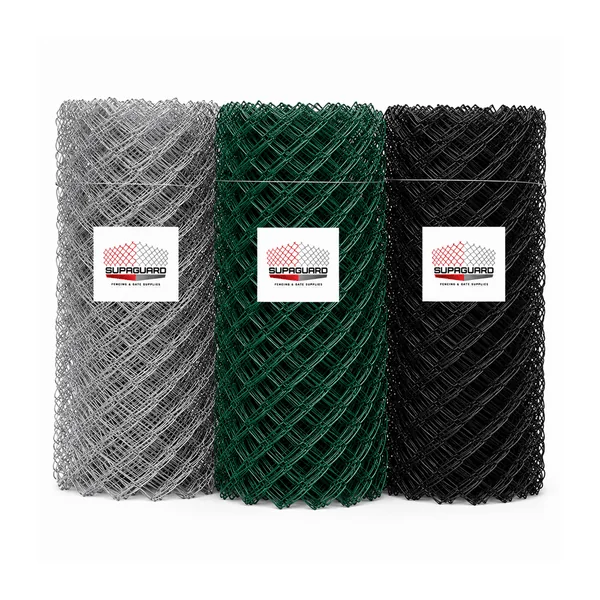
Chain link mesh in 25 to 60 mm apertures and 2.24 to 3.15 mm wire for security, temporary, tennis court and golf screen fencing. Galvanised, black or green PVC.
 Sport
Ball-stop fencing for a synthetic hockey pitch and sports fields
Australia
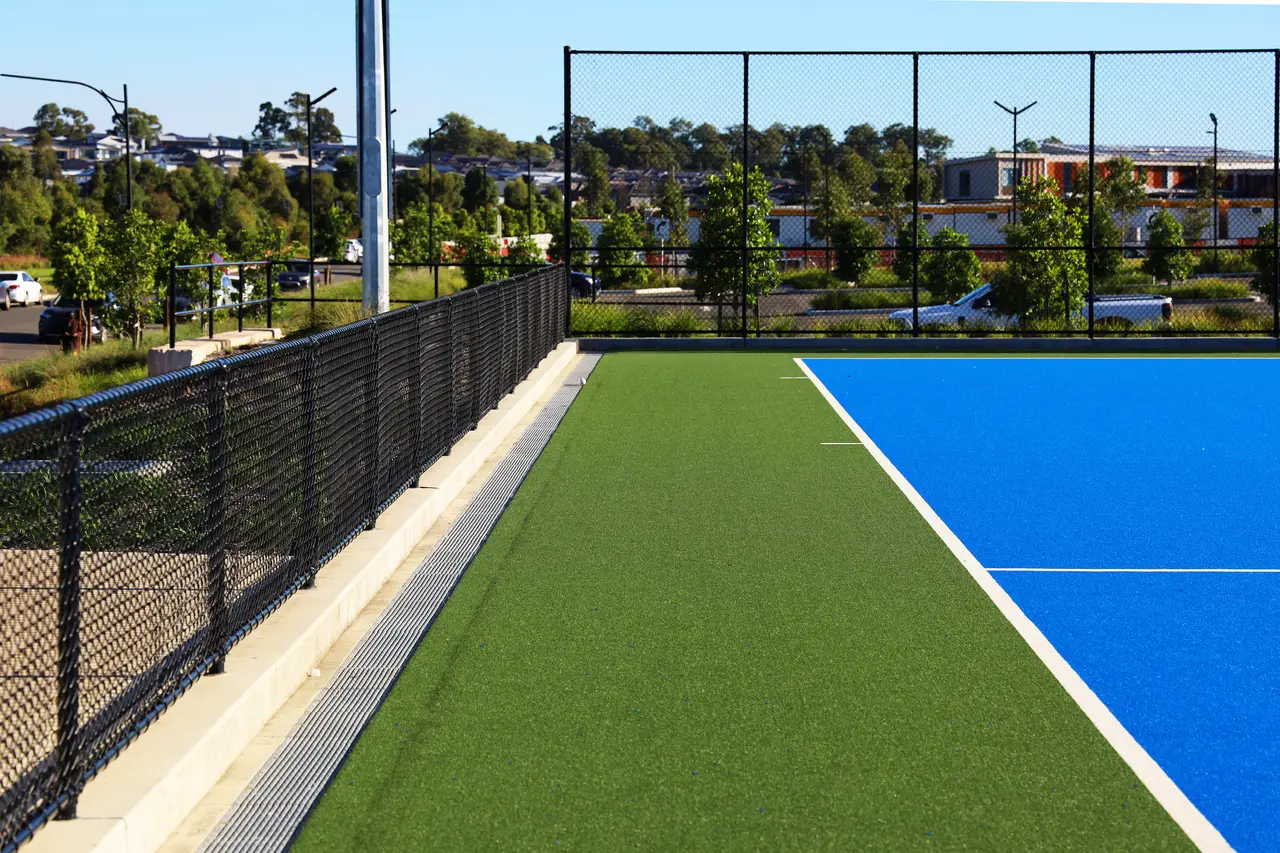
High ball-stop chainwire around a synthetic hockey pitch, playing fields and cricket practice nets, black-coated so the fence line disappears against the play.
More from the blog.
 Sports Fencing
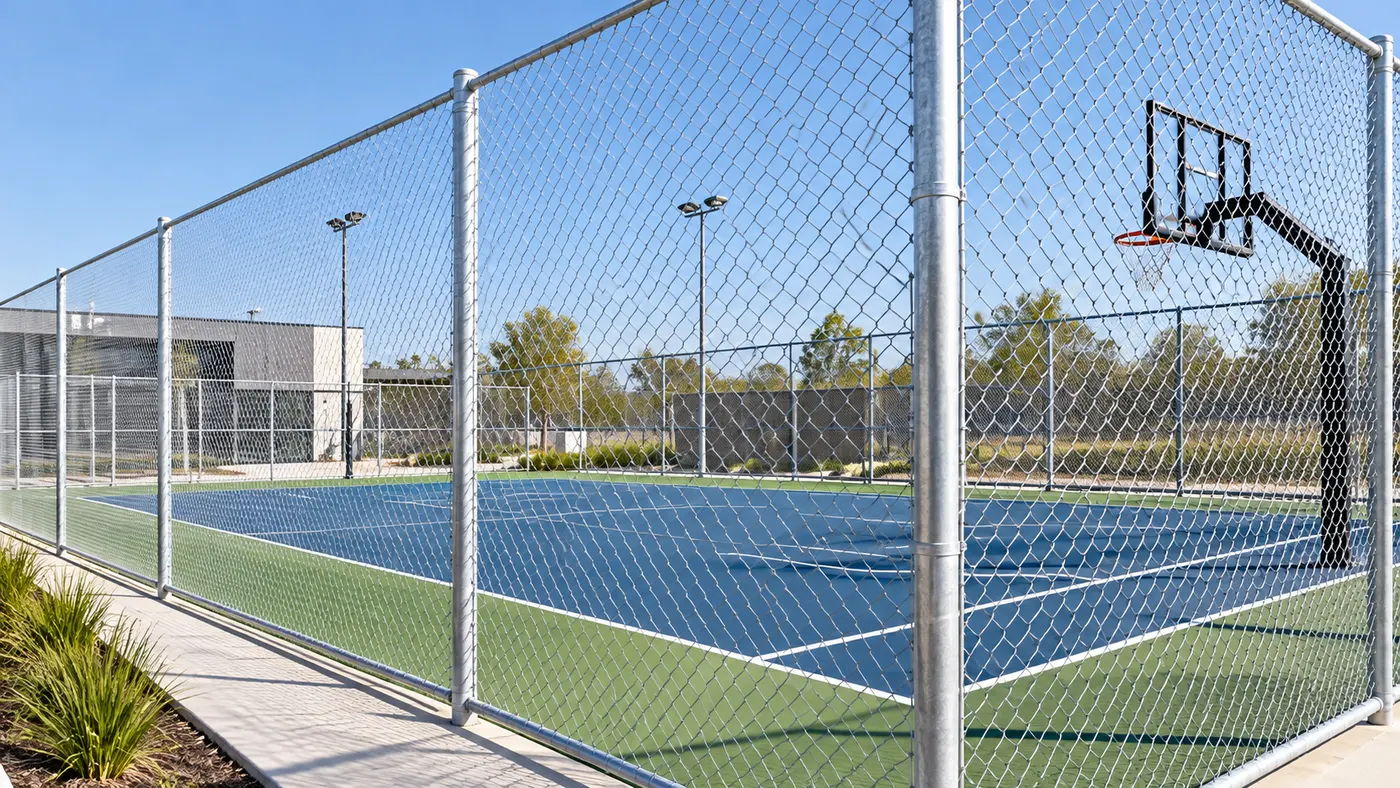
What Chainwire Mesh Specifications Work Best for Sports Courts?
2 Oct 2026
Compare chainwire mesh specifications for Australian sports courts, including mesh size, wire diameter, height, coatings and framing.
 Chainwire Gates
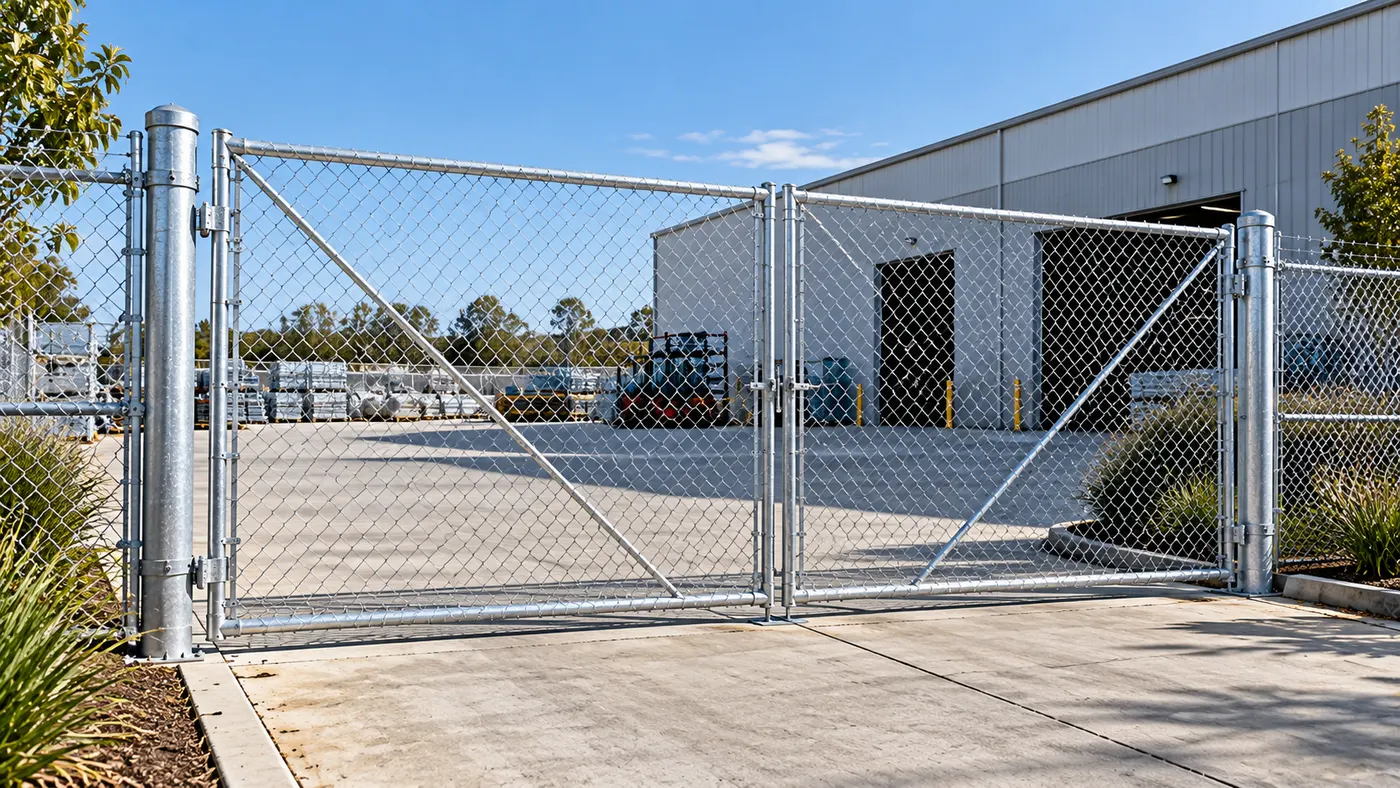
What Size Chainwire Gate Do You Need for a Commercial Site?
3 Oct 2026
Learn how to choose a chainwire gate size for a commercial site based on vehicles, access needs, opening width, height and security.
 Chainwire Mesh
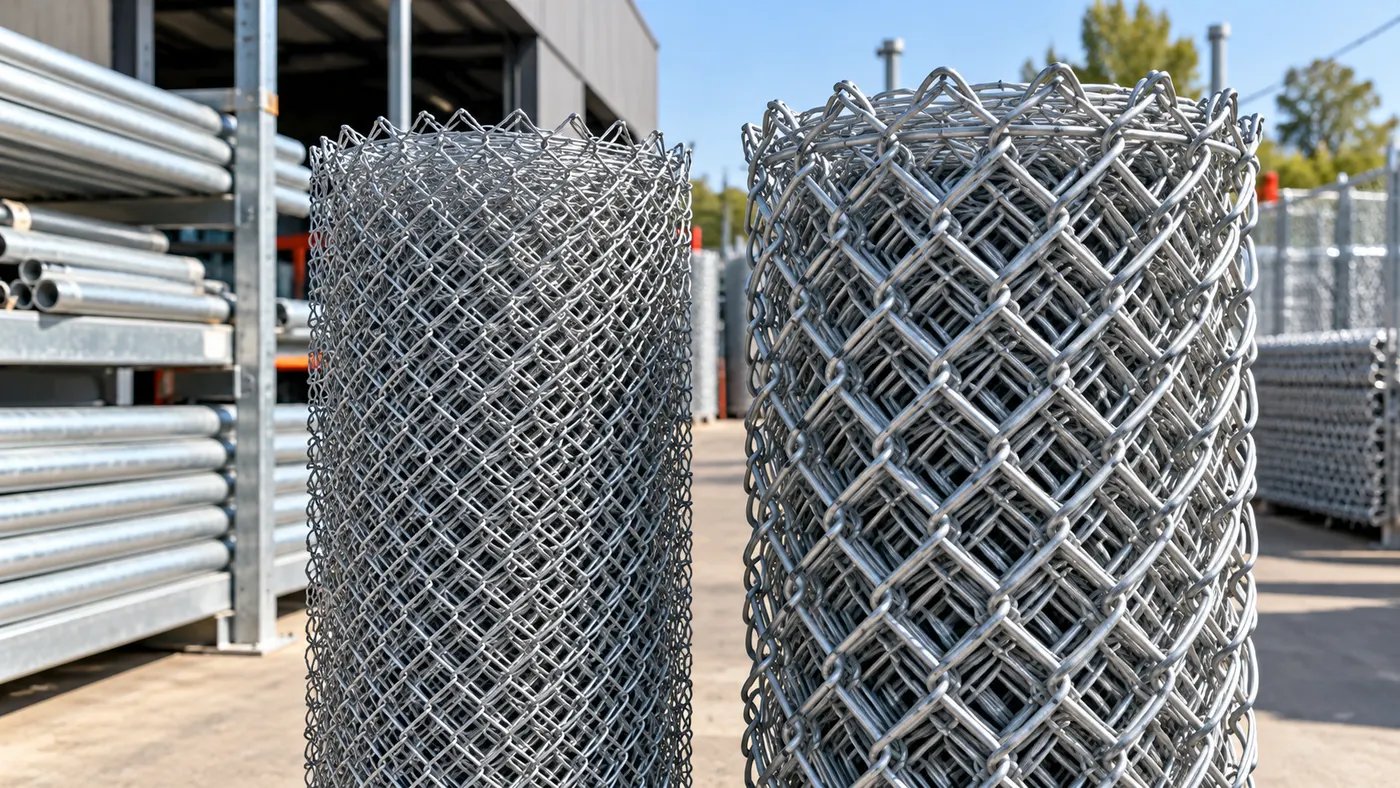
2.5mm vs 3.15mm Chainwire Mesh: Which Wire Diameter Do You Need?
3 Oct 2026
Compare 2.5mm vs 3.15mm chainwire mesh for strength, weight, security and common applications to choose the right fencing wire diameter.
Tell us about the fence.
One business day. That's how fast we come back with pricing once we have your quantity, finish and postcode.
Buying regularly? Apply for a credit account