
What Size Chainwire Gate Do You Need for a Commercial Site?
Learn how to choose a chainwire gate size for a commercial site based on vehicles, access needs, opening width, height and security.
Introduction
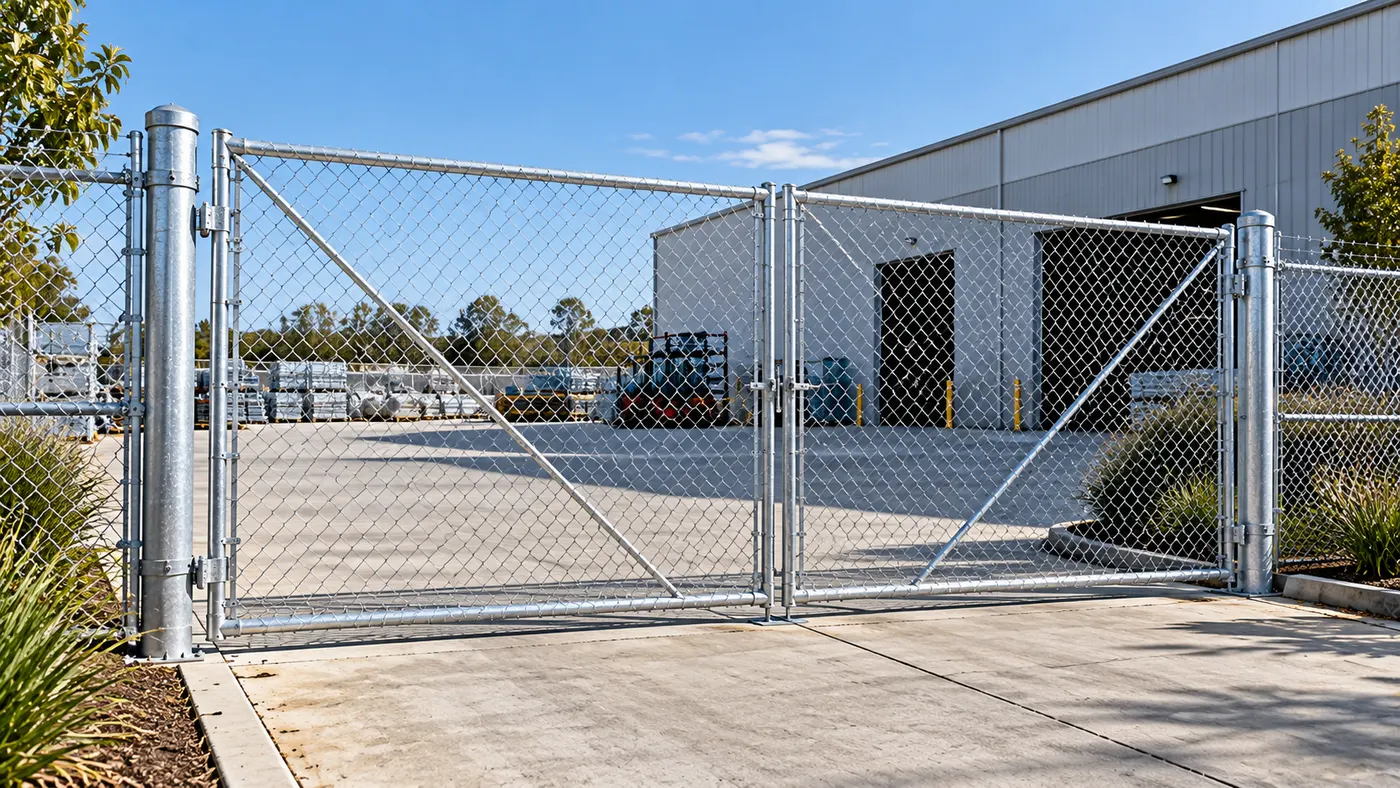
Choosing a commercial chainwire gate isn't as simple as measuring a gap and ordering something that looks about right.
A pedestrian entrance, delivery access point and heavy-vehicle driveway can all require very different gate configurations. Width matters, but so do height, single-versus-double leaf design, clearance, gate posts, hardware and how frequently the entrance will be used.
Supaguard Fencing manufactures chainlink security fencing products for Australian applications, including chainwire gates, mesh, wire, pipe and fittings. Its gate range includes single and double configurations across multiple opening widths and heights, giving commercial sites options for different access requirements.
The key is matching the chainwire gate to what actually needs to pass through it.
TLDR - Quick Guide
For a commercial site, choose your chainwire gate by working backwards from the access requirement.
Pedestrian access: A smaller single gate may be sufficient.
Maintenance access: Allow for equipment, trolleys and machinery—not just people.
Cars and light commercial vehicles: Measure the required clear opening and provide practical manoeuvring clearance.
Trucks and large vehicles: Wider double gates are typically more practical than narrow single gates.
Mixed-use entrances: Size for the largest regular vehicle rather than the smallest.
Security-sensitive entrances: Consider gate height, hardware, posts and the surrounding fence—not width alone.
Supaguard's published gate specifications include single gates from 900mm to 4000mm openings and double gates from 1800mm to 8000mm openings, depending on height and configuration.
There's no universal "commercial gate size."
Detailed Breakdown: Choosing a Commercial Chainwire Gate
1. Start With the Required Clear Opening
The most important measurement is the opening that needs to remain available when the gate is open.
Supaguard makes this particularly important to understand because its published chainwire gate width refers to the opening size, not simply the physical width of the gate frame. Supaguard states that the actual gate frame is made 30mm smaller than the nominated opening width.
For example, if a gate is listed for a 3000mm opening, don't assume the physical frame itself measures exactly 3000mm.
This distinction matters during:
- Post positioning
- Concrete footing preparation
- Fence layout
- Gate ordering
- Replacement projects
- Installation planning
Measure first. Confirm the required opening second. Order third.
That's considerably cheaper than discovering a measurement problem after the posts are installed.
2. Is the Gate for People or Vehicles?
This is the quickest way to narrow down your options.
A pedestrian chainwire gate doesn't need to accommodate a delivery truck. Likewise, a gate intended for forklifts, utilities or commercial vehicles shouldn't be sized as though everyone is arriving on foot.
Start by identifying the users.
Pedestrian-only access
A smaller single gate can provide controlled access for employees, contractors and visitors.
Equipment and maintenance access
Think beyond today's requirements. Mowers, pallet-moving equipment, maintenance machinery or other equipment may occasionally need access.
Passenger and light commercial vehicles
Allow enough width for practical vehicle movement, particularly where drivers must turn while entering.
Heavy vehicles
Trucks and other large commercial vehicles may require substantially wider openings and a double-gate arrangement.
The important principle is simple:
Size the gate for the largest vehicle or piece of equipment that reasonably needs regular access.
3. Single or Double Chainwire Gate?
Once you know the opening width, decide how that opening should be divided.
A single gate uses one gate leaf.
A double gate splits the opening between two leaves.
Supaguard's Gates specifications show a clear difference in available sizes. Its single-gate range includes openings from 900mm through to 4000mm, while double gates extend from 1800mm to 8000mm in selected configurations.
Double gates can make sense for wider commercial vehicle entrances because each individual leaf is smaller than one enormous gate spanning the entire opening.
Supaguard also uses different hardware configurations:
- Single gates: hand hole and shoot-bolt
- Double gates: hand hole, drop-bolt and chain on each leaf
- Its gates are wired with 50mm × 2.5mm chain mesh.
4. Don't Forget Gate Height
Width gets most of the attention because something has to physically pass through the entrance.
Height still matters.
A chainwire gate should integrate sensibly with the surrounding fence and the site's security requirements. A tall perimeter with a dramatically lower gate can create an obvious weak point.
Supaguard's gate range includes multiple heights, with availability depending on opening width and whether the gate is single or double.
For a straightforward commercial boundary, one height may be appropriate. A warehouse, industrial compound or restricted facility may require something very different.
Match the gate to the fence and the risk profile.
How Much Extra Width Should You Allow for Vehicles?
There isn't one magic number.
A vehicle's physical width is only the starting point.
The practical opening also depends on:
- Approach angle
- Road width
- Turning radius
- Vehicle length
- Mirrors and projections
- Frequency of access
- Site obstacles
- Traffic flow
- Driver visibility
A truck approaching a gate perfectly straight can use an opening differently from a long vehicle turning sharply from a narrow roadway.
That's why simply measuring the vehicle and adding a token amount of clearance isn't always enough.
For commercial sites with regular truck movements, consider the vehicle swept path and turning requirements as part of the access design.
If the site handles unusual or large vehicles, professional access or engineering advice may be appropriate.
Match the Gate to the Chainwire Fence
A commercial gate doesn't operate in isolation.
The surrounding Chain Link Mesh needs to suit the site's application, while appropriate Wire products form part of the broader fencing system.
Then there's the framework.
Supaguard supplies Pipe for chainlink fencing applications. The correct pipe selection becomes particularly important around gate openings because gate posts have to support moving loads rather than simply hold stationary mesh.
Appropriate Fittings connect and support the system, with options available for different parts of a chainlink fence installation.
Additional Fencing Accessories can also be required depending on the fence design and installation method.
In other words:
- Don't specify the gate first and figure out the posts later.
- Design the entrance as one system.
- Gate Posts Matter More Than You Might Think
A pedestrian gate and a wide double chainwire gate place very different demands on their supporting posts.
As gates become wider and heavier, the forces transferred through hinges and posts become more significant. Gate-post selection therefore needs to consider the gate dimensions, weight, operating conditions and structural requirements.
The footing matters too.
A perfectly good gate attached to an inadequately supported post can develop alignment and operating problems. The result may be dragging, difficult latching or an entrance that doesn't function as intended.
For commercial projects, post and footing specifications should follow the relevant project design, site conditions and engineering requirements.
Think About Daily Operation
Commercial gate selection shouldn't stop at "Will the truck fit?"
Ask how the entrance will work every day.
How Often Will It Open?
A rarely used maintenance entrance has different operational demands from a busy warehouse driveway.
Who Controls Access?
Consider whether the entrance is normally locked, manually managed or forms part of a larger access-control arrangement.
Is the Full Opening Always Needed?
A double gate can provide flexibility where the complete opening is needed for larger vehicles but not for every access event.
Where Will the Gate Swing?
Check for:
- Buildings
- Parked vehicles
- Footpaths
- Loading areas
- Landscaping
- Equipment
- Sloping ground
- Other fencing
A gate with enough opening width but nowhere practical to swing is still the wrong gate.
Commercial Gate Sizing Checklist
Before ordering a chainwire gate, document these details:
- Access Requirements
- Pedestrians, vehicles or both?
What is the largest regular vehicle?
Are trucks or maintenance vehicles expected?
Is occasional oversized access required?
Dimensions
Required clear opening width?
Required fence and gate height?
Is there sufficient swing clearance?
Does the approach require extra turning room?
Gate Configuration
Single or double leaf?
What hardware is required?
How will the gate be locked?
How frequently will it operate?
Supporting Structure
What gate-post pipe is specified?
What footing is required?
Which hinges and fittings are compatible?
How does the gate connect to the surrounding fence?
Site Requirements
What security level is required?
Are there applicable standards or project specifications?
Are there unusual wind or ground conditions?
Does vehicle movement need swept-path assessment?
That checklist gives you a much better starting point than "We need a three-metre gate."
Choosing a Supplier for a Commercial Chainwire Gate
Commercial fencing projects often involve more than buying one gate.
You may need mesh, pipe, wire, fittings, accessories and several gates in compatible specifications. Consistency across those components can simplify procurement and installation.
It's therefore worth considering product range, specification information, manufacturing capability and support when sourcing fencing materials.
Supaguard's Chain Link Fence Supplier Guide provides further guidance on what to consider when selecting a supplier for an Australian fencing project.
Good product information is particularly valuable.
When a supplier clearly tells you whether a stated gate width refers to the opening or frame, for example, that's a tiny detail that can prevent a very expensive misunderstanding.
Key Takeaways
The right commercial chainwire gate size depends on what needs to move through it, how that traffic approaches the entrance and how the gate integrates with the surrounding fence.
Start with the required clear opening, not a guessed gate-frame width.
Then consider:
- Pedestrian versus vehicle access
- Largest regular vehicle
- Turning clearance
- Single versus double configuration
- Gate height
- Supporting posts
- Hinges and hardware
- Fence specification
- Daily operating requirements
Supaguard's range provides single and double gate options across multiple opening widths, giving commercial projects considerable scope to match the entrance to the application.
The biggest gate isn't automatically the best one.
The best gate is the one that provides the required access, integrates properly with the fence and performs reliably in the site's real operating conditions.
Need help identifying suitable gate and fencing components? Contact Supaguard Fencing to discuss your commercial site requirements.
FAQs
What size chainwire gate is best for a commercial site?
There is no single chainwire gate size that works for every commercial property because access requirements vary significantly. The correct width should account for pedestrians, equipment, vehicles, approach angles and the largest vehicle expected to use the entrance. Supaguard offers single and double gate configurations across multiple opening sizes for different commercial requirements.
Should I choose a single or double chainwire gate?
A single gate can suit narrower pedestrian, equipment and vehicle entrances where one leaf is practical. Double gates can provide much wider openings while dividing the span between two gate leaves. The best configuration depends on the required opening, available swing area and how the entrance will be used.
How is Supaguard's chainwire gate width measured?
Supaguard states that the gate width shown in its specifications is the opening size. The actual gate frame width is manufactured 30mm smaller than that nominated opening. This distinction should be considered when positioning gate posts and planning the fence layout.
How high should a commercial chainwire gate be?
The gate height should suit the surrounding fence, site's security requirements and intended application. Supaguard offers several chainwire gate heights, although availability varies according to width and configuration. The relevant project specifications and security requirements should determine the final selection.
What else do I need besides a chainwire gate?
A complete commercial chainwire fencing system can require mesh, posts, rails, wire, hinges, fittings, accessories and appropriate gate hardware. Gate posts and footings also need to suit the size and loads associated with the selected gate. Specifying these components as one system helps create an entrance that works with the surrounding fence rather than becoming its weak point.
Products and a project to match.
Chainwire Gates
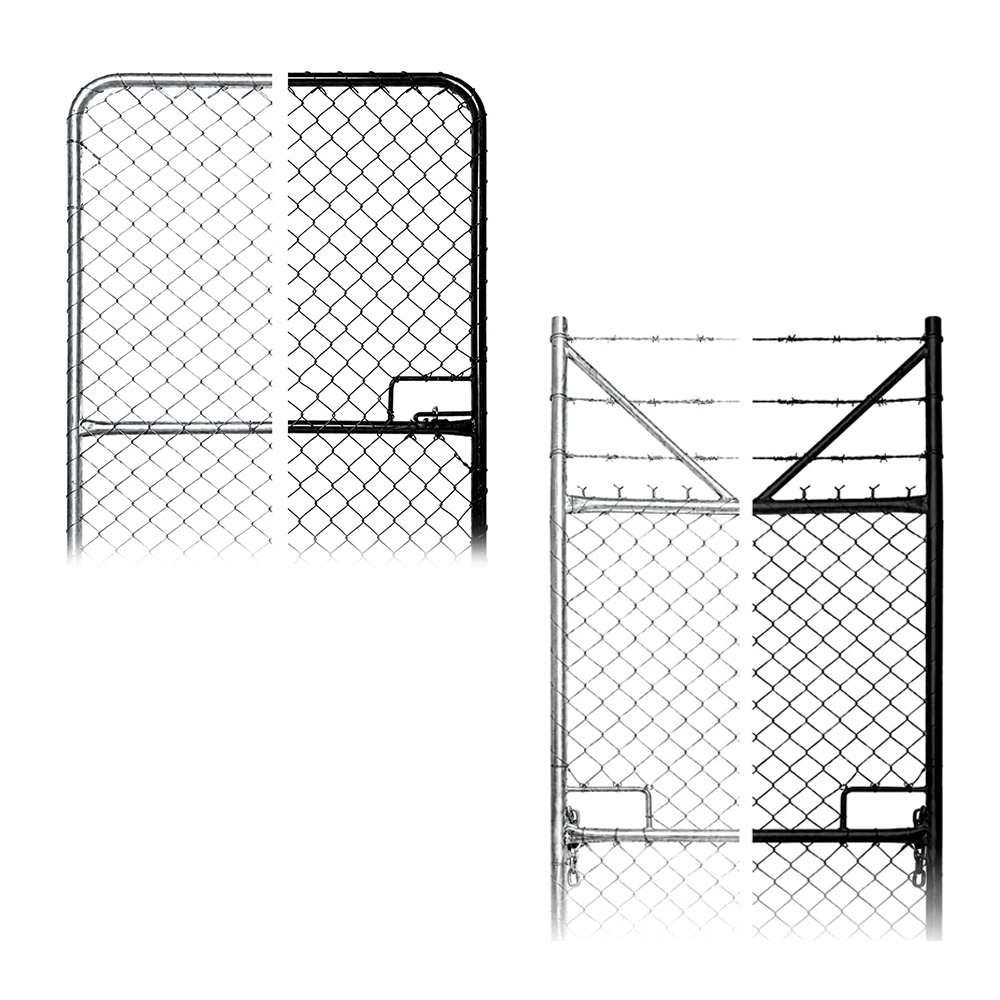
Single and double chainwire gates, with or without 3 barb, in galvanised or black. In stock or custom fabricated in house. Supplied from NSW and QLD.
Chain Mesh
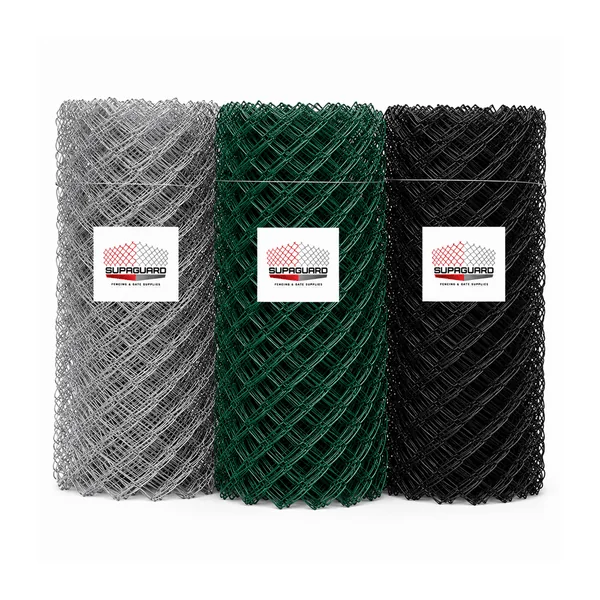
Chain link mesh in 25 to 60 mm apertures and 2.24 to 3.15 mm wire for security, temporary, tennis court and golf screen fencing. Galvanised, black or green PVC.
 Industrial
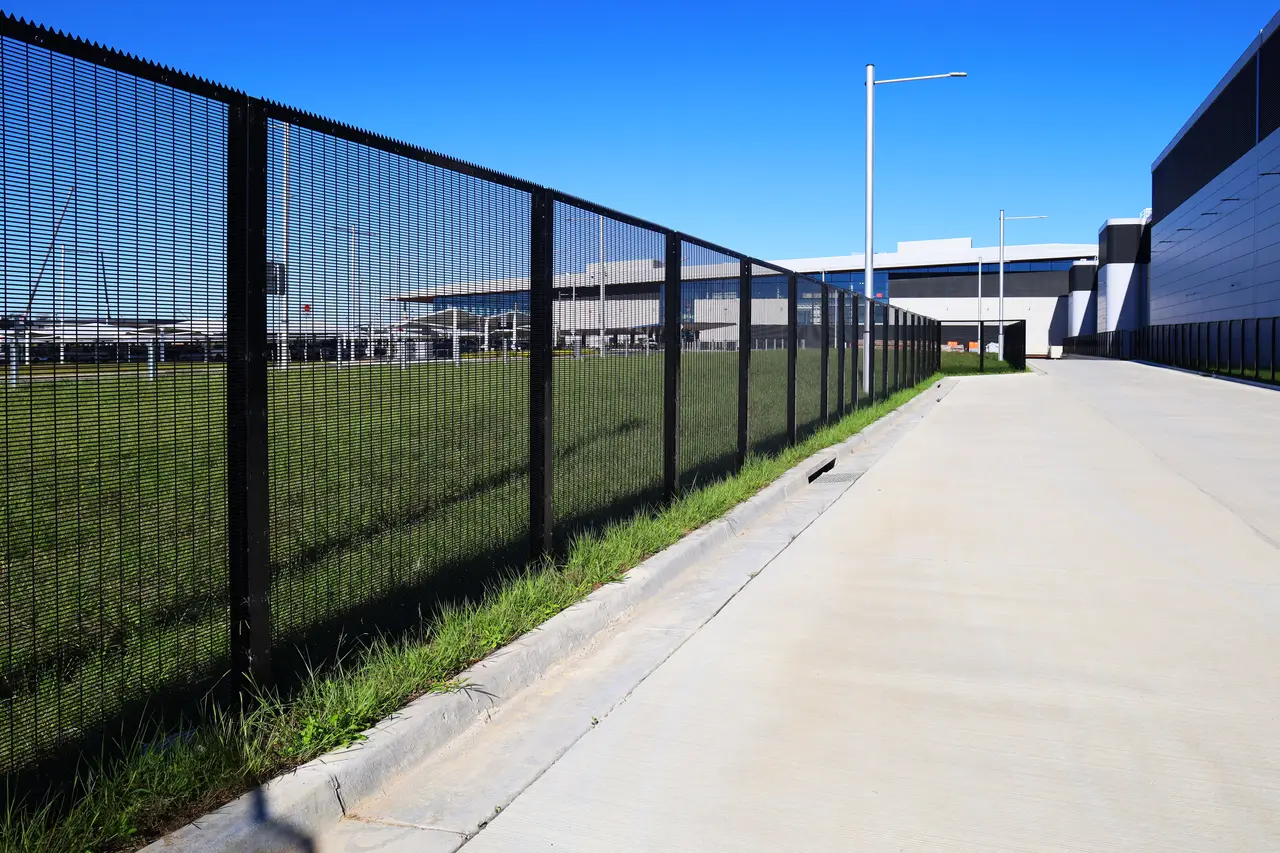
Anti-climb boundary and sliding gates for a logistics yard
Australia
Warehouse and container yard boundaries built from anti-climb mesh and spear-top steel, with razor topping on the exposed runs and sliding gates on the vehicle entries.
More from the blog.
 Chainwire Mesh Procurement
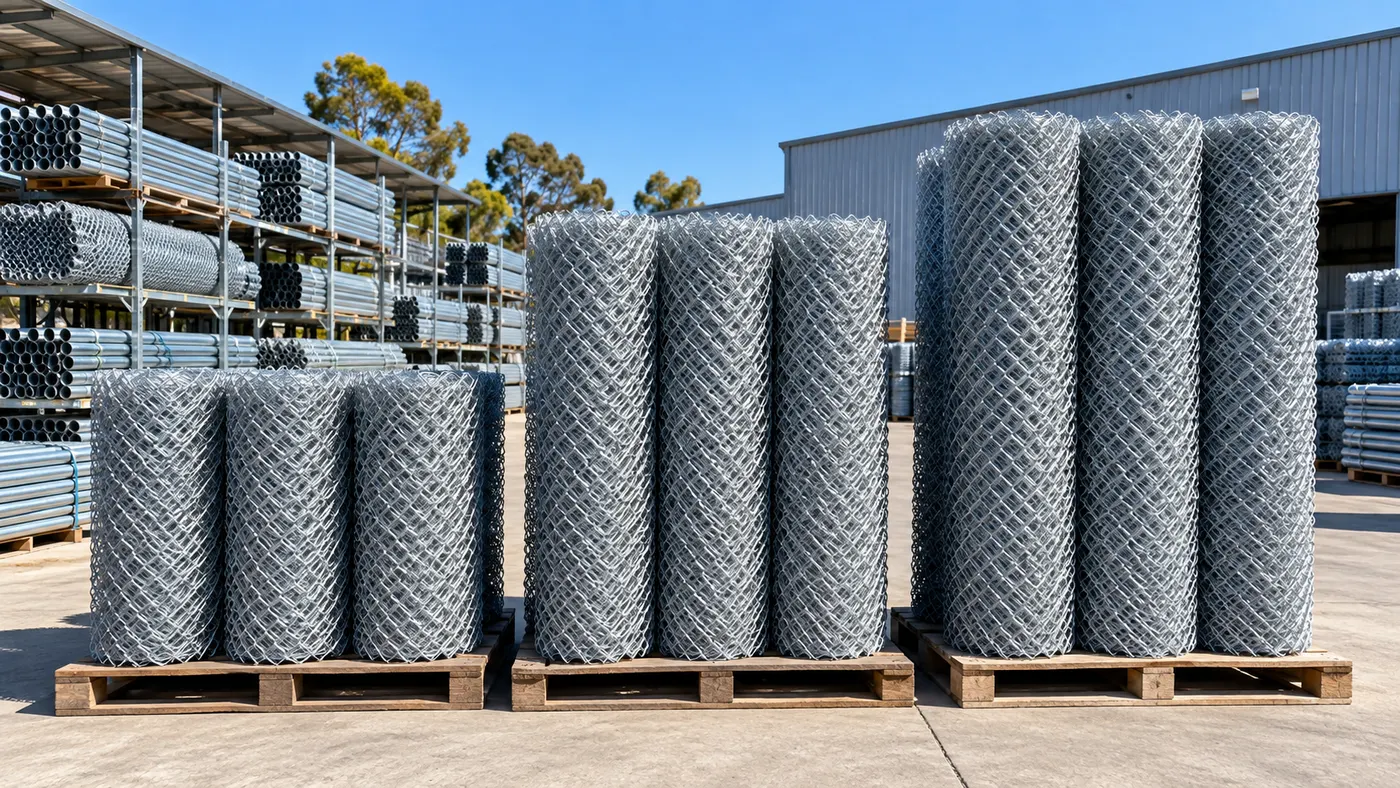
How to Choose Chainwire Mesh Roll Sizes for Large Projects
2 Nov 2026
Learn how to choose Chainwire Mesh Roll Sizes for large fencing projects based on fence length, height, mesh, wire diameter and site needs.
 Custom Security Gates
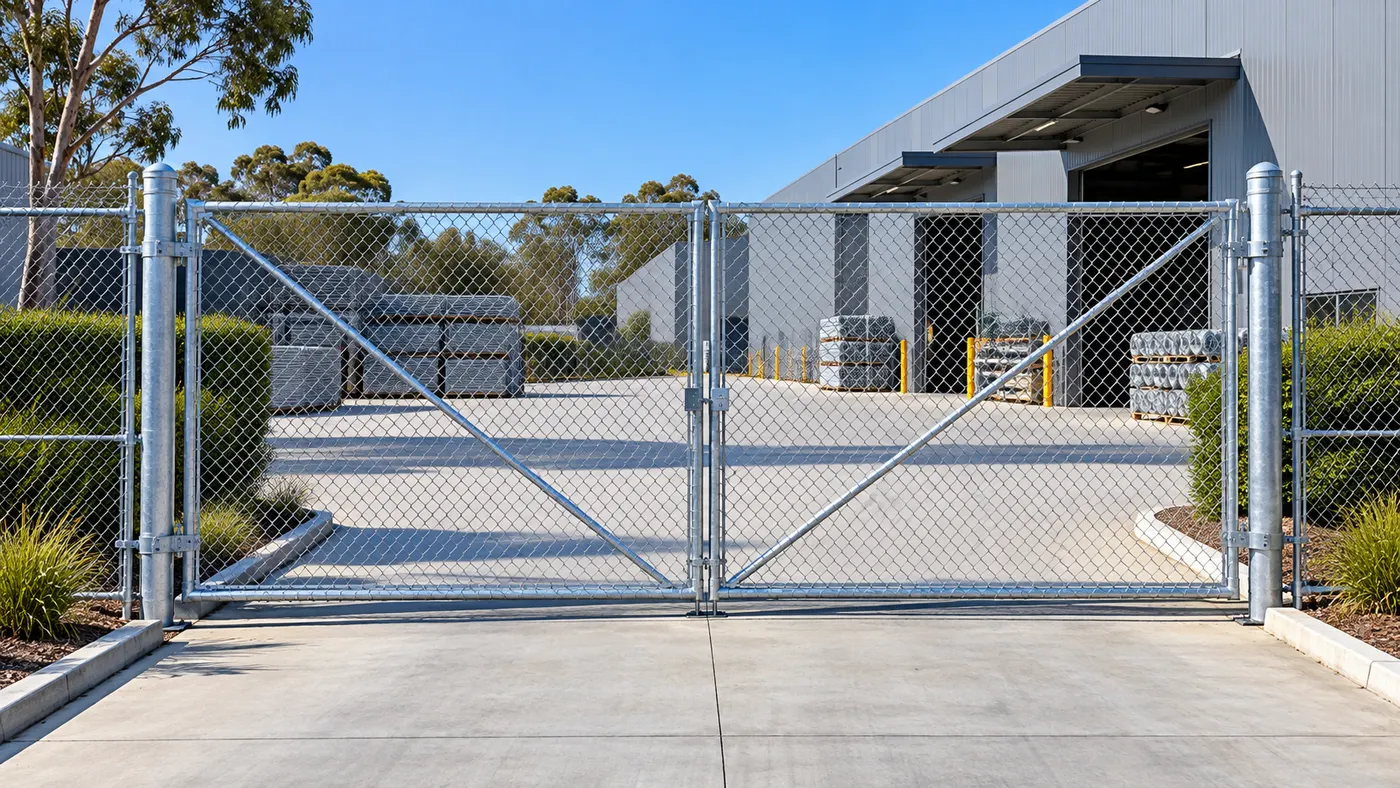
When Should Commercial Sites Order Custom Security Gates?
2 Nov 2026
Learn when custom security gates for commercial sites make sense for unusual openings, heavy traffic, access control and perimeter security.
 Depot Security
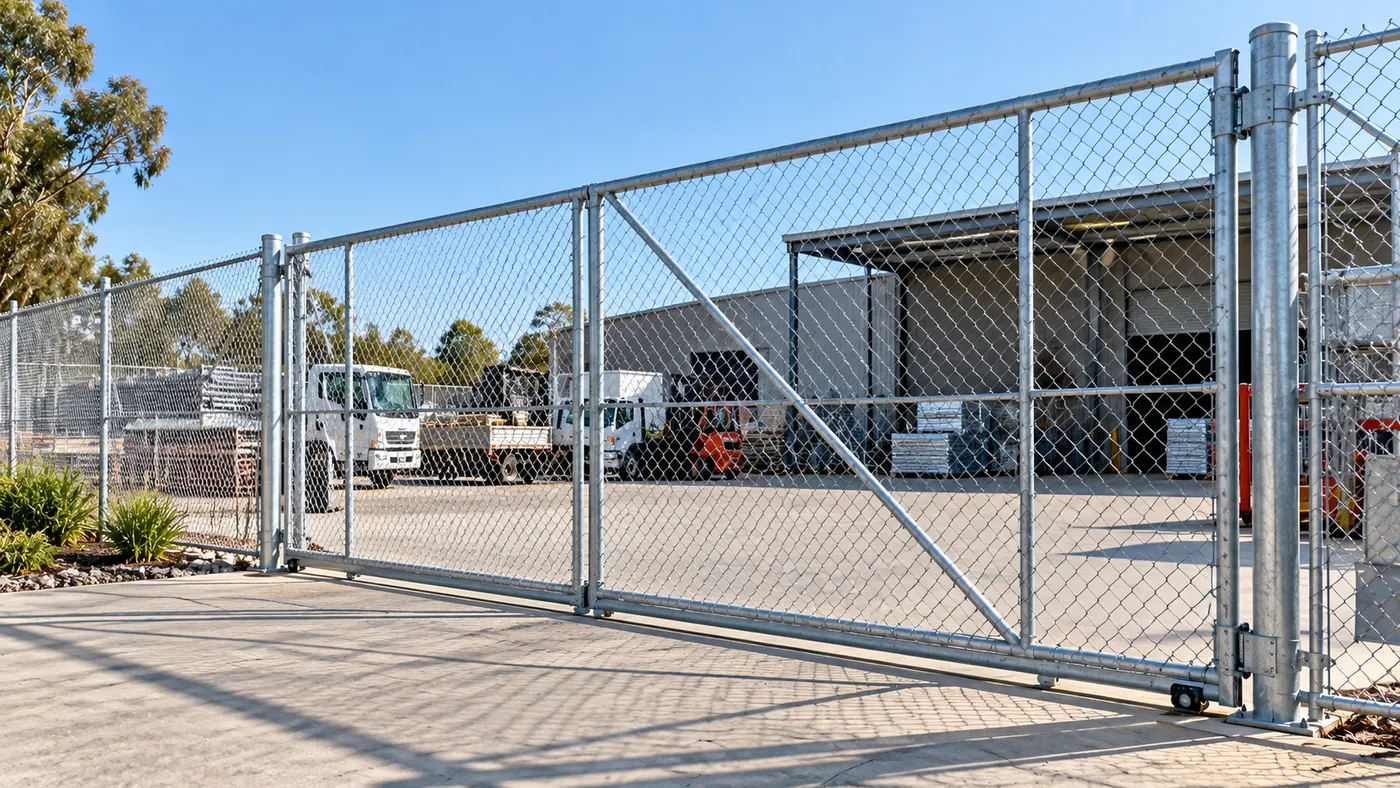
How Do You Choose Chainwire Fencing for Depot Security?
3 Oct 2026
Learn how to choose chainwire fencing for depot security, including mesh, height, gates, posts, fittings and access requirements.
Tell us about the fence.
One business day. That's how fast we come back with pricing once we have your quantity, finish and postcode.
Buying regularly? Apply for a credit account