
How Do You Choose Chainwire Fencing for Depot Security?
Learn how to choose chainwire fencing for depot security, including mesh, height, gates, posts, fittings and access requirements.
Introduction
Depots aren't ordinary commercial properties.
They may contain vehicles, machinery, tools, materials, fuel, stock or equipment—often across large outdoor areas that need to remain accessible to authorised staff while discouraging unwanted entry. That makes choosing chainwire fencing for depot security a balancing act between perimeter protection, visibility, access and practicality.
Supaguard Fencing manufactures chainlink security fencing products for Australian applications, including chain link mesh, gates, pipe and fittings. These components can be combined into fencing systems designed around different commercial and security requirements.
But simply putting chainwire around a depot isn't a security strategy.
You need to consider what you're protecting, where the vulnerable points are and how people and vehicles use the site every day.
TLDR - Quick Guide
When choosing chainwire fencing for depot security, assess the entire perimeter rather than selecting mesh alone.
Key considerations include:
- Security risk: What assets are stored inside, and what level of deterrence is required?
- Fence height: Higher fencing can make unauthorised access more difficult.
- Mesh specification: Consider aperture, wire diameter, coating and edge configuration.
- Framework: Posts, rails and other supports need to match the fence design.
- Gates: Vehicle and pedestrian access points should suit actual site traffic.
- Visibility: Chainwire allows sightlines through the perimeter, supporting passive surveillance.
- Ground conditions: Look for slopes, gaps and areas where the fence could be bypassed.
- Security toppings: Higher-risk sites may require additional measures where permitted and appropriate.
- Durability: Select materials and finishes for the site's environmental exposure.
- Maintenance: A security fence needs regular inspection to remain effective.
- The best depot fence isn't necessarily the tallest or heaviest option available.
It's the system that addresses the site's real security risks without making normal operations unnecessarily difficult.
Detailed Breakdown: Choosing Chainwire Fencing for Depot Security
1. Start With a Depot Security Risk Assessment
Before choosing wire diameter or fence height, identify what you're actually trying to protect.
A small equipment depot and a large industrial yard can have completely different security profiles.
Ask:
What assets are stored on site?
Are vehicles left overnight?
Are tools, machinery or valuable materials stored outdoors?
Does the depot contain restricted areas?
Where are the likely unauthorised entry points?
Is the site staffed overnight?
Are CCTV cameras installed?
How many vehicle entrances are required?
How many pedestrian entrances are required?
This information should guide your chainwire fencing for depot security specification.
For example, a low-risk storage yard may require a relatively straightforward commercial perimeter. A depot containing valuable vehicles, equipment or restricted materials may justify a more robust security-focused design.
The fence should follow the risk—not the other way around.
2. Choose the Right Chain Link Mesh
The mesh forms the main physical barrier, so its specification deserves more attention than "we need chainwire."
Supaguard's Chain Link Mesh range includes multiple combinations of aperture, wire diameter, height, coating and selvedge.
When selecting mesh, consider four main variables.
Wire Diameter
Thicker wire generally creates a heavier, more robust mesh when compared with an otherwise equivalent product.
Common chainwire configurations can use diameters such as 2.5mm and 3.15mm. The right choice depends on the security requirement, fence design and project specification.
For a depot where perimeter integrity is a priority, heavier mesh may be worth considering.
Mesh Aperture
The aperture is the diamond-shaped opening between the wires.
Smaller openings change the characteristics of the mesh and can be appropriate for particular security or containment requirements.
Don't select aperture based purely on appearance. Match it to the site's security objective and fencing specification.
Coating
Outdoor depot fencing spends its life exposed to the elements.
Galvanised chainwire provides corrosion protection, while PVC-coated options can provide an additional protective layer and a different appearance.
Environmental conditions should influence the choice.
Selvedge
Selvedge refers to how the top and bottom edges of the mesh are finished.
Depending on the product, chainwire may use knuckled or barbed configurations. The appropriate finish should reflect security requirements, accessibility and the overall fence design.
3. Get the Fence Height Right
Height is one of the most obvious security considerations.
A low chainwire fence can define a boundary effectively, but defining a boundary and securing a depot are not necessarily the same thing.
Higher fencing can increase the effort required to climb over the perimeter.
However, don't fall into the trap of thinking:
- Higher fence = automatically secure site.
A tall fence with an unsecured gate, large ground gap or poorly supported corner is still vulnerable.
When determining height, consider:
- Site risk level
- Adjacent land and structures
- Stored assets
- Climbing opportunities
- Gate height
- Local planning requirements
- Applicable standards
- Project specifications
- Additional security measures
The fence and gates should form a coherent perimeter rather than changing security level every few metres.
4. Pay Attention to the Framework
Mesh gets noticed. Framework does the heavy lifting.
Posts, rails and other structural components keep the chainwire positioned and tensioned around the perimeter.
Supaguard supplies Pipe suitable for chainlink fencing systems, with different nominal bore sizes and wall thicknesses available.
Different posts can also perform different jobs.
Line posts support the fence along straight runs.
Corner posts deal with changes in direction and mesh tension.
End posts terminate fence runs.
Gate posts support moving gates and can face significantly different loads from ordinary line posts.
This matters when designing chainwire fencing for depot security because commercial perimeters can involve long fence runs, tall mesh and large vehicle gates.
Using heavier mesh while under-specifying the supporting framework isn't much of an upgrade.
5. Treat Gates as Part of the Security Perimeter
A fence is only as effective as its access points.
Depots frequently require multiple types of access, including:
- Employee pedestrian access
- Passenger vehicles
- Delivery vans
- Forklifts
- Maintenance vehicles
- Heavy trucks
- Emergency access
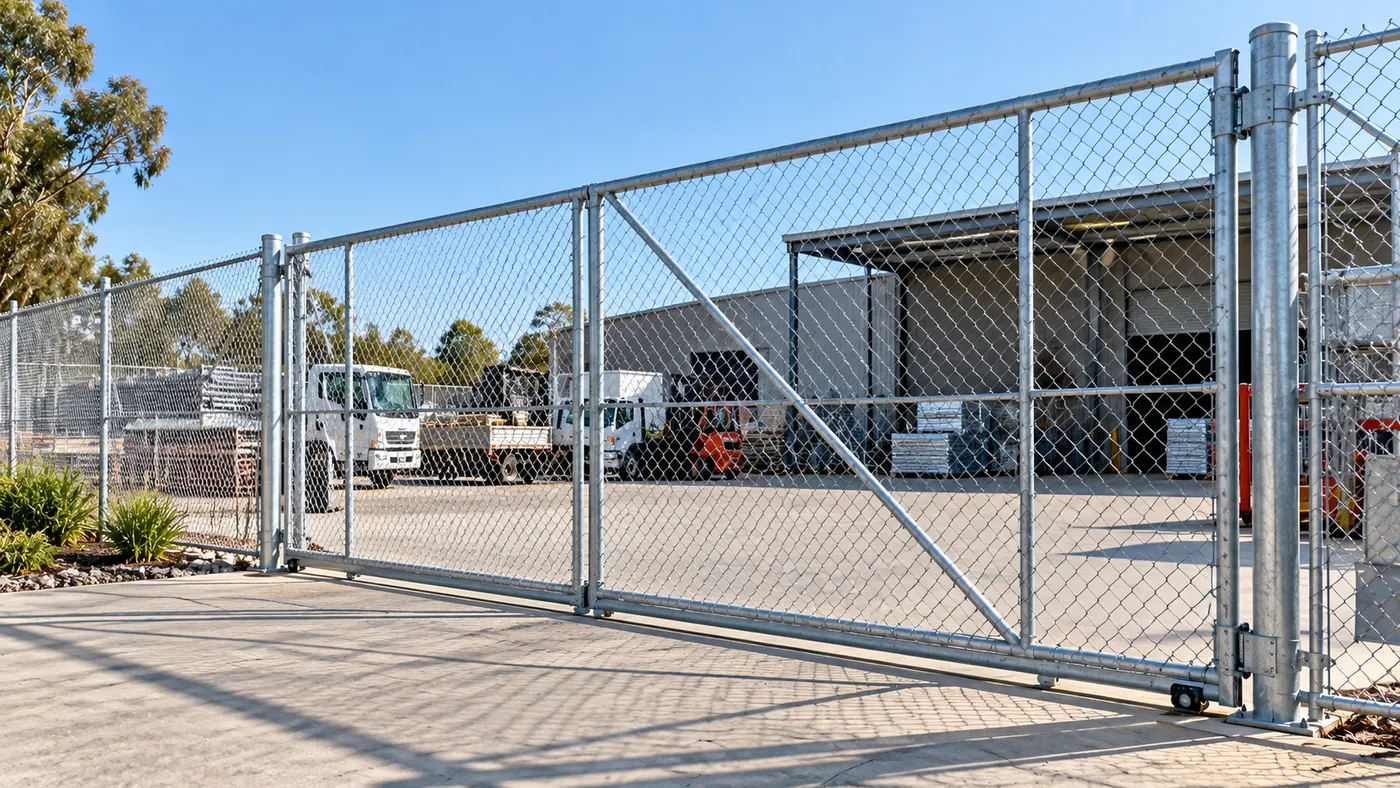
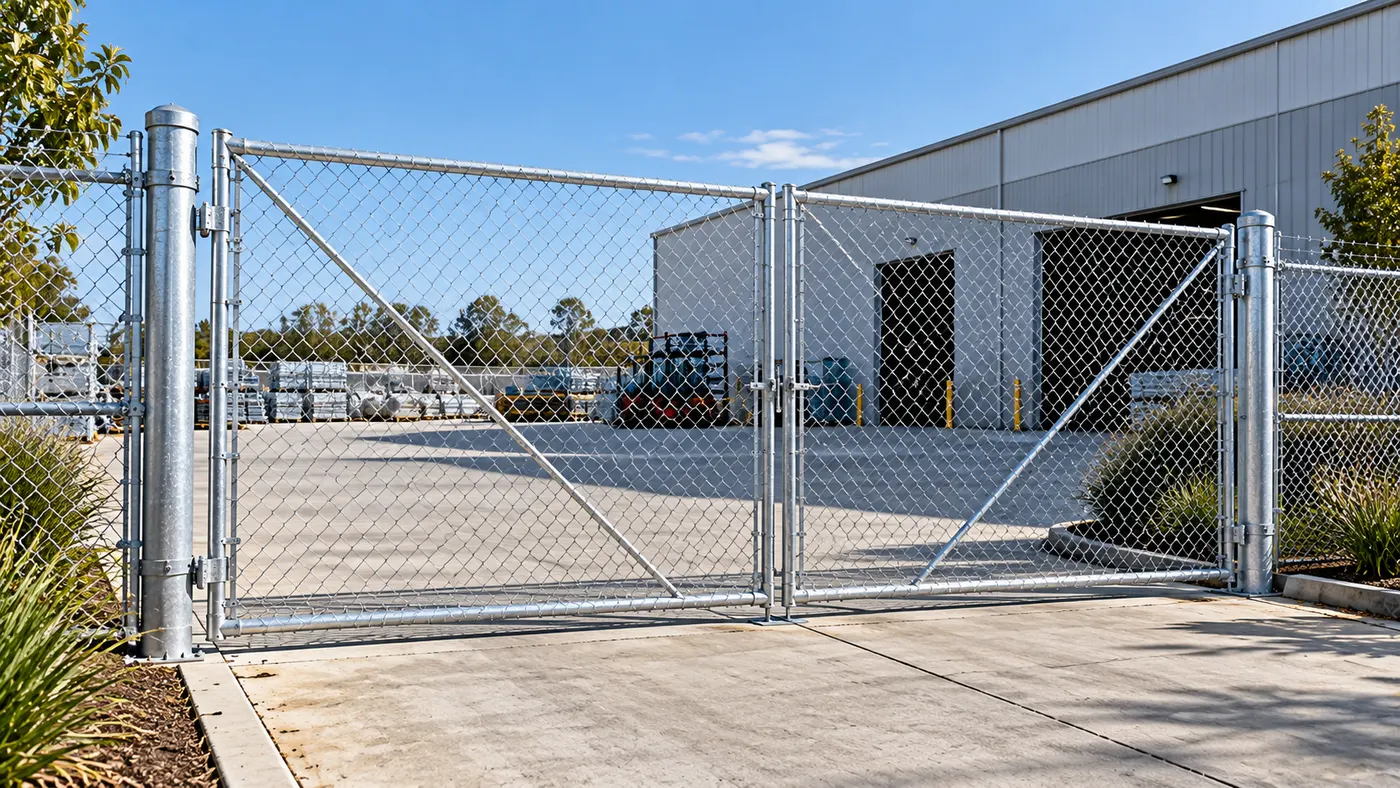
Supaguard's Gates range includes single and double chainwire gate configurations in various dimensions.
The right gate should account for more than vehicle width.
Consider:
- Required clear opening
- Vehicle turning path
- Gate swing area
- Frequency of use
- Gate height
- Locking requirements
- Supporting posts
- Emergency access
- Interaction with pedestrians
For wide commercial entrances, double gates can provide a practical way to create larger openings.
Whatever configuration you choose, don't create a strong perimeter and then make the entrance the easiest place to defeat it.
6. Use the Right Fittings
Small components can have a big job.
Supaguard's Fittings range includes components used to connect and support chainlink fencing systems, such as clamps, connectors, hinges, caps and plates.
For depot fencing, fittings should be selected to match:
- Pipe dimensions
- Fence configuration
- Gate design
- Rail arrangement
- Corner construction
- Site conditions
- Compatibility matters.
Improvising connections may save a little time during installation but can compromise the consistency and performance of the finished system.
Security fencing should look and behave like one integrated system—not a collection of parts that happened to fit together.
7. Consider Visibility as a Security Feature
One major advantage of chainwire is that it creates a physical barrier without completely blocking sightlines.
For depot environments, that can be valuable.
Clear visibility may help:
- Security staff observe activity.
- CCTV systems maintain views across the site.
- Employees notice unusual activity.
- Drivers see approaching pedestrians or vehicles.
- Reduce hidden spaces immediately behind solid fencing.
- That doesn't mean visibility alone creates security.
Instead, chainwire fencing for depot security can form one layer in a broader strategy incorporating lighting, CCTV, controlled access, alarms and operational procedures.
Physical fencing and electronic security should complement each other.
8. Look for Climbing Opportunities Around the Fence
You can install an impressive fence and accidentally leave a ladder beside it.
Not literally—although that happens too.
When assessing a depot perimeter, look for nearby objects that could make climbing easier:
- Storage containers
- Pallets
- Bins
- Parked vehicles
- Trees
- Utility structures
- Buildings
- Stacked materials
- Temporary equipment
- Security isn't only about the fence specification.
- It's about the environment immediately around it.
Maintaining a clear area near higher-risk sections of the perimeter can make it harder to use surrounding objects to bypass the fence.
9. Consider Higher-Security Options Where Needed
Not every section of a depot necessarily carries the same risk.
A rear boundary beside an isolated area may warrant different treatment from a highly visible frontage. Likewise, a compound containing valuable equipment may need additional protection inside the main perimeter.
This is where layered security becomes useful.
For sites with elevated security requirements, Supaguard's guide to High Security Fencing Products provides additional considerations for restricted areas.
The important point is proportionality.
Don't turn every depot into a fortress unnecessarily—but don't rely on general boundary fencing where the risk clearly demands more.
10. Match the Fence to Commercial Operations
Security measures that constantly interfere with legitimate operations tend to create problems.
Imagine a depot where every truck struggles through an undersized gate. Eventually, gates may be left open for convenience.
That's not a gate problem anymore.
It's a security problem caused by poor planning.
Effective chainwire fencing for depot security should support normal site operations while maintaining controlled access.
That means considering:
- Delivery schedules
- Staff movements
- Shift changes
- Vehicle queuing
- Visitor access
- Emergency access
- Maintenance operations
- After-hours procedures
For a broader look at selecting products for business premises, see Supaguard's guide to Commercial Security Fencing Products.
Depot Security Fencing Checklist
Before finalising your fence specification, work through this checklist.
Perimeter
Is the entire boundary covered?
Are there changes in ground level?
Could someone pass underneath the fence?
Are nearby structures creating climbing opportunities?
Are vulnerable areas visible from occupied parts of the site?
Mesh
What wire diameter is required?
What aperture suits the application?
What coating is appropriate?
What fence height is required?
Which selvedge configuration is suitable?
Framework
Are line posts correctly specified?
Are terminal and corner posts suitable?
Are rails required?
Are gate posts appropriately sized?
Do all fittings match the framework?
Access
How many gates are necessary?
Are pedestrian and vehicle movements separated where appropriate?
Can the largest regular vehicle enter comfortably?
Is there adequate gate swing clearance?
How will access be controlled?
Wider Security
Is lighting adequate?
Does CCTV have clear sightlines?
Are valuable assets stored away from the perimeter?
Are high-risk zones separately protected?
Is the fence inspected regularly?
This approach treats fencing as part of depot security rather than simply a property boundary.
Maintenance Matters Too
Even correctly specified chainwire fencing for depot security needs ongoing attention.
Commercial environments can be hard on fences. Vehicle contact, weather, ground movement and everyday operations can gradually affect components.
Periodic inspections should look for:
- Damaged mesh
- Loose wire
- Bent posts
- Loose fittings
- Gate alignment problems
- Corrosion
- Ground gaps
- Damaged locks or hardware
- Vegetation interfering with the fence
- Objects positioned too close to the perimeter
Small problems are generally easier to deal with before they become large openings in the security system.
Key Takeaways
Choosing chainwire fencing for depot security means looking beyond the mesh.
Start with the site's actual risks and operations. Then select the appropriate mesh specification, height, posts, rails, gates and fittings to create a coherent perimeter.
Remember these priorities:
- Match security to risk.
- Specify the entire fencing system.
- Pay particular attention to gates and access points.
- Maintain visibility where it supports surveillance.
- Remove obvious climbing opportunities.
- Consider higher-security measures for vulnerable areas.
- Design around real vehicle and pedestrian movements.
- Inspect and maintain the perimeter after installation.
- A good depot fence shouldn't simply mark where the property ends.
It should help control access, protect valuable assets and work alongside the site's broader security measures without getting in the way of everyday operations.
Need help selecting suitable components for your depot perimeter? Contact Supaguard Fencing to discuss your commercial fencing requirements.
FAQs
Is chainwire fencing suitable for depot security?
Yes, chainwire fencing for depot security can provide a durable physical perimeter while maintaining visibility through the fence. The appropriate level of protection depends on mesh specification, height, framework, gates and the site's overall security design. Higher-risk depots may require additional security measures alongside the chainwire perimeter.
What height should chainwire fencing be around a depot?
There is no single fence height appropriate for every depot because security risks and site requirements vary. The required height should account for stored assets, adjacent land, climbing risks, gate height, project specifications and applicable requirements. Higher fencing may increase deterrence, but height should be considered alongside the strength and integrity of the complete system.
What chainwire mesh is best for a commercial depot?
The best mesh depends on the required security level, environment and project specification. Factors to compare include wire diameter, aperture, coating, height and selvedge rather than selecting chainwire based on one measurement alone. More demanding depot applications may justify a heavier mesh specification as part of a properly designed fencing system.
What type of gate should a depot use?
The gate should match the people, vehicles and equipment that regularly need access to the depot. Pedestrian entrances may use smaller single gates, while truck and equipment entrances can require wider single or double configurations. Gate posts, hardware, clear opening, swing area and access-control requirements should all be considered before selecting the gate.
How can you improve chainwire fencing for depot security?
Start by ensuring the mesh, posts, gates and fittings are correctly specified and maintained across the entire perimeter. Security can then be strengthened through appropriate lighting, CCTV, access control, clear perimeter zones and additional protection for higher-risk areas. A layered approach is generally more effective than relying on the fence alone.
Products and a project to match.
Security Panels
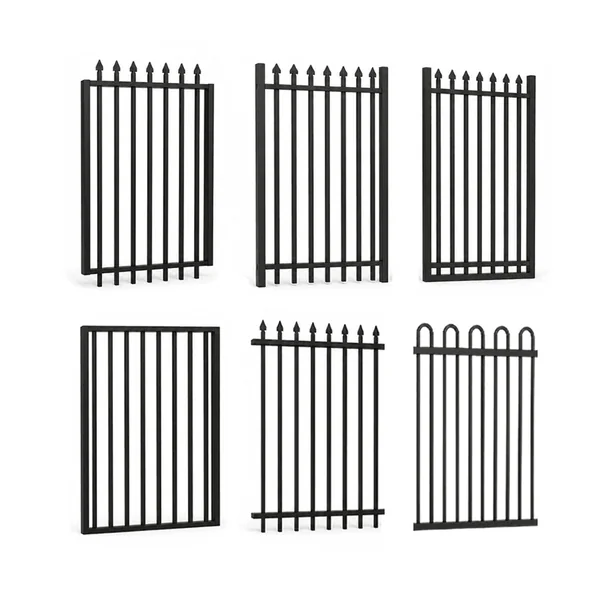
Security fence panels to AS1450: flat top and spear top panels and gates in galvanised steel, plus converter kits and picket extensions. Made in house.
Security Posts
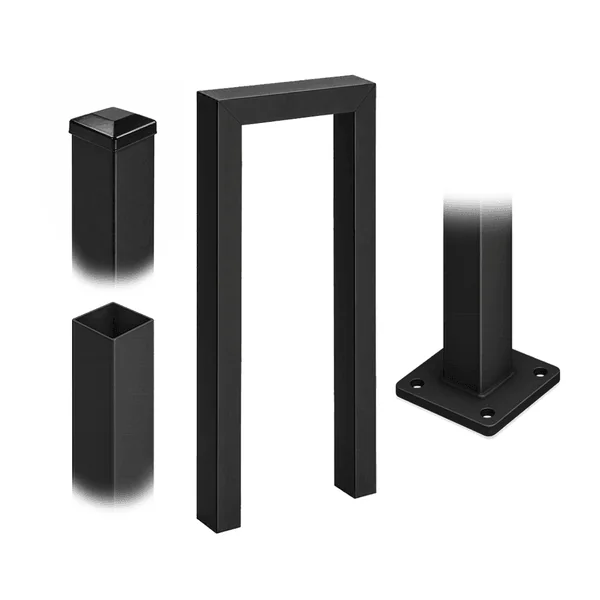
Heavy duty steel security posts, flange posts and tunnel posts for flat top and spear top fencing. Powder coated black or green. NSW and QLD supply.
Chain Mesh
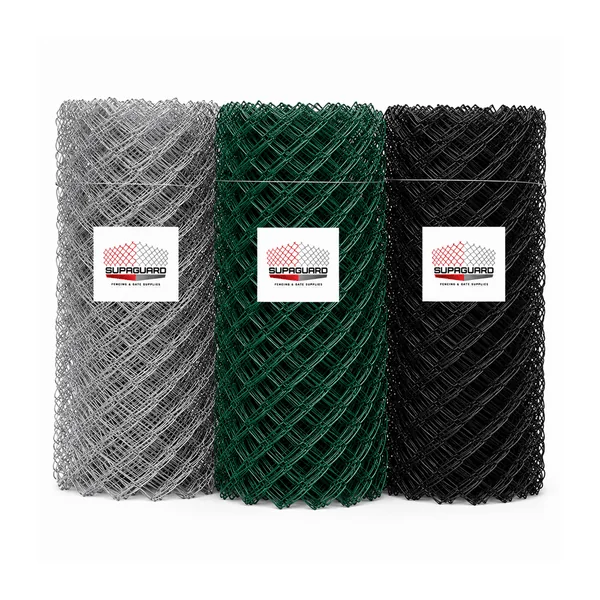
Chain link mesh in 25 to 60 mm apertures and 2.24 to 3.15 mm wire for security, temporary, tennis court and golf screen fencing. Galvanised, black or green PVC.
 Industrial
Anti-climb boundary and sliding gates for a logistics yard
Australia
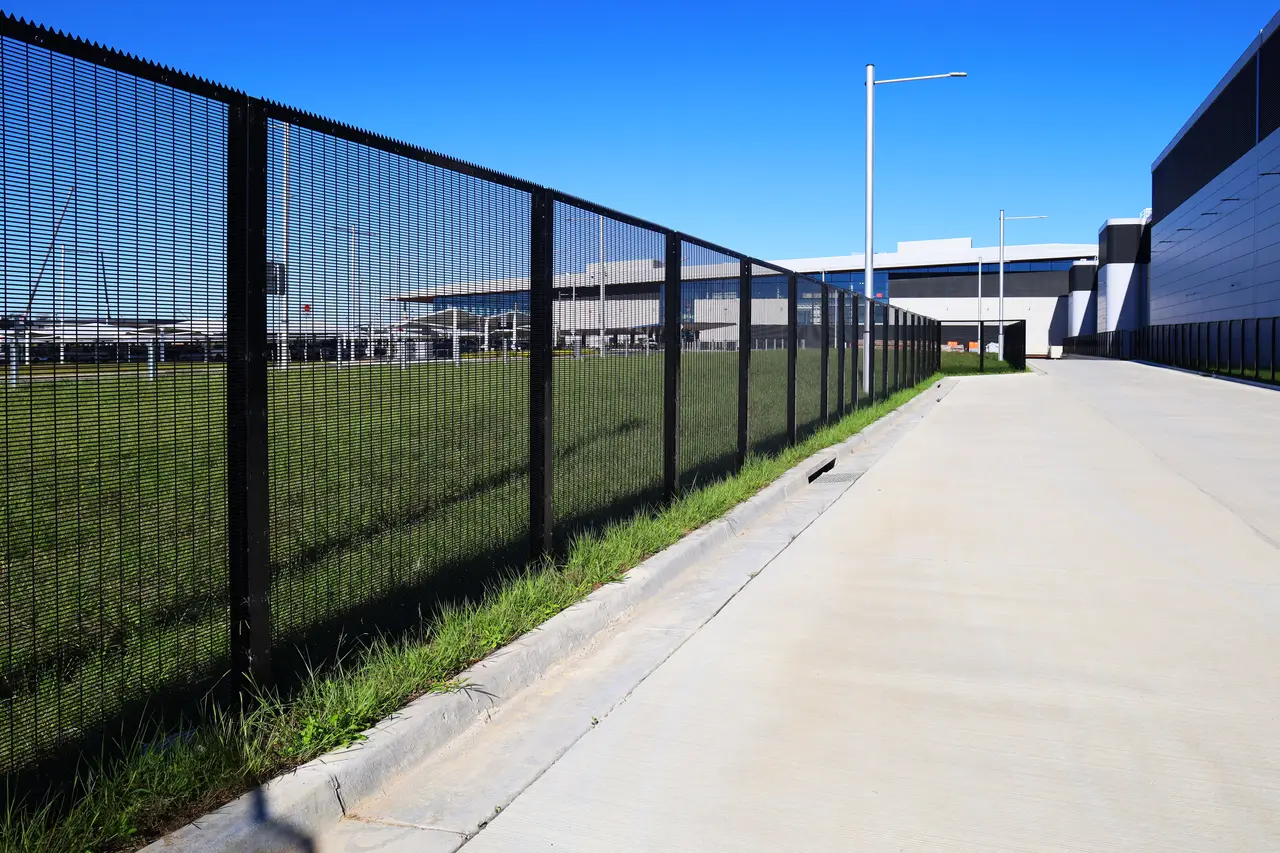
Warehouse and container yard boundaries built from anti-climb mesh and spear-top steel, with razor topping on the exposed runs and sliding gates on the vehicle entries.
More from the blog.
 Summer Weather Preparation
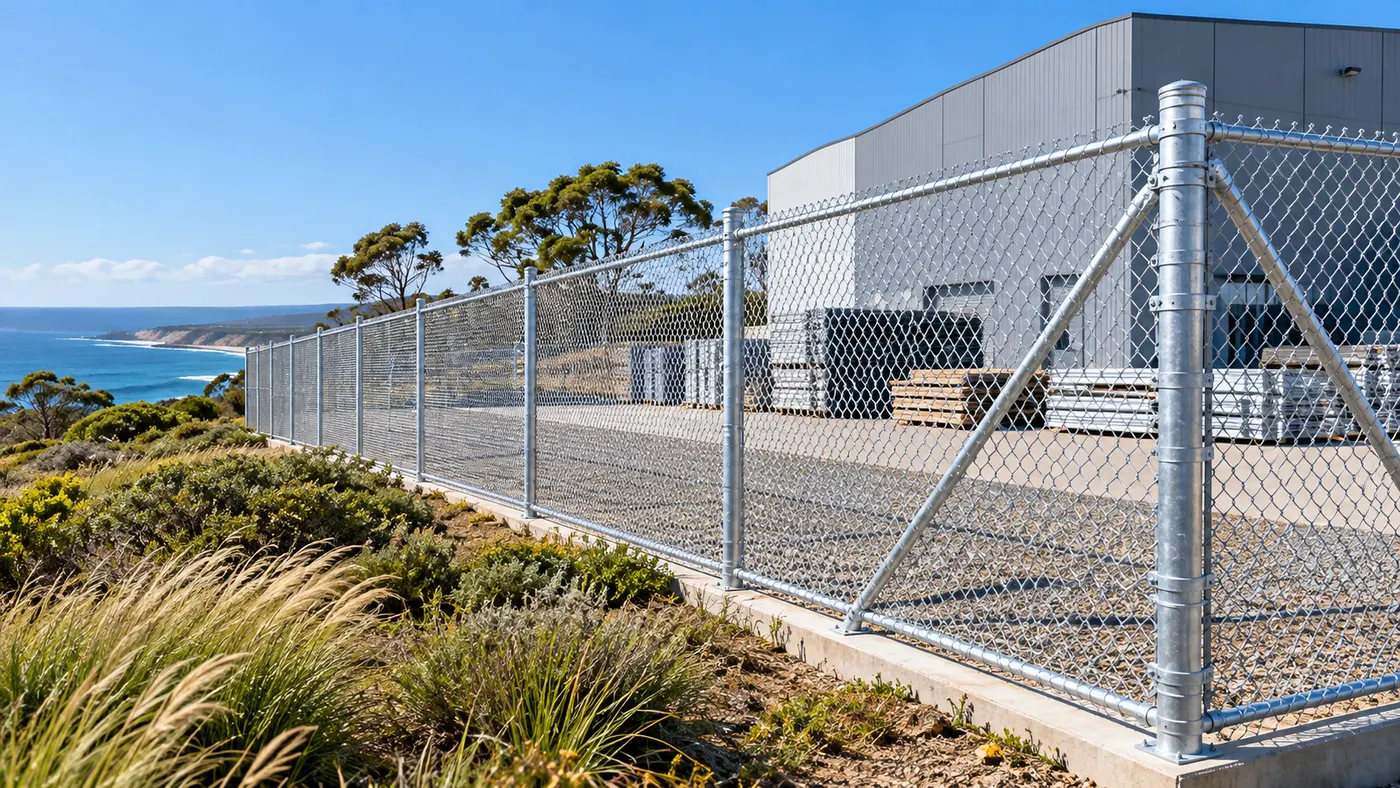
How to Choose Chainwire Fencing for High-Wind Areas
2 Nov 2026
Learn how to choose chainwire fencing for high-wind areas, including mesh, posts, pipe, fittings, foundations, height and wind exposure.
 Substation Security
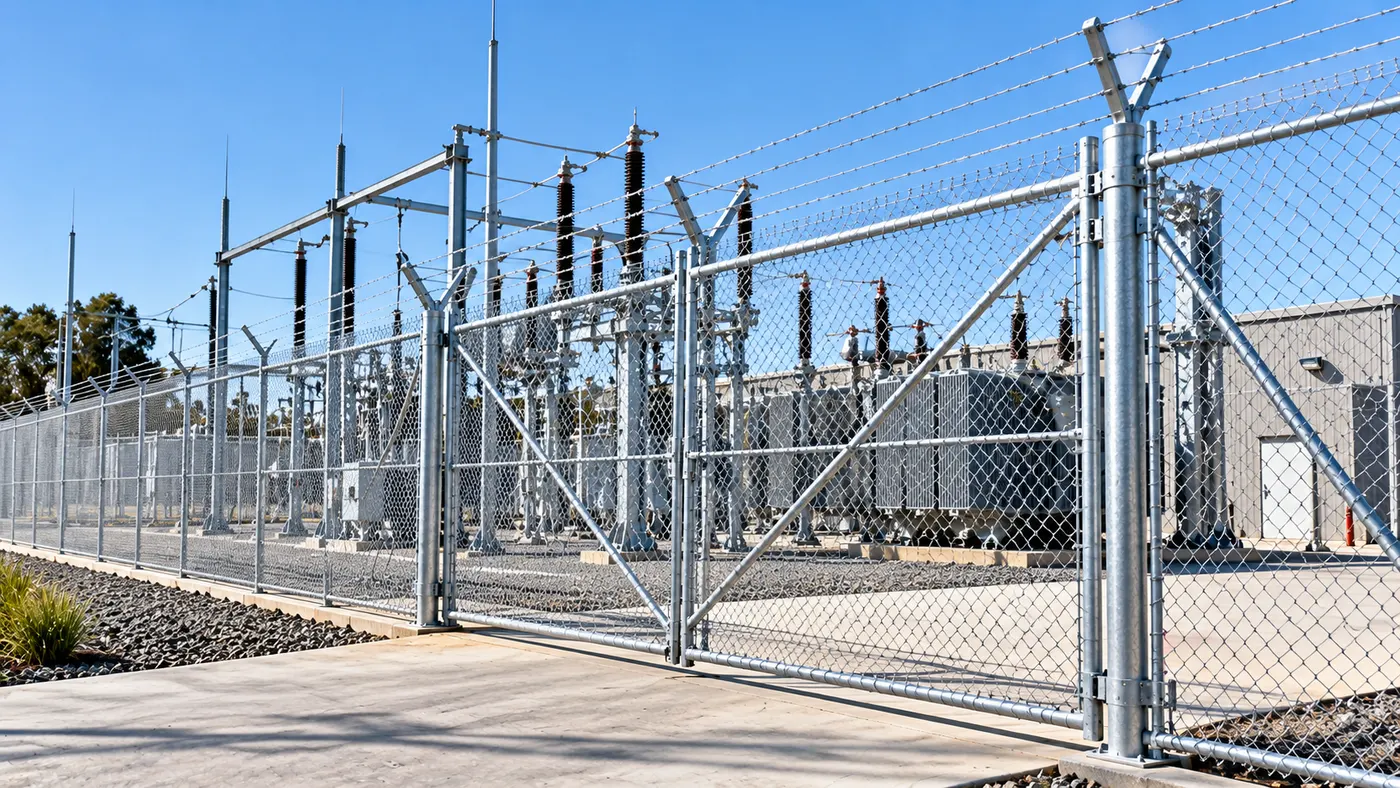
What Chainwire Fencing Products Are Used for Substation Security?
3 Oct 2026
Explore chainwire fencing products used for substation security, including mesh, posts, gates, wire, fittings and security accessories.
 Chainwire Gates
What Size Chainwire Gate Do You Need for a Commercial Site?
3 Oct 2026
Learn how to choose a chainwire gate size for a commercial site based on vehicles, access needs, opening width, height and security.
Tell us about the fence.
One business day. That's how fast we come back with pricing once we have your quantity, finish and postcode.
Buying regularly? Apply for a credit account