
What Chainwire Fencing Products Are Used for Substation Security?
Explore chainwire fencing products used for substation security, including mesh, posts, gates, wire, fittings and security accessories.
Introduction
Electrical substations aren't places where perimeter security should be treated as an afterthought.
A substation fence may need to discourage unauthorised access, clearly establish a restricted area and support controlled entry for authorised personnel and vehicles. At the same time, every project can have its own engineering, electrical safety and security requirements.
That makes choosing the right chainwire fencing products a system-design decision rather than a matter of ordering mesh and posts.
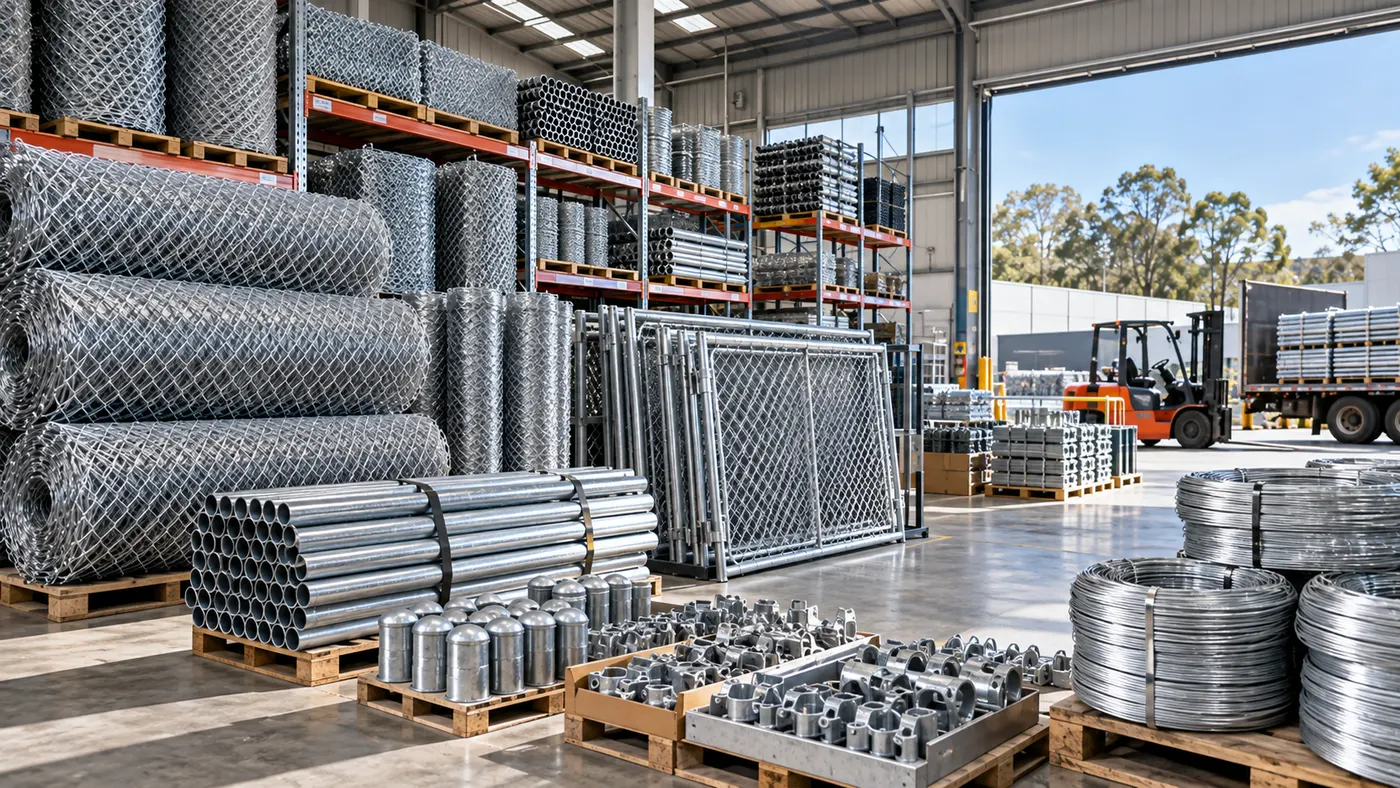
Supaguard Fencing manufactures chainlink security fencing products for Australian applications, including chain link mesh, gates, pipe, wire, fittings and fencing accessories. These components can form part of a substation perimeter where chainwire fencing is specified by the project's designers and relevant requirements.
Here's a closer look at the chainwire fencing products that may be used and what needs to be considered when specifying them.
TLDR - Quick Guide
A substation chainwire fencing system can include:
- Chain link mesh to create the main perimeter barrier
- Posts to support and tension the fence
- Rails to strengthen and stabilise the framework
- Line and tie wire to support and secure the mesh
- Pedestrian gates for authorised personnel
- Vehicle gates for maintenance and equipment access
- Gate hardware for reliable operation and controlled entry
- Fittings to connect posts, rails and gates
- Security toppings where specified and permitted
- Installation accessories required to complete the system
The correct products, dimensions and configuration should always follow the project's engineering specifications, electrical safety requirements, applicable standards and network-owner requirements.
For substations, don't design the fence by guesswork.
Detailed Breakdown: Chainwire Fencing Products for Substation Security
1. Chain Link Mesh Forms the Main Barrier
The most visible component is the mesh.
Supaguard's Chain Link Mesh range includes different combinations of mesh aperture, wire diameter, height, coating and selvedge.
These variables matter because "chainwire mesh" isn't a complete specification.
Wire Diameter
Supaguard's chainlink range includes common wire diameters such as 2.5mm and 3.15mm across various configurations.
Wire diameter affects the physical characteristics and weight of the mesh. A heavier-duty security specification may therefore call for a different wire diameter from a basic boundary fence.
However, thicker wire shouldn't be selected in isolation.
The complete specification matters.
Mesh Aperture
The aperture is the diamond-shaped opening in the chainwire.
Different aperture sizes are available, and the required configuration should follow the project's security and technical requirements.
Coating
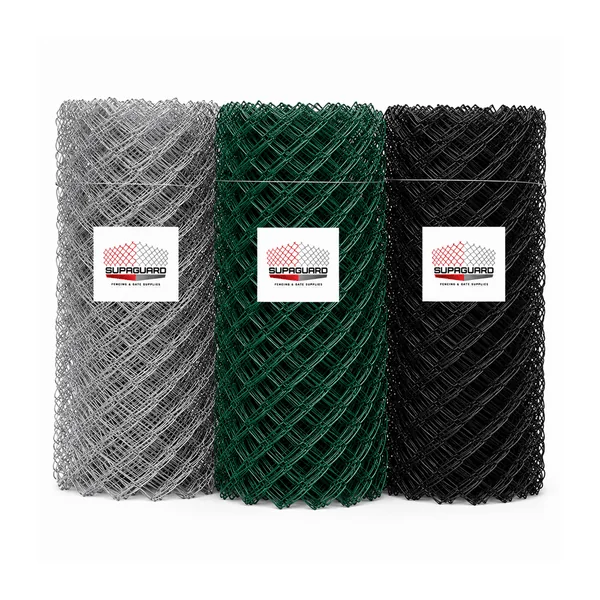
Supaguard offers heavily galvanised mesh as well as PVC-coated products in black and green.
Coating selection should account for the environment, durability requirements and project specification.
Selvedge
The top and bottom edges of chainwire can have different finishes.
Supaguard's mesh range includes knuckled and barbed edge configurations depending on the product. The appropriate arrangement should be determined by the project's security and safety requirements.
2. Posts Support the Security Perimeter
Mesh without adequate framework isn't much of a perimeter.
Posts provide vertical support and allow the chainwire to be properly positioned and tensioned.
Supaguard's Pipe range includes different nominal bore sizes and wall thicknesses for chainlink fencing applications.
A substation perimeter may involve several types of posts.
Line Posts
Line posts provide intermediate support along straight sections.
Corner Posts
Corners experience forces from fence runs changing direction and need to accommodate mesh tension.
End Posts
End posts terminate a run and help resist the tension within the fence.
Gate Posts
Gate posts support moving gate leaves and therefore have different demands from ordinary line posts.
The correct pipe and footing design should follow the project's structural requirements.
Simply using the same post everywhere because it's convenient isn't necessarily appropriate.
3. Rails Help Create a Complete Framework
Horizontal rails can form another important part of the fence framework.
Depending on the design, rails can support and stabilise the chainwire between posts and help maintain the intended fence geometry.
The required pipe dimensions will depend on factors including:
- Fence height
- Post spacing
- Mesh specification
- Site conditions
- Security requirements
- Structural design
- Project documentation
- Substation fencing can also be exposed to site-specific environmental conditions.
Wind, terrain and soil conditions may influence structural requirements, which is why the final framework needs to follow the project's engineering specification rather than a generic rule of thumb.
4. Gates Control Access to the Substation
A secure perimeter still needs entrances.
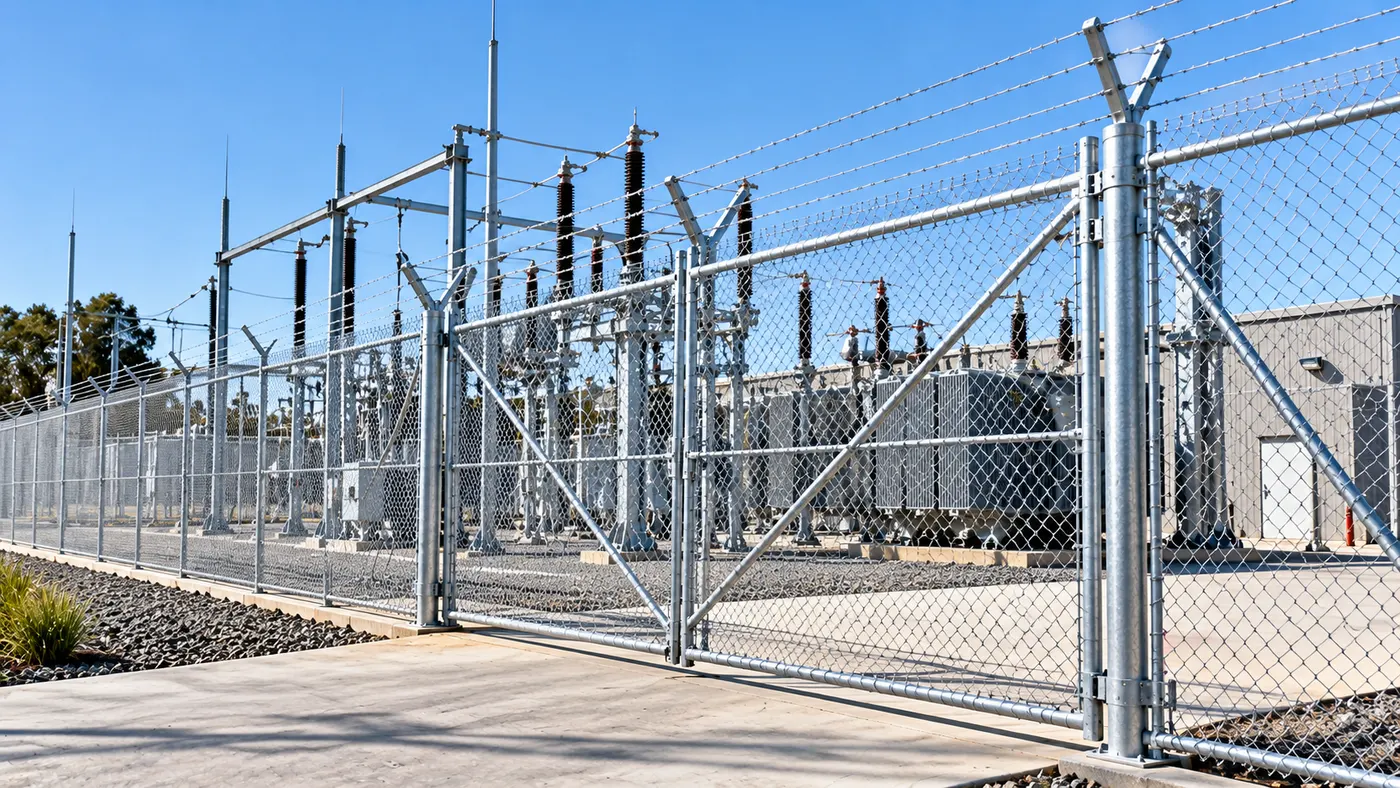
Substations may require gates for:
- Personnel
- Maintenance teams
- Service vehicles
- Equipment deliveries
- Emergency access
- Large maintenance vehicles
Supaguard's Gates range includes single and double chainwire gate configurations across multiple widths and heights.
Supaguard specifies that its standard chainwire gates are wired using 50mm × 2.5mm chain mesh.
An important measurement detail is that the nominated gate width represents the opening size, while the actual frame is manufactured 30mm smaller.
That matters when positioning gate posts.
Pedestrian Gates
Smaller single gates may be suitable where controlled personnel access is required, subject to the project's specification.
Vehicle Gates
Vehicle entrances require more planning.
Consider:
- Vehicle width
- Turning requirements
- Clear opening
- Gate swing
- Available space
- Frequency of use
- Locking arrangements
- Gate posts
- Emergency requirements
- Wider openings may use double gates to divide the opening between two leaves.
Whatever configuration is chosen, the gate should not become the weak point in an otherwise carefully designed security perimeter.
5. Wire Is a Small but Essential Part of the System
Several types of Wire can form part of a chainwire fencing system.
Supaguard's range includes:
- Line wire
- Tie wire
- Helicoil
- Line Wire
Line wire can help support and tension chainwire mesh as part of the fence configuration.
Tie Wire
Tie wire is used to attach and secure fencing components.
Matching Finishes
Supaguard offers wire products in galvanised, black and green finishes depending on the product.
Where PVC-coated mesh is specified, matching coated wire can help provide a more consistent finished system.
The wire might be one of the cheapest-looking items on the materials list, but a chainwire fence doesn't get very far without it.
6. Fittings Connect the Components
Every post, rail and gate needs to connect somehow.
Supaguard's Fittings range includes products used across chainlink fencing systems, such as:
- Gate hinges
- Rail clamps
- Post clamps
- Connectors
- Adjustable corners
- Pipe straps
- Post caps
- Base plates
- Correct sizing is important.
Fittings should match the relevant pipe dimensions, gate frame and overall fence configuration.
For substation security, the goal is a consistent system in which every component performs its intended job.
An impressive mesh specification can't compensate for poorly matched hardware.
7. Security Toppings May Form Part of the Design
Some higher-security fence designs use additional measures above the main chainwire barrier.
Supaguard's Fencing Accessories range includes barbed wire and products used during chainwire installation.
Where a security topping is specified, the design needs to account for:
- Fence height
- Post configuration
- Local requirements
- Site safety
- Security risk
- Project specification
- Applicable standards
- Security toppings should never simply be added because "more looks safer."
- For restricted infrastructure, they should form part of the designed security system.
For a broader discussion of options for restricted sites, see Supaguard's guide to High Security Fencing Products.
8. Electrical Safety Changes the Conversation
Substation fencing isn't simply industrial fencing around electrical equipment.
Electrical infrastructure introduces additional hazards and technical requirements that can affect fence design.
Depending on the installation, engineering considerations may include:
- Earthing and bonding
- Electrical clearances
- Touch and step potential
- Conductive fencing components
- Gate bonding
- Proximity to energised equipment
- Access controls
- Warning signage
These aren't details a fencing supplier, installer or property owner should improvise.
Where conductive chainwire fencing is used around electrical infrastructure, the fence design and installation should follow the requirements established by the responsible electrical engineers, network operator and applicable standards.
That distinction matters:
Suppliers provide fencing products. Qualified project professionals determine how those products can safely be used around electrical infrastructure.
9. Standards and Project Specifications Come First
Security fencing products shouldn't be selected from a generic checklist and assumed to suit every substation.
Australian projects can involve multiple standards, specifications and regulatory requirements depending on the application and location.
Supaguard states that its chainlink security fencing products comply with relevant Australian manufacturing requirements, but the complete installed fence must still meet the requirements applicable to the specific project.
Before selecting chainwire fencing products, check:
- Project drawings
- Engineering specifications
- Security requirements
- Electrical requirements
- Network-owner specifications
- Local requirements
- Relevant Australian Standards
- Gate and access requirements
For additional context, read Supaguard's guide to Australian Security Fencing Standards.
The product catalogue tells you what is available.
The project specification tells you what to use.
10. Think Beyond the Outer Fence
Physical security is strongest when it works in layers.
Chainwire may create the primary perimeter, but a substation security strategy can also involve:
- Controlled gates
- Locks
- Warning signage
- Lighting
- CCTV
- Intrusion detection
- Clear zones
- Asset-specific barriers
- Operational procedures
Maintaining visibility through chainwire can also be useful because the fence does not completely block sightlines around the site.
This can support visual monitoring and CCTV coverage.
The key point is that chainwire fencing products should form part of the security system rather than being expected to provide every layer of protection themselves.
Substation Chainwire Fencing Product Checklist
Before ordering products, confirm the specification for each major part of the perimeter.
Mesh
- Required height
- Aperture
- Wire diameter
- Coating
- Selvedge
- Quantity
Framework
- Line posts
- Corner posts
- End posts
- Gate posts
- Top rails
- Other specified rails
- Pipe sizes
- Wall thicknesses
- Footing requirements
Gates
- Pedestrian gates
- Vehicle gates
- Clear opening dimensions
- Gate height
- Single or double configuration
- Hinges
- Locking requirements
- Gate-post specifications
Wire and Fittings
- Line wire
- Tie wire
- Helicoil where required
- Rail clamps
- Post clamps
- Connectors
- Caps
- Gate hardware
Security and Safety
- Security toppings where specified
- Warning signage
- Electrical safety requirements
- Earthing and bonding requirements
- Access controls
- CCTV and surveillance considerations
This checklist is a starting point—not a replacement for project engineering.
Key Takeaways
The chainwire fencing products used for substation security can include mesh, posts, rails, wire, gates, fittings and additional security components.
But product selection should never happen in isolation.
For a substation perimeter:
- Start with the project security requirements.
- Follow electrical and engineering specifications.
- Select mesh by more than height alone.
- Match posts and rails to structural requirements.
- Design gates around authorised access.
- Match fittings to the framework.
- Use security toppings only where appropriate and specified.
- Consider electrical safety around conductive fencing.
- Treat fencing as one layer of a broader security strategy.
- Most importantly, don't turn a product catalogue into an engineering specification.
Substation security involves electrical, structural and security considerations that need to be addressed by the appropriate project professionals.
Once those requirements are established, the correct chainwire fencing products can be selected to match the design.
Need to source chainlink fencing components for a specified project? Contact Supaguard Fencing to discuss product requirements.
FAQs
What chainwire fencing products are used around substations?
Substation fencing systems can include chain link mesh, posts, rails, line wire, tie wire, gates, fittings and security accessories. The exact products and dimensions depend on the project's security, structural and electrical requirements. Always follow the approved project specification rather than using a generic fencing configuration.
What chainwire mesh is suitable for substation security?
Suitable mesh should be selected according to required height, aperture, wire diameter, coating and edge configuration. Higher-security applications may require a more robust specification than ordinary commercial boundary fencing. The final mesh selection should follow the substation's engineering and security requirements.
Do substations need special chainwire gates?
Substation gates should provide the required authorised access without unnecessarily weakening the perimeter. Pedestrian and vehicle gates may require different opening sizes, posts, hardware and access-control arrangements. Gate specifications should follow the project's security, operational and electrical requirements.
Can barbed wire be used on substation chainwire fencing?
Barbed wire can form part of some security fencing configurations where it is specified, permitted and appropriate for the site. Its use should account for fence design, safety, applicable requirements and the project's security specification. It should not simply be added to a substation fence without considering those requirements.
Are there special safety requirements for chainwire fencing around electrical substations?
Yes, conductive fencing around electrical infrastructure can involve important electrical safety considerations such as earthing, bonding and touch potential. These requirements depend on the electrical installation and must be determined by appropriately qualified professionals and the applicable project requirements. The fencing products should then be selected and installed according to that approved design.
Products and a project to match.
Security Panels
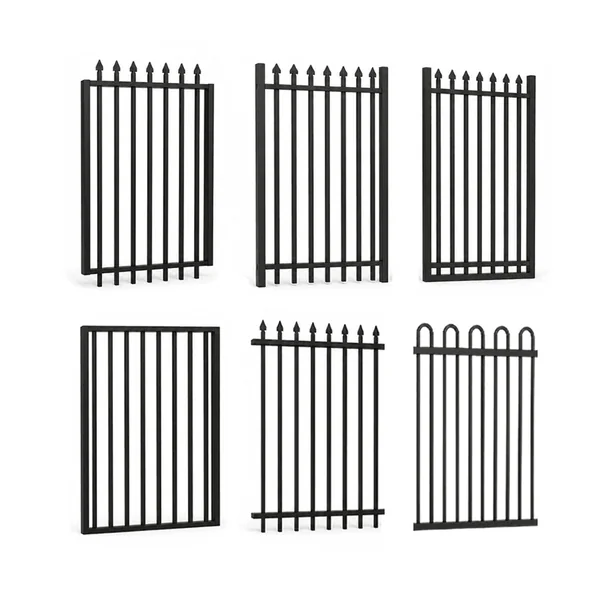
Security fence panels to AS1450: flat top and spear top panels and gates in galvanised steel, plus converter kits and picket extensions. Made in house.
Security Posts
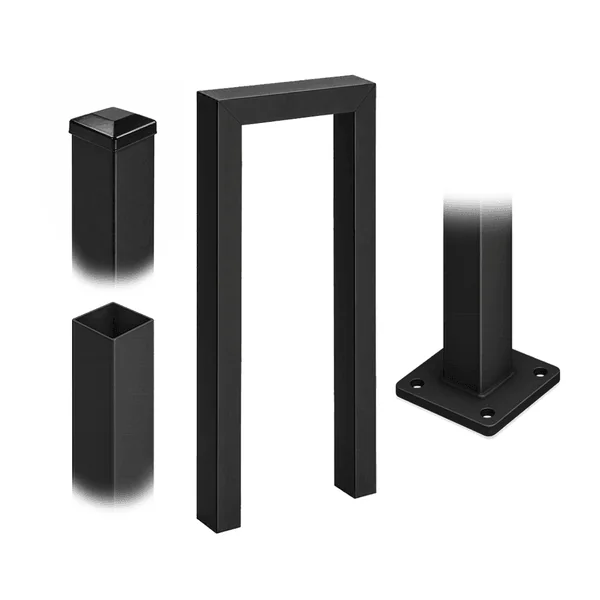
Heavy duty steel security posts, flange posts and tunnel posts for flat top and spear top fencing. Powder coated black or green. NSW and QLD supply.
Chain Mesh
Chain link mesh in 25 to 60 mm apertures and 2.24 to 3.15 mm wire for security, temporary, tennis court and golf screen fencing. Galvanised, black or green PVC.
 Government & Infrastructure
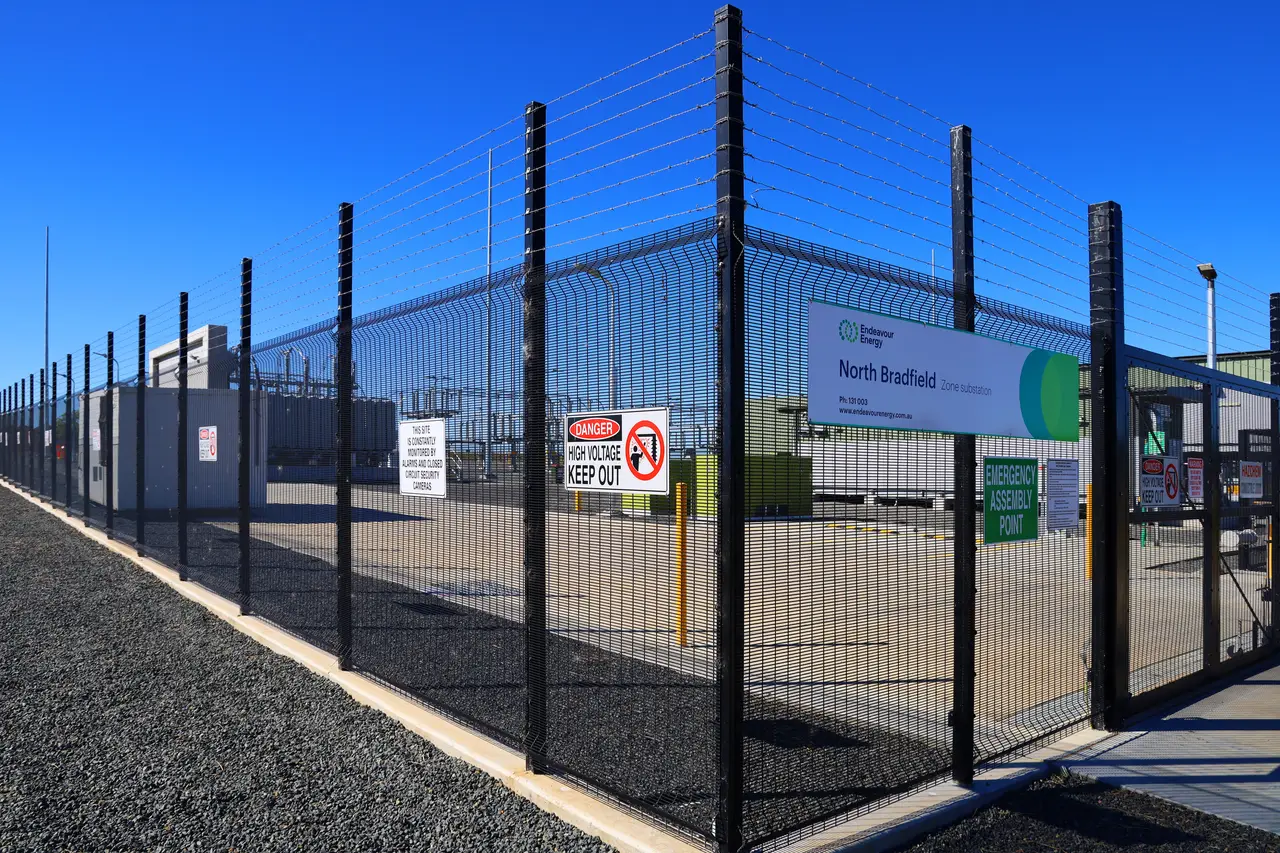
Anti-climb perimeter for a zone substation
North Bradfield, NSW
A new zone substation needed a hardened boundary that resisted climbing, carried a barbed topping and kept switchyard equipment visible for inspection.
More from the blog.
 Depot Security
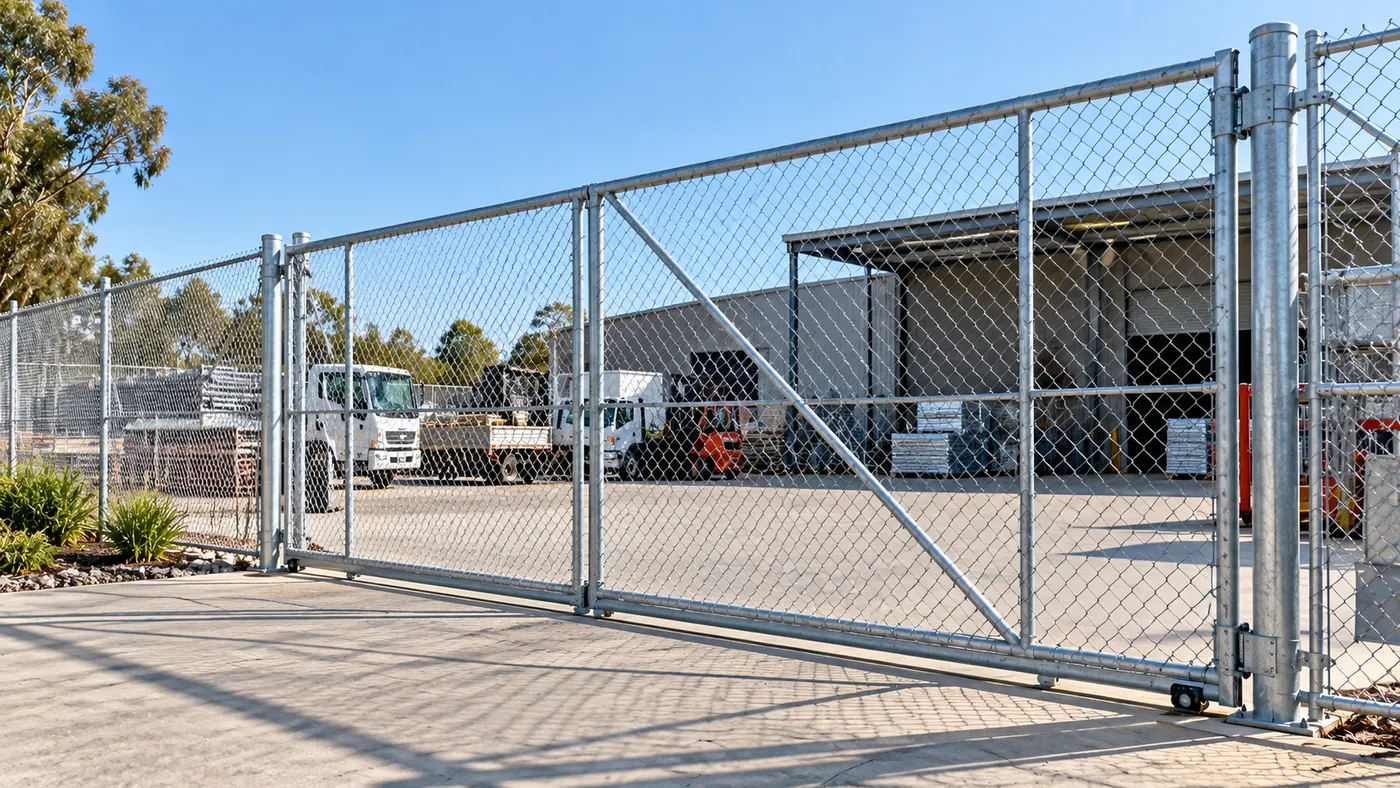
How Do You Choose Chainwire Fencing for Depot Security?
3 Oct 2026
Learn how to choose chainwire fencing for depot security, including mesh, height, gates, posts, fittings and access requirements.
 Security Solutions
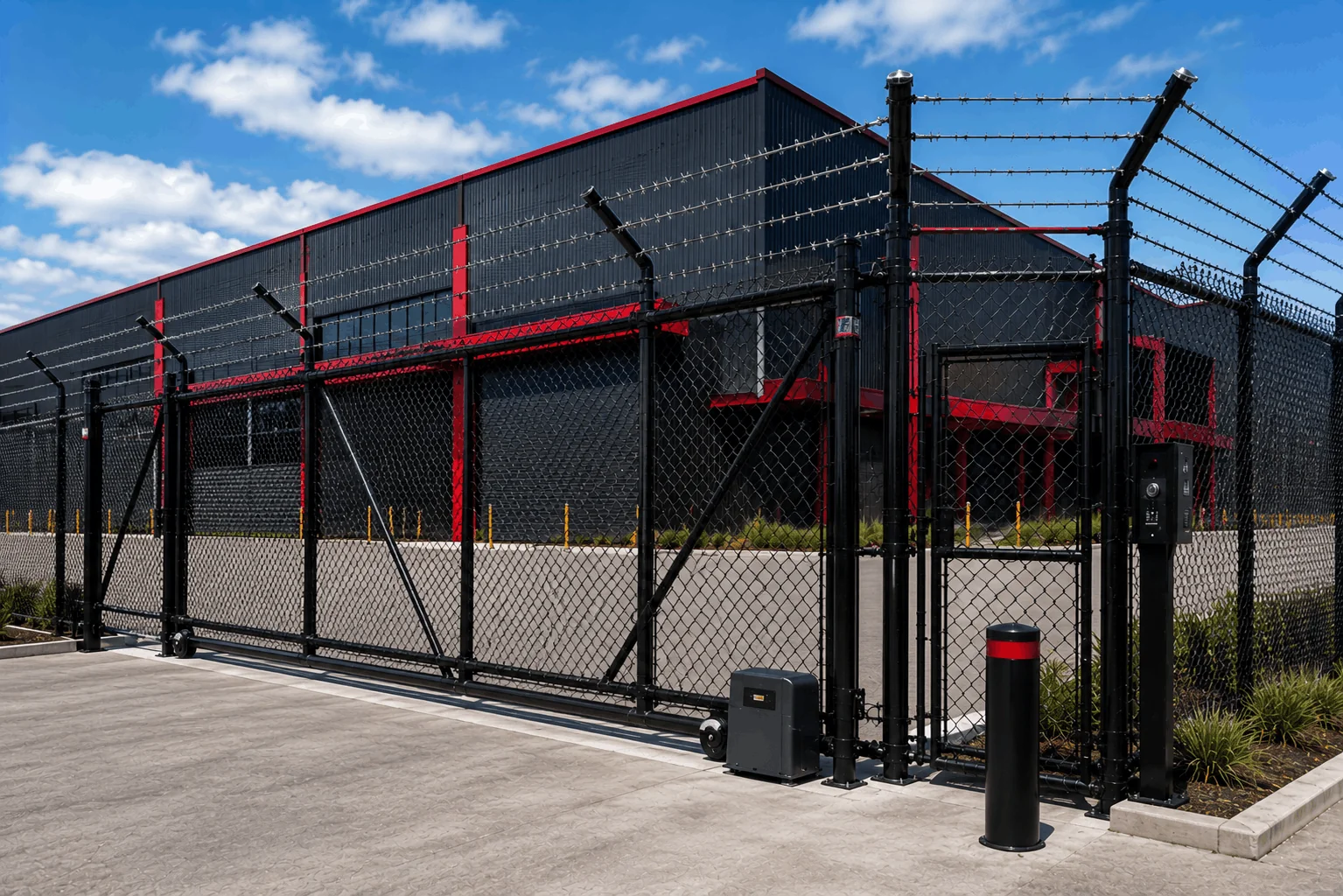
Best High Security Fencing Products for Restricted Sites
7 May 2026
Discover the best high security fencing products for restricted sites, including chain link mesh, gates, barbed wire, and fittings.
 Smithfield
Where to Buy Chainwire Fencing Supplies in Smithfield, NSW
3 Oct 2026
Looking for chainwire fencing supplies in Smithfield? Find mesh, wire, gates, pipe, fittings and accessories for your next fencing project.
Tell us about the fence.
One business day. That's how fast we come back with pricing once we have your quantity, finish and postcode.
Buying regularly? Apply for a credit account