How to Choose Chainwire Fencing for High-Wind Areas
Learn how to choose chainwire fencing for high-wind areas, including mesh, posts, pipe, fittings, foundations, height and wind exposure.
Introduction
Why Wind Exposure Should Influence Fence Selection
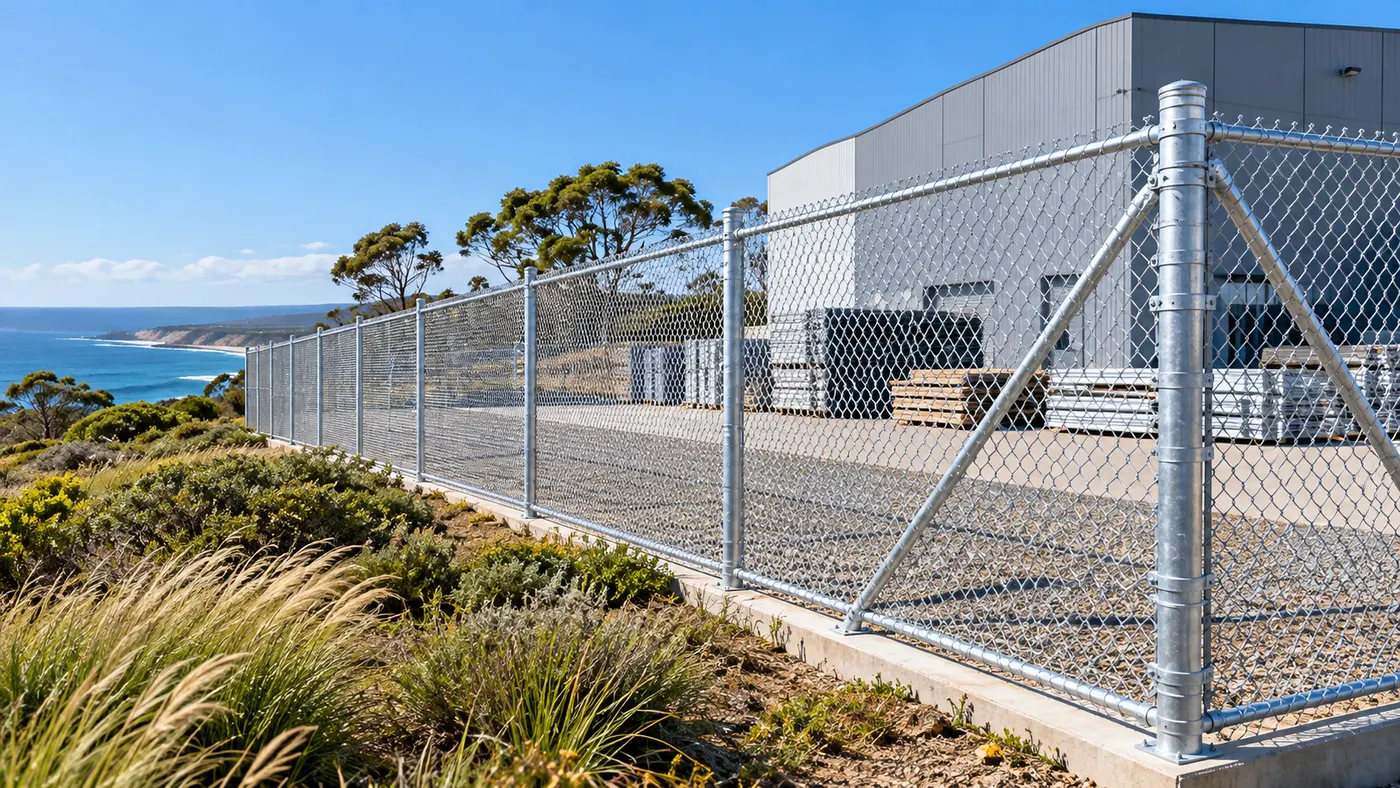
Wind creates pressure on a fence and transfers that force through the mesh, rails, posts, fittings, and foundations.
On a relatively sheltered property, the loads may be considerably different from those experienced by a fence running across an open industrial site, elevated location, exposed rural property, or coastal area. Fence height and the surrounding terrain can also affect exposure.
Chainwire has an advantage in that it is permeable. Air can pass through the openings in the mesh, reducing the broad sail-like surface associated with solid fencing.
That advantage should not be mistaken for immunity to wind damage.
A chainwire system still needs sufficient structural support to resist the loads expected at its particular location.
TLDR – Quick Guide
Chainwire's open mesh can make it suitable for exposed and windy locations.
Chainwire fencing for high-wind areas should be selected as a complete system rather than by mesh alone.
Start by assessing the site's actual wind exposure.
Fence height can significantly influence wind loading.
Taller fencing generally requires greater structural consideration.
Post size, wall thickness, spacing, and installation all matter.
Terminal, corner, and gate posts can experience different forces from intermediate posts.
Foundations transfer fence loads into the ground and should suit local conditions.
Mesh needs appropriate tension to perform as intended.
Top rails, braces, and tension wires may form important parts of the overall system.
Fittings should be compatible with the posts, rails, and mesh being used.
Why Can Chainwire Fencing Work Well in Windy Areas?
Open Mesh Allows Air to Pass Through
One of the defining characteristics of chainwire fencing is its open construction.
Unlike a solid sheet fence, chainwire does not create a continuous barrier against moving air. A portion of the wind can pass through the mesh openings rather than placing pressure against an entirely solid face.
This characteristic can make chainwire attractive for exposed sites where visibility and ventilation are also important.
Supaguard supplieschain link fencing components for projects where the mesh forms part of a broader fencing system.
Open Does Not Mean Wind-Proof
It is important not to oversimplify the advantage.
The mesh still creates resistance, and that resistance is transferred to the structural framework. Wind forces can also increase substantially if additional materials are installed over the mesh.
A correctly selected system therefore needs to account for both the permeability of the mesh and the structural requirements of the completed fence.
What Should You Assess Before Choosing High-Wind Chainwire Fencing?
Start With the Site
Two fences of identical height and construction can experience different conditions depending on where they are installed.
Consider whether the site is:
- Open or sheltered
- Urban or rural
- Coastal or inland
- Elevated
- Exposed to prevailing winds
- Surrounded by buildings
- Adjacent to large open areas
- Located on sloping terrain
- Subject to severe weather
The objective is not simply to decide whether a location "feels windy." A commercial or engineered fence may need a more formal assessment of the design conditions.
Consider the Fence's Purpose
A simple boundary fence may have different requirements from:
- Security fencing
- Sports fencing
- Industrial fencing
- Utility enclosures
- Equipment compounds
- Commercial perimeters
- Storage facilities
- Infrastructure sites
- High fencing around courts or facilities
- The purpose affects height, access, security, mesh, gates, and structural design.
How Does Fence Height Affect Wind Performance?
Taller Fences Present More Area to the Wind
As fence height increases, the total area exposed to moving air increases as well.
That means a taller chainwire fence should not automatically use the same posts, spacing, foundations, and bracing as a much shorter fence.
The forces also act farther above ground level, which can increase the demands placed on posts and foundations.
High Fencing Needs More Careful Specification
Sports facilities, industrial compounds, security boundaries, and other applications may require substantial fence heights.
In these cases, simply choosing heavy mesh is not enough.
The supporting framework needs to be selected for the fence height, exposure, configuration, and intended use.
How Important Are Fence Posts in High-Wind Areas?
Posts Carry Loads Into the Ground
Fence posts are one of the primary structural components of a chainwire system.
Loads from the mesh and other components are transferred into the posts and ultimately into their foundations and surrounding ground.
Post selection may need to account for:
- Outside diameter
- Wall thickness
- Material
- Fence height
- Post spacing
- Post function
- Wind exposure
- Ground conditions
- Bracing
- Attached accessories
Supaguard's range offence pipe provides options for constructing the framework, but appropriate pipe selection should be based on the requirements of the individual project.
Not Every Post Has the Same Job
An intermediate post supporting a straight fence run does not necessarily experience the same loading as a corner, end, strainer, or gate post.
Terminal points often need to resist tension from the chainwire in addition to environmental loads.
Corners can experience forces from multiple directions, while gate posts must support both the fence and gate hardware.
That is why a good specification considers post function instead of treating every upright as interchangeable.
Should You Use Bigger Fence Posts in Windy Areas?
Bigger Is Not a Complete Design Strategy
Increasing post size may increase capacity in some situations, but simply selecting the largest available pipe does not automatically create a properly designed high-wind fence.
A large post can still perform poorly if:
- Spacing is inappropriate
- Foundations are inadequate
- Connections are weak
- Bracing is insufficient
- The fence is too tall for the design
- Large wind-catching materials are attached
- Installation quality is poor
The fence behaves as a system, and its weakest critical component can affect overall performance.
Wall Thickness Also Matters
Two pipes with similar outside dimensions do not necessarily have identical structural characteristics.
Wall thickness, steel properties, coating, and intended application can differ.
For commercial or high-exposure projects, component specifications should be considered rather than selecting posts based on diameter alone.
How Does Post Spacing Affect a Chainwire Fence?
Spacing Influences Support
Post spacing determines how frequently the mesh and associated framework are supported.
Increasing the distance between posts changes the loads carried by individual structural components.
Closer spacing may be appropriate in some demanding applications, but the correct arrangement depends on the complete fence design.
Avoid Using One Spacing Rule Everywhere
A standard spacing that works for a low boundary fence in a sheltered location may not be appropriate for a tall fence on an exposed site.
Height, wind conditions, post size, mesh, rails, and site requirements all interact.
When conditions are demanding, use project-specific specifications rather than assuming a familiar spacing will always work.
What Role Does Chainwire Mesh Play in Wind Resistance?
Mesh Needs to Match the Application
Chainwire is manufactured in different wire diameters, mesh sizes, finishes, and configurations.
The correct mesh depends on factors such as:
- Fence purpose
- Required security
- Fence height
- Expected service conditions
- Framework
- Installation method
- Corrosion exposure
A stronger mesh does not remove the need for appropriately designed posts and foundations.
Proper Tension Is Important
Chainwire is intended to be installed with appropriate tension and support.
Poorly tensioned mesh can move excessively, sag, or place uneven demands on connections.
Correct tensioning helps the mesh and framework function together rather than allowing uncontrolled movement in windy conditions.
Why Are Rails, Braces, and Tension Wires Important?
The Framework Helps Stabilise the Fence
Depending on the design, chainwire fencing may incorporate top rails, bottom rails, bracing, or tension wires.
These components can help maintain alignment and distribute forces through the system.
Their necessity and dimensions depend on the fence design rather than a universal formula.
Bracing Is Particularly Important at Key Points
Ends, corners, changes in direction, and gate openings can create concentrated forces.
Bracing can help transfer those loads more effectively into adjacent structural components and foundations.
This becomes increasingly important as fence height, mesh tension, and environmental exposure increase.
How Do Fittings Affect High-Wind Fence Performance?
Small Components Still Carry Important Loads
It is easy to focus on posts and mesh while overlooking fittings.
Yet a chainwire fence depends on connections between:
- Mesh and posts
- Rails and posts
- Braces and framework
- Tension components
- Gates and gate posts
If these connections are inappropriate or poorly installed, increasing the size of other components will not necessarily solve the problem.
Choose Compatible Components
Bands, caps, clamps, ties, tension bars, hinges, and other hardware should suit the dimensions and intended use of the fence.
Supaguard'sfencing fittings can be incorporated into chainwire systems, but each project still needs components selected for its specific configuration.
Compatibility helps produce a more coherent system and simplifies installation.
Why Do Fence Footings Matter in High-Wind Areas?
The Foundation Anchors the Structure
A strong post is only as useful as the support beneath it.
Wind loads transmitted through the fence eventually reach the post foundations and surrounding ground.
Footing requirements can vary according to:
- Fence height
- Post size
- Wind exposure
- Soil conditions
- Fence configuration
- Gate loads
- Local engineering requirements
A footing that is appropriate for one project should not automatically be copied to another.
Ground Conditions Can Change the Design
Dense, stable ground behaves differently from loose, wet, reactive, filled, or otherwise challenging soil.
The appropriate footing diameter, depth, concrete specification, or alternative foundation approach may therefore vary.
For significant commercial or high-wind projects, site conditions should be considered during design rather than after posts begin moving.
Do Privacy Screens Make Chainwire Fencing More Vulnerable to Wind?
Screening Can Change the Fence Dramatically
One of the biggest mistakes with chainwire fencing in exposed areas is adding material that reduces the openness of the mesh without considering the structural consequences.
Examples include:
- Shade cloth
- Privacy fabric
- Windscreen
- Advertising banners
- Tarpaulins
- Solid panels
- Temporary sheeting
These additions can turn a relatively open fence into a much larger wind-catching surface.
Never Assume the Existing Fence Can Carry Screening
A fence originally designed as open chainwire may not have been designed for the loads introduced by screening.
Even partially permeable fabric can increase wind resistance.
Before adding substantial screening to an exposed fence, confirm that the framework, connections, posts, and foundations are suitable for the changed loading.
Can You Attach Signs to Chainwire Fencing in High-Wind Areas?
Signs Create Solid Surface Area
A sign attached to chainwire can behave differently from the surrounding mesh because it may block most or all airflow through its surface.
The larger the sign, the greater the potential effect.
Multiple signs along a fence can further change the loading.
Consider Signs During Initial Design
If a commercial site is expected to use permanent signs, security notices, branding panels, or advertising, include those elements in the original fence specification where possible.
That allows their potential wind effect to be considered before construction.
Adding large panels later without assessment can place unexpected loads on posts and fittings.
How Should Gates Be Designed for Windy Locations?
Gates Introduce Moving Components
A gate is not simply another section of fence.
It includes hinges, latches, frames, posts, and moving components that experience different loads.
Wind can cause gates to swing, rack, vibrate, or place additional forces on hinges and posts if they are not adequately controlled.
Gate Posts Deserve Special Attention
Gate posts often carry greater concentrated loads than ordinary intermediate posts.
Gate width, height, weight, infill, hardware, and operating method should all be considered.
Wide vehicle gates and tall security gates may require substantially different structural arrangements from small pedestrian gates.
Does Corrosion Resistance Matter for High-Wind Fencing?
Strength Needs to Be Maintained Over Time
A fence may be adequately designed when new but become less dependable if corrosion significantly affects structural components or connections.
Long-term performance therefore involves both structural design and environmental durability.
Inspecting exposed fencing periodically can help identify corrosion, loose fittings, movement, or damage before those issues become more significant.
Coastal Sites Need Additional Attention
Coastal environments can expose metal fencing to salt-laden air and other corrosive conditions.
For these sites, material finish and corrosion resistance deserve consideration alongside wind exposure.
A coastal location can therefore present two separate challenges: strong environmental loads and an aggressive atmosphere for metal components.
Should High-Wind Chainwire Fencing Be Engineered?
Some Projects Need Site-Specific Design
Not every residential chainwire boundary requires a custom engineering analysis.
However, professional or engineering input may be appropriate when a project involves:
- Significant fence height
- Very exposed terrain
- Severe wind conditions
- Large gates
- Security requirements
- Screening or privacy fabric
- Large signs
- Critical infrastructure
- Unusual soil conditions
- Commercial or industrial requirements
Local building requirements and relevant Australian standards should also be considered where applicable.
Avoid Guessing on Critical Projects
Past experience can be useful, but "we've always built fences this way" is not a substitute for project-specific assessment when conditions are substantially different.
A design that performed well on a sheltered urban property may not behave the same way on an exposed industrial or coastal site.
When consequences of failure are significant, appropriate professional design is a sensible part of project planning.
How Can Installation Quality Affect Wind Performance?
Correct Components Still Need Correct Installation
A carefully specified fence can underperform if it is installed poorly.
Potential installation problems include:
- Inadequate footing dimensions
- Incorrect post alignment
- Poorly tensioned mesh
- Loose connections
- Insufficient bracing
- Incorrectly assembled fittings
- Weak gate installation
- Damaged protective coatings
Quality control during installation is therefore just as important as material selection.
Inspect the Completed Fence
Before considering a project complete, check that the fence follows the intended design.
Posts should be aligned, mesh appropriately tensioned, connections secure, gates operating correctly, and required bracing properly installed.
For engineered fencing, installation should follow the relevant drawings and specifications.
How Should You Maintain Chainwire Fencing in Windy Areas?
Inspect After Significant Weather
Exposed fencing can benefit from periodic inspections, particularly after severe wind events.
Look for:
- Leaning posts
- Loose fittings
- Mesh movement
- Damaged ties
- Sagging sections
- Gate misalignment
- Foundation movement
- Corrosion
- Damaged rails or braces
Small problems can place additional loads on neighbouring components if they are left unresolved.
Keep Added Materials Under Control
Temporary banners, shade cloth, tarps, and similar items are sometimes attached to fences without considering their effect.
If a storm or high-wind period is expected, follow the site's safety and engineering procedures regarding temporary materials.
Do not remove or alter structural components without appropriate guidance.
How Do You Specify Chainwire Fencing for a High-Wind Project?
Start With Performance Requirements
Before ordering individual components, define what the completed fence needs to achieve.
Document:
- Site location
- Fence purpose
- Required height
- Total length
- Terrain
- Exposure
- Security level
- Gate sizes
- Screening requirements
- Signage
- Ground conditions
- Corrosion environment
- This creates a much better basis for component selection.
- Build the Fence as a Complete System
- Once requirements are clear, consider the relationship between:
- Chainwire mesh
- Posts
- Rails
- Bracing
- Tension components
- Fittings
- Gates
- Foundations
- Finishes
The strongest fence is not necessarily the one with the heaviest individual component. It is the one in which the components are appropriately selected and work together for the actual site conditions.
Choosing Supaguard Components for High-Wind Chainwire Fencing
Match Products to the Project
For contractors, fencing businesses, commercial projects, and other professional applications, Supaguard provides chainwire, pipe, wire, and fittings that can form part of a complete fencing system.
When selecting components for an exposed site, begin with the project's structural and environmental requirements rather than selecting individual products independently.
This makes it easier to match mesh, framework, and connections to the intended application.
Get Technical Requirements Clear Before Ordering
High-wind fencing projects benefit from clear specifications.
Before finalising materials, confirm the required dimensions, quantities, finishes, post types, framework, fittings, gate requirements, and any project-specific engineering details.
Doing this early can reduce the risk of discovering during installation that components do not match the design requirements.
Key Takeaways
Chainwire fencing for high-wind areas benefits from open mesh that allows some airflow through the fence.
Open mesh does not make a chainwire fence immune to wind loads.
High-wind fence selection should consider the complete system.
Site exposure is one of the first factors to assess.
Fence height influences the loads placed on the structure.
Taller fences generally require greater structural consideration.
Posts transfer loads from the fence into the foundations.
Post diameter alone does not determine fence strength.
Pipe wall thickness and intended application also matter.
Post spacing should suit the height, structure, and site conditions.
Corner, terminal, and gate posts may require different treatment from intermediate posts.
Chainwire needs appropriate tension and support.
Frequently Asked Questions
Is chainwire fencing suitable for high-wind areas?
Chainwire can be suitable for high-wind areas because its open mesh allows a portion of the airflow to pass through rather than creating a completely solid barrier. Suitability still depends on fence height, posts, spacing, foundations, bracing, fittings, gates, exposure, and other project conditions. Significant or unusual installations may require a site-specific structural assessment.
Do I need thicker posts for chainwire fencing in a windy location?
A high-wind project may require stronger posts, but simply increasing post diameter or wall thickness does not guarantee that the complete fence is adequately designed. Post spacing, foundations, bracing, fence height, mesh, gates, connections, and wind exposure all influence performance. Posts should therefore be selected as part of the overall fencing system rather than as an isolated component.
Can I add shade cloth or privacy screening to chainwire fencing?
Screening can be attached in some applications, but it may substantially increase the amount of wind load transferred to the fence. A chainwire fence originally designed as an open structure may not have posts, foundations, or fittings capable of supporting that additional load. Have the fence requirements assessed before adding extensive shade cloth, privacy fabric, banners, or solid panels in a high-wind location.
How does fence height affect chainwire fencing in strong winds?
A taller fence presents more surface area to the wind and transfers loads through a greater height above the ground. This can increase demands on posts, foundations, bracing, connections, and other structural components. High chainwire fencing should therefore be specified for its actual height and site conditions instead of simply copying the construction of a shorter fence.
Should commercial chainwire fencing in a high-wind area be engineered?
Engineering may be appropriate for tall, highly exposed, screened, security-sensitive, or otherwise demanding commercial fencing projects. The need depends on the site, fence dimensions, wind conditions, gates, soil, attached materials, regulatory requirements, and consequences of failure. Contractors should confirm applicable project specifications, local requirements, and relevant Australian standards before construction.
Products and a project to match.
Chain Mesh
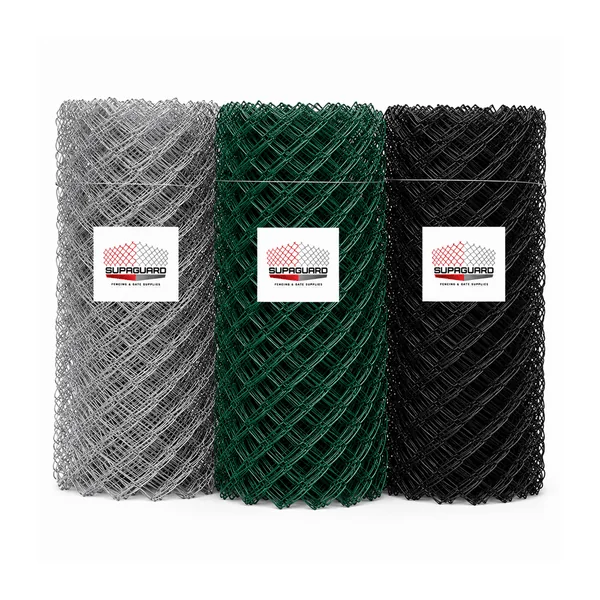
Chain link mesh in 25 to 60 mm apertures and 2.24 to 3.15 mm wire for security, temporary, tennis court and golf screen fencing. Galvanised, black or green PVC.
 Sport
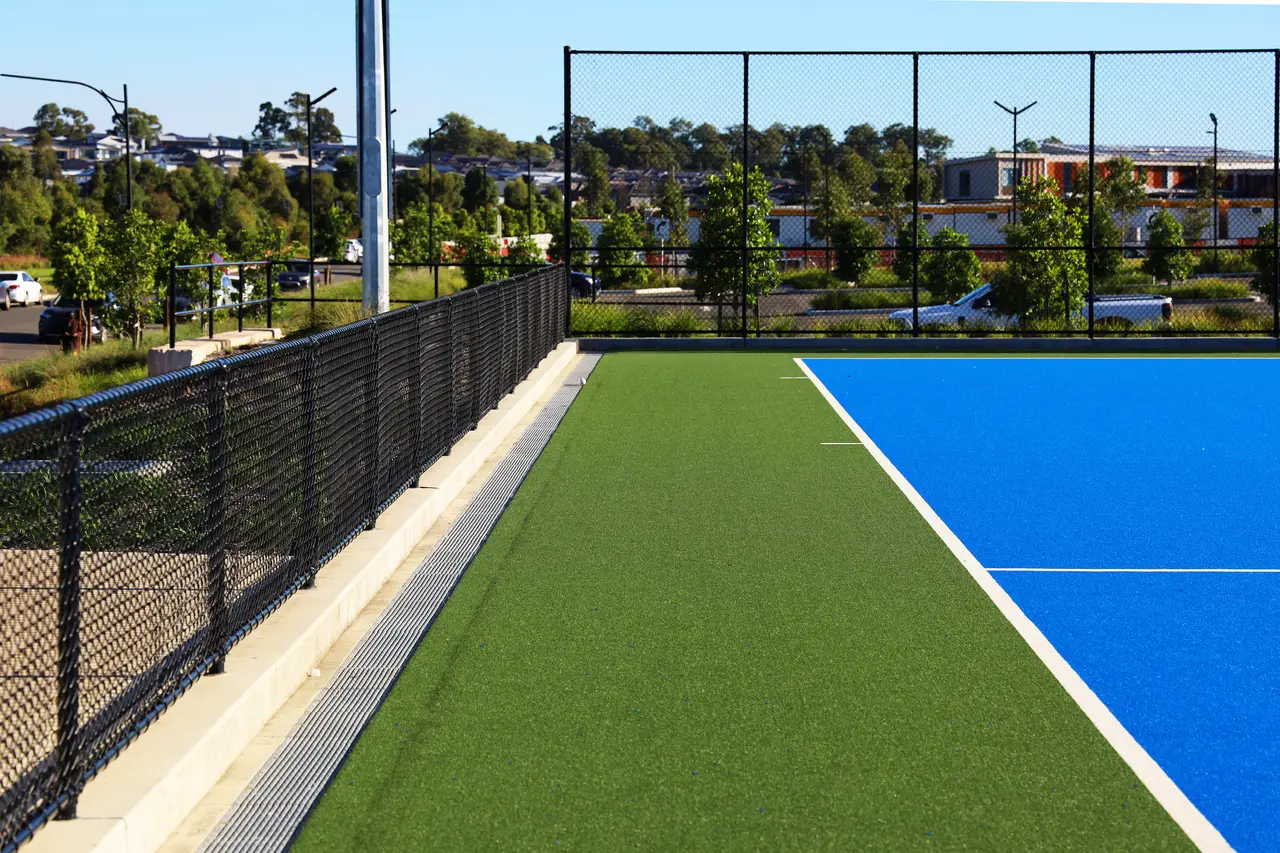
Ball-stop fencing for a synthetic hockey pitch and sports fields
Australia
High ball-stop chainwire around a synthetic hockey pitch, playing fields and cricket practice nets, black-coated so the fence line disappears against the play.
More from the blog.
 Depot Security
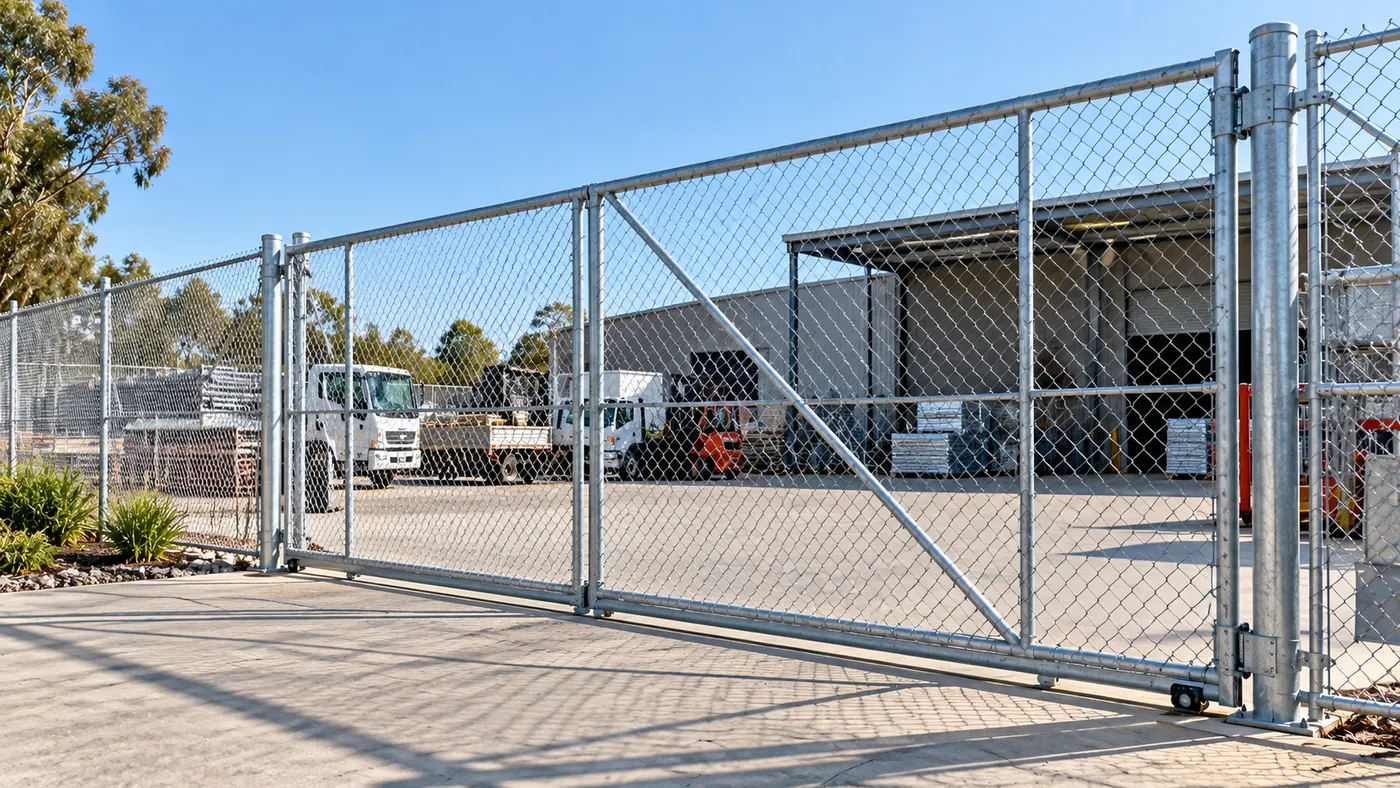
How Do You Choose Chainwire Fencing for Depot Security?
3 Oct 2026
Learn how to choose chainwire fencing for depot security, including mesh, height, gates, posts, fittings and access requirements.
 Substation Security
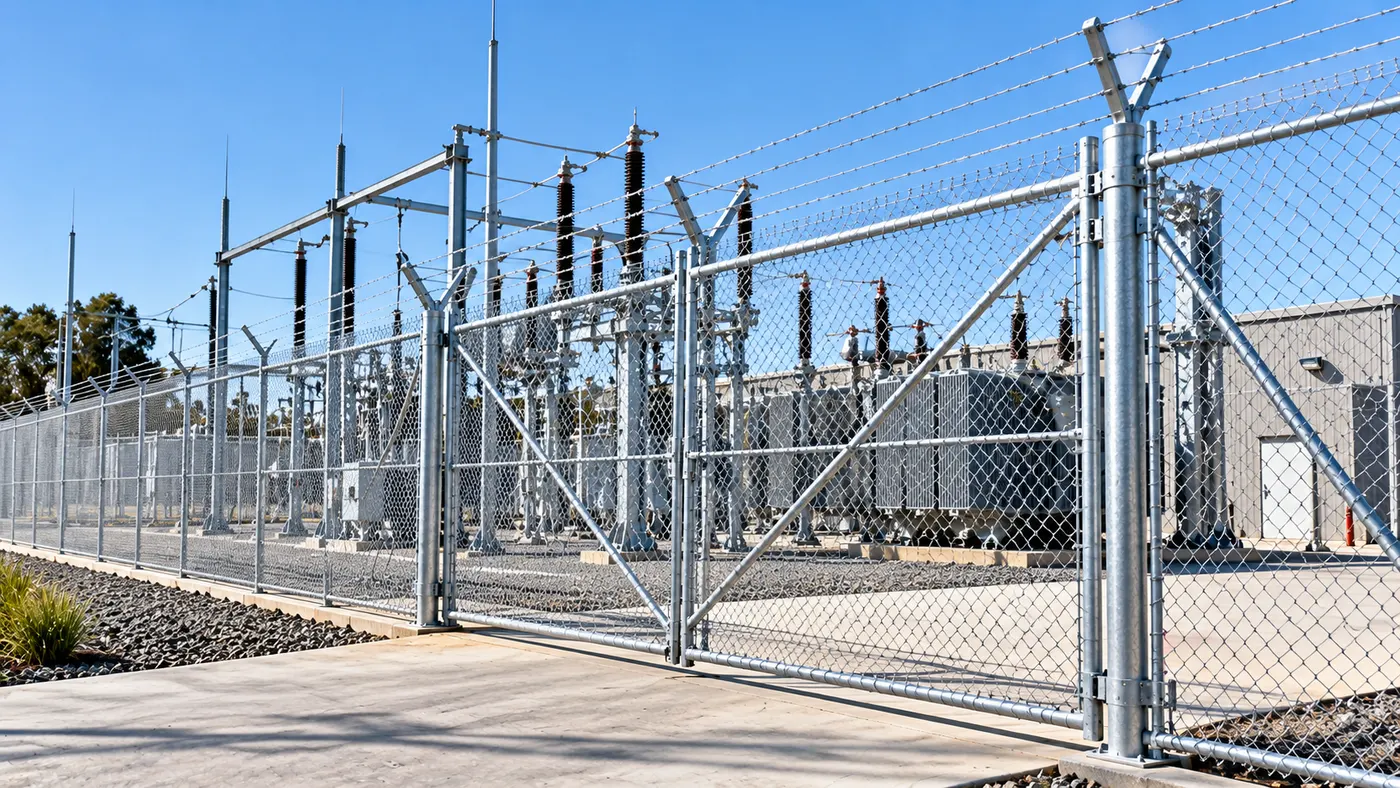
What Chainwire Fencing Products Are Used for Substation Security?
3 Oct 2026
Explore chainwire fencing products used for substation security, including mesh, posts, gates, wire, fittings and security accessories.
 Sports Fencing
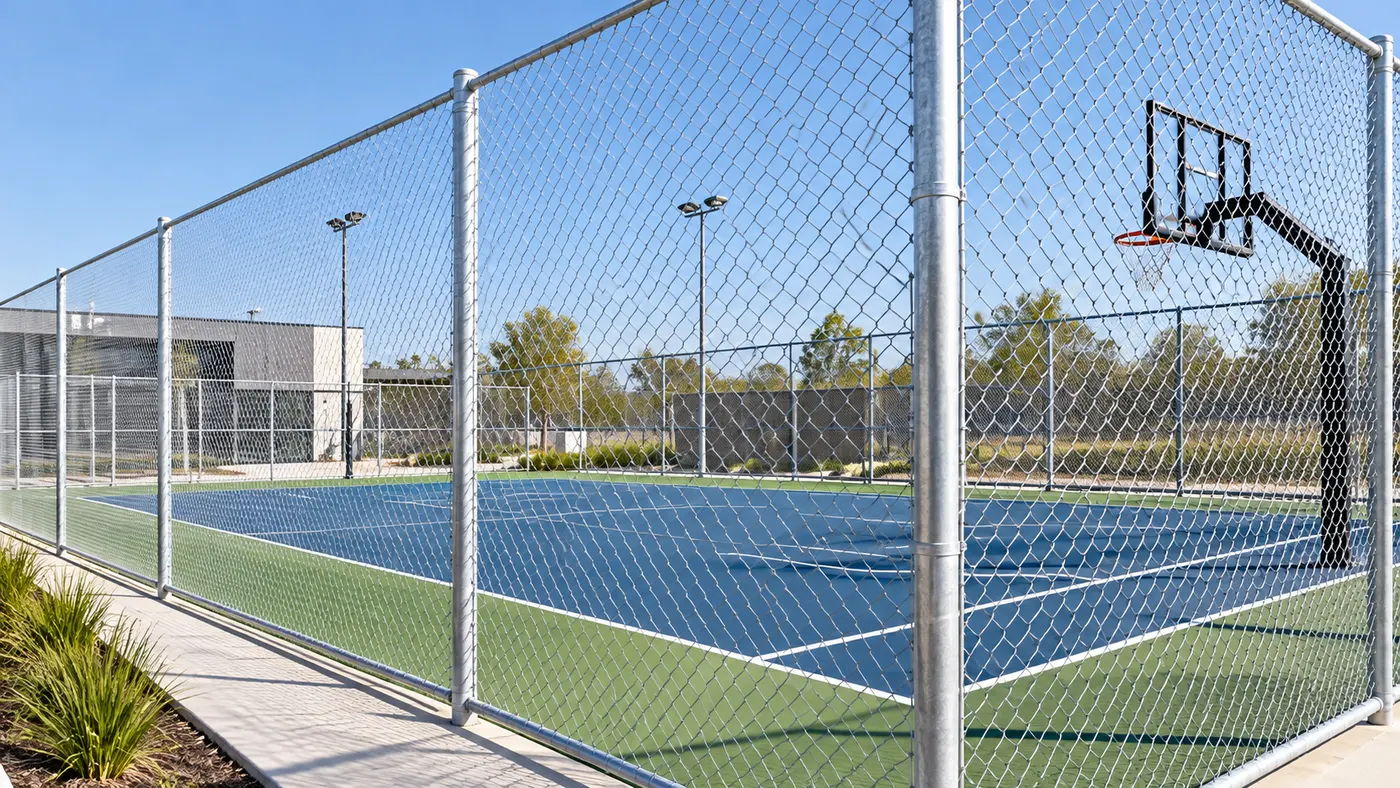
What Chainwire Mesh Specifications Work Best for Sports Courts?
2 Oct 2026
Compare chainwire mesh specifications for Australian sports courts, including mesh size, wire diameter, height, coatings and framing.
Tell us about the fence.
One business day. That's how fast we come back with pricing once we have your quantity, finish and postcode.
Buying regularly? Apply for a credit account