
Flat Top vs Spear Top Security Fencing Panels: Which Should You Choose?
Compare Flat Top vs Spear Security Fencing Panels for security, appearance, access control, site use, maintenance, and project needs.
Introduction
Why the Top Profile Matters in Security Fencing
Security fencing works as a complete system. Panel design is important, but so are fence height, post selection, spacing, gates, foundations, fittings, access points, installation quality, visibility, and any additional security measures required by the project.
The top profile is one part of that system.
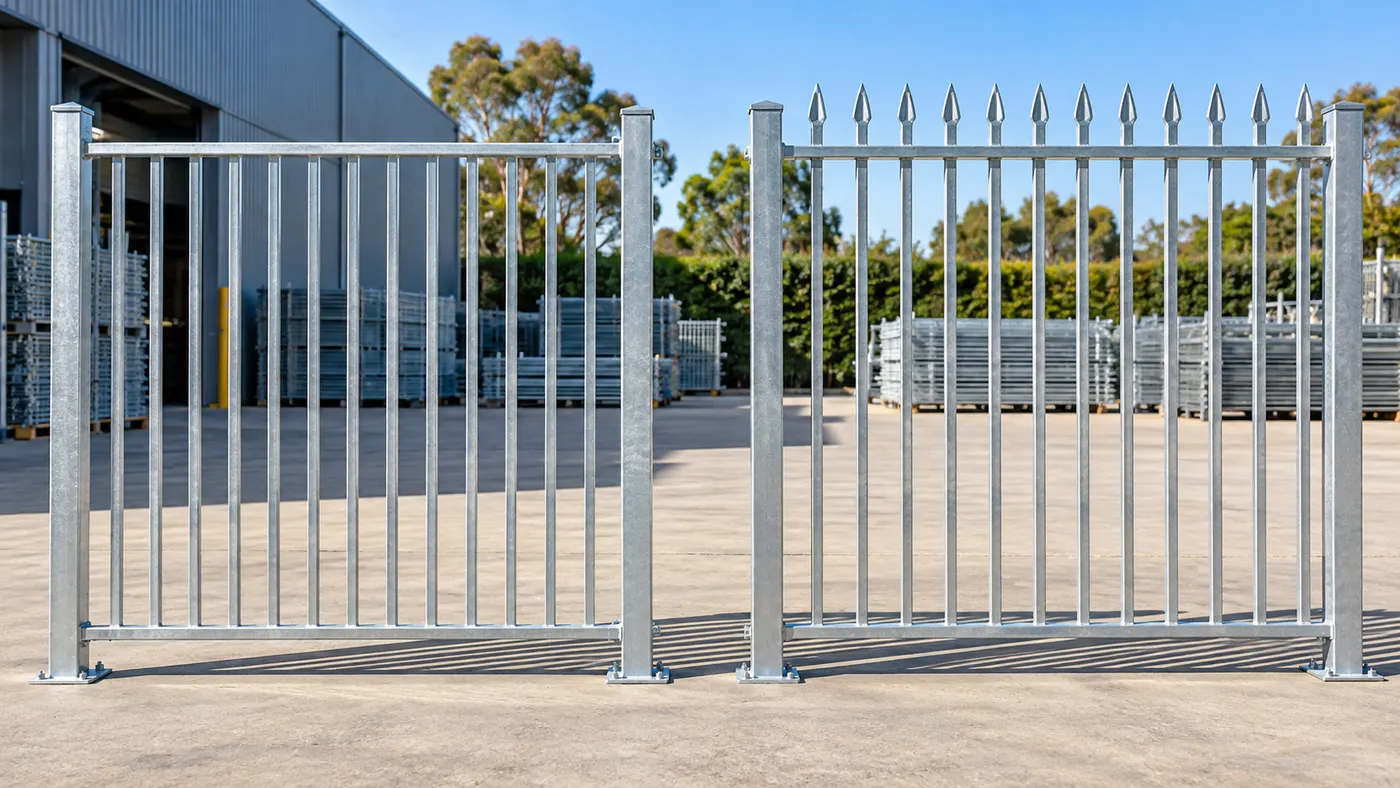
Flat top fencing provides a clean, level upper edge. Spear top fencing incorporates projecting points at the top of the vertical members, creating a more overt security appearance and potentially making climbing over the top less inviting.
Neither characteristic should be considered in isolation.
For commercial and restricted sites, Supaguard's guide tohigh-security fencing products provides additional context about evaluating perimeter security as a complete system rather than relying on one component.
TLDR – Quick Guide
Comparing Flat Top and Spear Top Panels at a Glance
Flat top security fencing has a clean, level upper profile.
Spear top fencing uses projecting vertical points at the top of the panel.
Flat top designs can provide a more restrained architectural appearance.
Spear top designs create a more visibly defensive perimeter.
Spear tops may add an additional climbing deterrent at the upper edge.
Fence height remains important regardless of the top profile.
Flat top fencing can suit sites where security and presentation need to coexist.
Spear top fencing may suit locations where stronger visual deterrence is desirable.
Schools, public areas, pedestrian environments, industrial sites, utilities, warehouses, and restricted facilities can have very different requirements.
The site's users should be considered before selecting pointed fencing profiles.
Gates should be specified as part of the same security strategy as the fence panels.
Gate height and profile should generally integrate logically with adjoining fencing.
What Are Flat Top Security Fencing Panels?
A Clean and Controlled Perimeter Profile
Flat top security fencing is characterised by a straight, level upper edge rather than pointed projections.
This creates a neat appearance that can work particularly well around commercial properties, institutional environments, public-facing sites, and projects where the perimeter needs to provide separation and access control without appearing unnecessarily aggressive.
The simple profile can also coordinate effectively with gates and other architectural elements.
However, "flat top" should not be interpreted as synonymous with "low security." Panel construction, spacing between vertical members, fence height, posts, foundations, gate design, installation, and the site's broader security measures all influence the effectiveness of the perimeter.
Where Flat Top Panels Can Make Sense
Flat top fencing may be considered for:
- Commercial properties
- Office environments
- Educational facilities
- Recreational facilities
- Public-facing sites
- Warehouses
- Selected industrial properties
- Building perimeters
- Internal site separation
- Controlled pedestrian areas
- The appropriate design depends on the project's specification and risk assessment.
For example, a public-facing commercial facility may need a substantial physical perimeter while still prioritising a clean appearance. A flat top configuration can potentially satisfy that design objective without sacrificing the ability to control access.
What Are Spear Top Security Fencing Panels?
A More Overt Security Profile
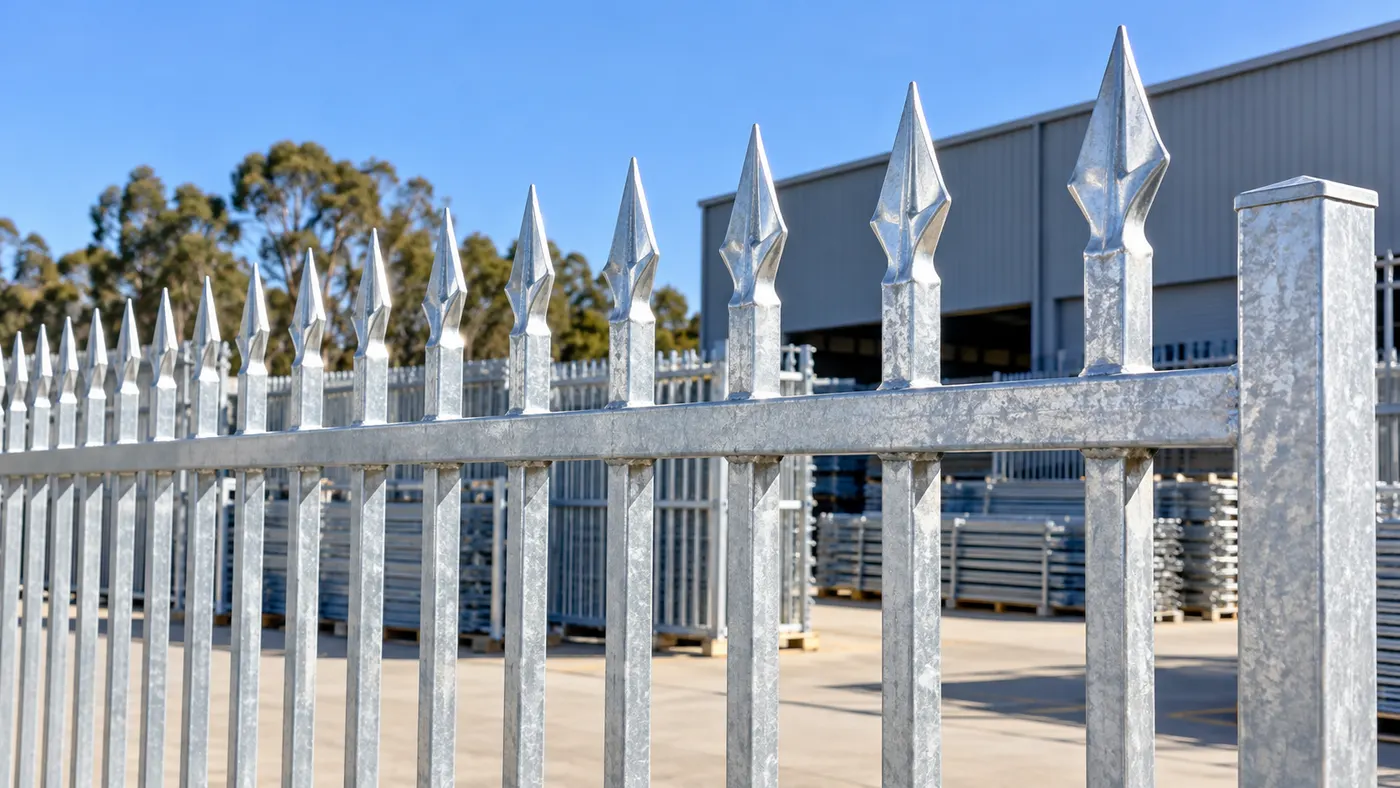
Spear top fencing extends the vertical members beyond the upper horizontal rail and terminates them in pointed profiles.
Visually, this immediately communicates a stronger boundary.
The projecting tops may also make the upper edge less inviting to climb over than a smooth, flat profile. That can make spear top fencing relevant to projects where deterrence is a significant design consideration.
However, the presence of spear points alone does not determine the security classification of an entire fence.
Where Spear Top Panels May Be Considered
Potential applications can include:
- Industrial facilities
- Warehouses
- Storage yards
- Utility sites
- Infrastructure
- Restricted commercial areas
- Equipment compounds
- Selected government facilities
- Sites where visible deterrence is important
Whether spear top fencing is appropriate should still be determined by the site's users, location, access patterns, risk assessment, project documentation, and applicable requirements.
A design suitable for a controlled industrial perimeter may not be the right choice for a heavily used pedestrian environment.
What Is the Main Difference Between Flat Top and Spear Top Fencing?
The Upper Profile Changes Both Appearance and Deterrence
The most obvious distinction is physical.
Flat top panels terminate with a straight horizontal profile. Spear top panels incorporate pointed projections.
That seemingly small difference can substantially change how a perimeter is perceived.
A flat top fence can appear controlled and architectural. A spear top fence sends a more explicit visual message that the perimeter is intended to discourage unauthorised access.
That does not necessarily mean the spear top option is always the correct security solution.
A well-designed flat top fence with suitable height, closely spaced vertical members, properly specified posts, controlled gates, strong foundations, and complementary security measures may be more appropriate for a particular project than an inadequately specified spear top fence.
Which Option Provides Better Security?
Start With the Site's Actual Security Objective
The better question is not simply, "Which top looks more secure?"
Ask what the fence needs to achieve.
A perimeter may need to:
- Define a property boundary
- Restrict unauthorised pedestrian access
- Separate public and operational areas
- Protect equipment
- Control access to a warehouse
- Secure a utility compound
- Manage vehicle movement
- Discourage opportunistic climbing
- Maintain surveillance sightlines
- Integrate with electronic access control
- Different objectives can produce different specifications.
Supaguard's discussion ofcommercial security fencing provides a broader framework for evaluating products according to the site's security requirements rather than choosing components independently.
Spear Tops Can Add Visible Deterrence
The pointed upper profile makes spear fencing visually defensive.
For sites where discouraging climbing is important, this characteristic may contribute to the perimeter strategy.
But security should not be reduced to one feature.
An intruder may target a poorly secured gate, vulnerable corner, damaged section, low adjoining structure, or another weak point rather than attempting to climb directly over the centre of a fence panel.
Effective security therefore requires attention to the entire boundary.
Is Flat Top Fencing Still Suitable for Security Applications?
Flat Top Does Not Mean Decorative Only
It is easy to assume that flat top panels are primarily aesthetic.
That oversimplifies the design.
A substantial flat top panel can still create a controlled physical barrier when correctly specified and integrated with appropriate posts, gates, foundations, fittings, and access controls.
Security depends on characteristics such as:
- Overall fence height
- Panel construction
- Vertical member spacing
- Horizontal rail arrangement
- Post strength and spacing
- Foundation design
- Gate security
- Hardware
- Installation quality
- Site layout
- The top profile is only one variable.
- Some Sites Need Security Without an Aggressive Appearance
A strong visual deterrent can be beneficial in some environments, but it may conflict with the design objectives of others.
A school, commercial property, public facility, or recreational environment may need a clearly controlled perimeter while still maintaining an approachable appearance.
Flat top fencing can be worth considering in these situations, subject to the project's safety, security, and compliance requirements.
When Should You Consider Spear Top Security Fencing?
When Visible Deterrence Is a Priority
Spear top panels can be appropriate when the perimeter should clearly communicate restricted access.
The projecting tops make the fence look more difficult and uncomfortable to climb.
This can complement other security measures around industrial, commercial, infrastructure, and controlled-access sites.
Potential environments include storage yards, plant areas, utility compounds, industrial facilities, warehouses, and other locations where unauthorised access presents a meaningful operational or security concern.
When It Fits the Broader Security Strategy
Spear top fencing makes the most sense when its design supports the rest of the perimeter.
For example, installing spear top panels while using an easily bypassed gate can leave the most important weakness unresolved.
Panels, gates, posts, hardware, access controls, and site layout should therefore be considered together.
When Should You Consider Flat Top Security Fencing?
When Appearance and Security Need to Work Together
Flat top panels are useful where a clean architectural appearance matters alongside boundary control.
Their straight upper line can integrate naturally with modern commercial buildings, educational facilities, recreational environments, landscaped areas, and public-facing properties.
The visual effect is generally more restrained than spear top fencing.
That can make flat top panels particularly useful when the project team does not want the perimeter to dominate the property's overall appearance.
When the Site Has Frequent Pedestrian Activity
The people who interact with the perimeter matter.
Where fencing is located close to pedestrian areas, entrances, pathways, recreation areas, or other frequently occupied spaces, the design team should carefully evaluate the suitability of projecting elements.
This does not mean a particular profile is automatically compliant or non-compliant. Project-specific requirements and applicable standards should determine the final specification.
How Does Fence Height Affect the Choice?
Height Can Matter as Much as the Top Profile
A top treatment should never be evaluated without considering overall fence height.
The effectiveness of a perimeter can change significantly depending on whether the panel is relatively low or forms a taller security barrier.
A spear top on an otherwise unsuitable fence will not compensate for poor overall specification.
Similarly, a flat top fence should not be dismissed simply because it lacks pointed projections.
Match Height to Risk and Application
The appropriate height may depend on:
- Site use
- Risk assessment
- Local requirements
- Project documentation
- Security objectives
- Adjacent structures
- Ground levels
- Public access
- Internal access requirements
- Gate configuration
Changes in terrain should also be considered because slopes, retaining walls, landscaping, or nearby structures can affect the effective height of a perimeter.
How Do Posts Affect Security Panel Performance?
Panels Depend on the Supporting Structure
Even a robust security panel relies on correctly selected support posts.
Posts must suit factors such as panel dimensions, fence height, spacing, site exposure, gate loads where applicable, foundations, and project requirements.
A fencing system should therefore be specified as a group of compatible components rather than a collection of unrelated products.
Supaguard suppliesfence pipe in a range of specifications for fencing and structural applications, allowing contractors to select components according to project requirements.
Gate Posts Require Particular Attention
Gate openings introduce different forces from fixed fence panels.
The larger and heavier the gate, the more important the supporting post and foundation specification becomes.
This is particularly relevant around industrial vehicle entrances and other wide openings.
Do not simply assume that a post suitable for an ordinary fence run will automatically suit a gate.
How Should Gates Match Flat Top or Spear Top Fencing?
Maintain a Logical Perimeter Design
A gate is one of the most frequently used parts of a perimeter and often one of its most important security points.
Where practical, its height and visual profile should integrate with the adjoining fencing.
A flat top fence can be paired with a gate that continues the clean horizontal profile, while spear top fencing may use a corresponding gate design to maintain the visual deterrent across the opening.
Security Should Continue Across the Opening
A strong panel system can be undermined by an inadequately specified gate.
Consider:
- Gate width
- Gate height
- Hinges
- Latches
- Locking arrangements
- Gate posts
- Ground clearance
- Vehicle access
- Pedestrian access
- Frequency of operation
- Access-control equipment
For larger commercial projects, gates should be treated as part of the original perimeter design rather than an afterthought.
How Does Visibility Affect the Decision?
Open Security Panels Can Preserve Sightlines
Security does not always mean creating a solid visual barrier.
Open steel fencing can allow staff, security personnel, cameras, and people inside a property to maintain visibility through the perimeter.
This may be valuable around industrial yards, public facilities, utilities, schools, warehouses, and other monitored locations.
Both flat top and spear top configurations can potentially preserve these sightlines.
Consider Landscaping and Site Equipment Too
A fence can provide good visibility when installed and then gradually become obscured.
Vegetation, stored materials, temporary structures, signage, equipment, or parked vehicles can affect surveillance and inspection.
Perimeter planning should therefore extend beyond the fence itself.
What About Galvanised and Powder-Coated Finishes?
Finish Selection Is Separate From Top Profile
Choosing between flat top and spear top fencing does not necessarily determine the finish.
Depending on the available product and project specification, security fencing may use galvanised or coated finishes.
Finish selection should consider:
- Environmental exposure
- Corrosion risk
- Desired appearance
- Project specification
- Maintenance expectations
- Compatibility with other components
A black finish, for example, can create a very different architectural appearance from a galvanised finish even when the underlying panel profile is identical.
Consider the Environment
Sites near the coast, industrial environments, and other corrosive locations may place different demands on steel products.
Rather than relying on a generic lifespan claim, determine whether the coating system and product specification are suitable for the actual exposure conditions.
Maintenance should also be included in the long-term planning process.
Which Fencing Style Looks Better?
Appearance Depends on the Property
There is no universal aesthetic winner.
Flat top fencing can complement:
- Contemporary architecture
- Commercial buildings
- Educational environments
- Landscaped properties
- Public-facing facilities
- Recreational spaces
- Spear top fencing can visually suit:
- Industrial facilities
- Traditional security architecture
- Restricted areas
- Warehouses
- Utility sites
- Secure compounds
The surrounding building, gate design, finish, fence height, landscaping, and streetscape all influence the final appearance.
Think Beyond the Fence Panel
A panel does not exist by itself.
Posts, gates, gate hardware, finishes, retaining walls, signage, lighting, and landscaping all contribute to the completed perimeter.
For a consistent result, specify the system as a whole.
What Maintenance Does Security Panel Fencing Require?
Inspect the Complete Perimeter Regularly
Steel security fencing is generally straightforward to inspect, but that does not mean it should be ignored after installation.
Periodic inspections can identify:
- Physical damage
- Loose components
- Corrosion
- Coating damage
- Gate alignment problems
- Damaged latches
- Foundation movement
- Vegetation interference
- Evidence of attempted access
Early identification can make maintenance easier and prevent a small issue from developing into a larger perimeter weakness.
Gates Often Need Extra Attention
Fixed panels have relatively few moving components.
Gates operate repeatedly.
Hinges, latches, tracks, rollers, locks, closers, and access-control equipment can therefore require more frequent attention depending on the design and usage.
High-traffic entrances should be included in routine site maintenance.
What Should You Check Before Ordering Security Fencing Panels?
Confirm the Project Specification First
Before requesting materials, establish the key requirements.
These may include:
- Fence profile
- Panel dimensions
- Overall height
- Quantity
- Post specification
- Post spacing
- Finish
- Gate locations
- Gate dimensions
- Ground conditions
- Terrain changes
- Security requirements
- Applicable project standards
- Delivery requirements
The more accurate the information supplied during procurement, the easier it becomes to assemble a compatible fencing system.
Avoid Selecting Panels in Isolation
Ordering panels before confirming posts, gates, fittings, and site dimensions can create unnecessary problems.
The entire perimeter should be coordinated.
For larger projects, drawings, schedules, measurements, and technical specifications can help reduce ambiguity before materials are ordered.
Flat Top vs Spear Security Fencing Panels: Which Is Right for Your Project?
Choose According to the Site, Not a General Rule
When comparing Flat Top vs Spear Security Fencing Panels, there is no single answer suitable for every project.
Flat top fencing may be preferable when the project requires a controlled perimeter with a clean, restrained appearance. It can be particularly relevant where architectural integration and regular interaction with public or pedestrian areas matter.
Spear top fencing may be appropriate where stronger visible deterrence is part of the security objective. Its pointed profile creates a more defensive appearance and may discourage attempts to climb directly over the upper edge.
But the final decision should extend beyond the top profile.
Fence height, panel construction, posts, foundations, gates, hardware, visibility, finishes, site users, environmental exposure, risk assessments, and project requirements all contribute to the suitability of the finished perimeter.
Key Takeaways
What to Remember Before Making Your Selection
Flat top panels provide a clean, level upper profile.
Spear top panels incorporate pointed projections.
Flat top fencing can balance perimeter control with a restrained appearance.
Spear top fencing creates a stronger visual deterrent.
Spear tops may make the upper edge less inviting to climb.
Neither profile determines security performance by itself.
Fence height should be evaluated alongside the top design.
Panel construction and vertical spacing are important.
Supporting posts must suit the selected fencing system.
Gate posts may require different specifications from ordinary fence posts.
Gates should be considered at the same time as the fence panels.
A weak gate can undermine an otherwise robust perimeter.
Frequently Asked Questions
Are spear top security fencing panels more secure than flat top panels?
Spear top panels provide a more overt visual deterrent and their pointed upper profile may make climbing over the top less inviting. However, overall perimeter security also depends on fence height, panel construction, posts, gates, foundations, hardware, site layout, and other security measures. The correct choice should therefore be based on the project's complete security requirements rather than the top profile alone.
Where are flat top security fencing panels commonly used?
Flat top panels can be considered for commercial properties, educational environments, recreational areas, public-facing facilities, warehouses, and other locations requiring a controlled perimeter. Their straight upper profile provides a clean appearance that can integrate well with buildings, gates, and landscaped surroundings. Suitability still depends on the site's risk assessment, users, project specifications, and applicable requirements.
When should you consider spear top security fencing?
Spear top fencing may be worth considering when visible deterrence and discouraging direct climbing are important parts of the perimeter strategy. Potential applications include selected industrial sites, warehouses, equipment compounds, utilities, infrastructure, and restricted commercial areas. Project teams should also evaluate pedestrian interaction, gate design, fence height, access control, and applicable standards before specifying a pointed profile.
Should security gates use the same top profile as the fence panels?
Using a corresponding gate profile can create a more consistent appearance and help maintain the intended perimeter design across access points. However, gate security also depends on its height, posts, hinges, latching or locking system, ground clearance, width, operation, and any electronic access controls. The gate should therefore be specified as a functional security component rather than selected only because it visually matches the panels.
How do I choose between Flat Top vs Spear Security Fencing Panels?
Start by defining the site's security objective, users, access points, desired appearance, fence height, gate requirements, environmental exposure, and applicable project specifications. Flat top panels may suit projects prioritising a clean security boundary, while spear top panels may suit locations where a more overt visual deterrent is desirable. For project-specific product selection, dimensions and availability, discussing the specification with an experienced fencing supplier before ordering can help ensure the panels and supporting components work together.
More from the blog.
 Gate Fabrication
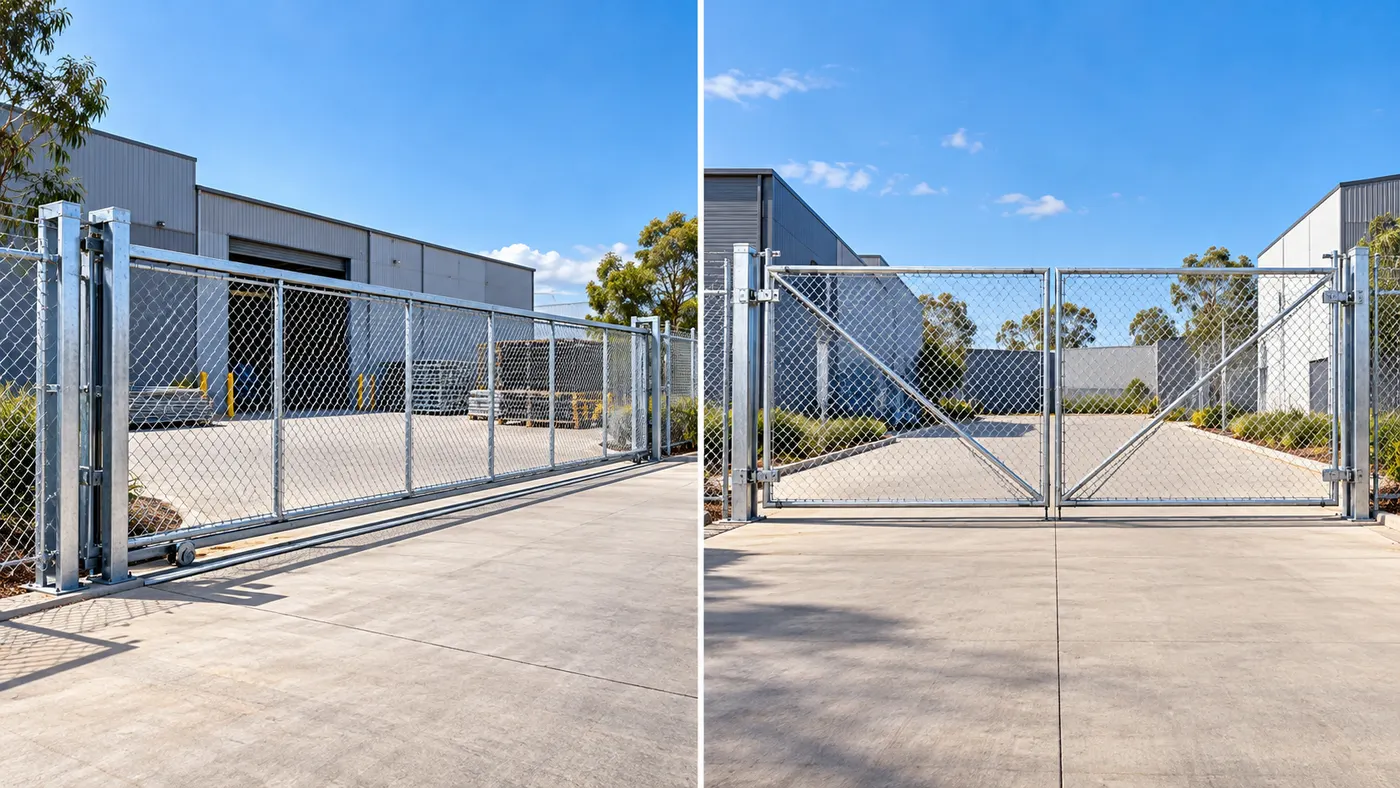
Sliding Gates vs Swing Gates: Which Works Best for Industrial Access?
2 Nov 2026
Compare sliding gates vs swing gates for industrial access, including space, traffic, terrain, security, maintenance, and site requirements.
 Security Fabrication
What Are Crimped Spears for Security Fencing Used For?
2 Nov 2026
Learn how crimped spears for security fencing are used to strengthen perimeter deterrence and suit commercial and restricted sites.
 Chain Link Mesh
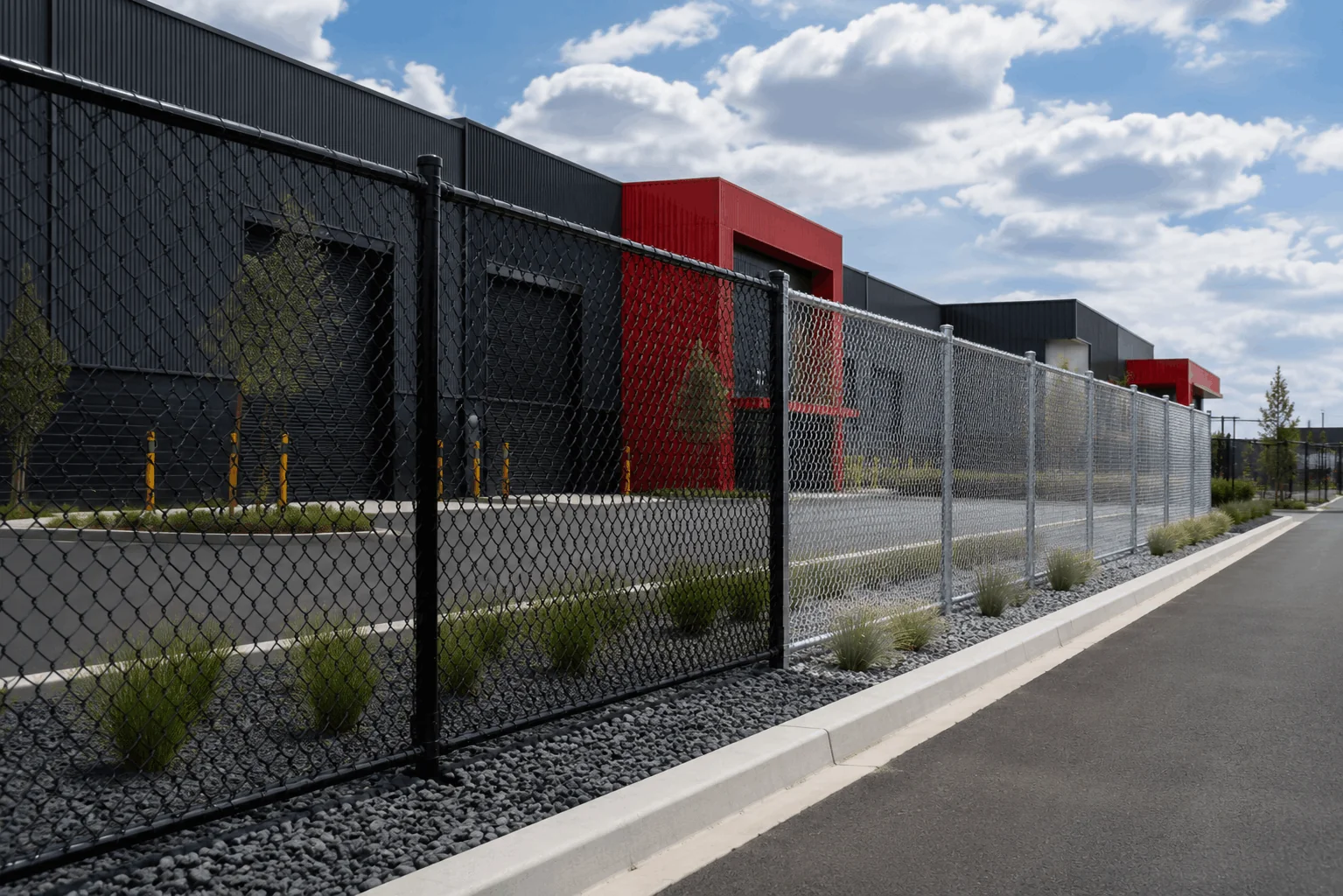
Black PVC Chain Mesh vs Galvanised Mesh for Security Fencing
5 July 2026
Compare black PVC chain mesh and galvanised mesh to determine the best security fencing solution for durability, appearance, and value.
Tell us about the fence.
One business day. That's how fast we come back with pricing once we have your quantity, finish and postcode.
Buying regularly? Apply for a credit account