
What Are Crimped Spears for Security Fencing Used For?
Learn how crimped spears for security fencing are used to strengthen perimeter deterrence and suit commercial and restricted sites.
Introduction
Security fencing has to accomplish more than simply mark where one property ends and another begins. For commercial, industrial, infrastructure, storage, and restricted sites, a perimeter may also need to discourage unauthorised access while maintaining visibility, durability, and a professional appearance.
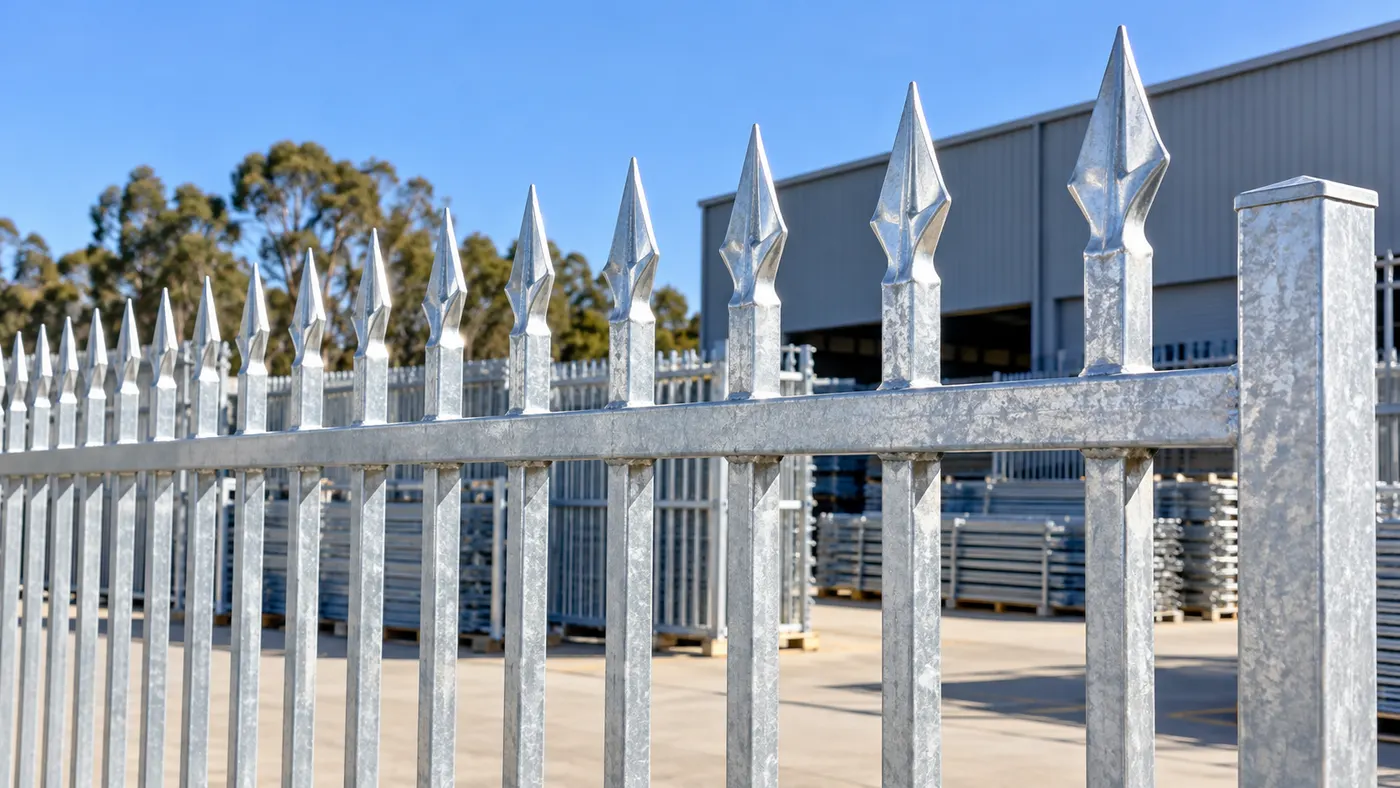
One component used in certain metal security fence designs is the crimped spear. Crimped Spears for Security Fencing are pointed metal components generally incorporated into the upper portion of suitable fencing or gates. Their distinctive shape contributes to the fence's visual security profile and can make climbing or passing over the perimeter less straightforward.
Crimped spears are not a complete security system on their own. Their effectiveness depends on factors such as fence design, height, spacing, installation, gates, site conditions, applicable requirements, and the overall security strategy. Selecting compatible components is therefore just as important as choosing the spear profile itself.
For contractors, fabricators, installers, property managers, and organisations planning perimeter projects, understanding what crimped spears do—and where they make sense—can help create a more appropriate fencing specification.
Supaguard supplies a range offencing accessories for security and commercial fencing projects, allowing components to be considered as part of a complete fencing system rather than in isolation.
TLDR – Quick Guide
Crimped spears are pointed metal components used in certain security fence and gate designs.
They are commonly positioned along the top of suitable fence sections.
Their primary role is to increase the visual and physical deterrence of a perimeter.
The pointed profile can make a fence appear more difficult to climb.
Crimped spears can be used on commercial, industrial, infrastructure, storage, and other controlled perimeters where appropriate.
What Are Crimped Spears for Security Fencing?
Understanding the Basic Component
A crimped spear is a metal fencing component formed to create a pointed upper profile. Depending on the fencing system, spear components may be integrated into vertical members or used as part of the fence's top treatment.
The term "crimped" refers to the formed or pressed shape used in producing the spear profile. The resulting point gives the upper fence line a distinctive appearance while supporting the fence's deterrent function.
Unlike purely decorative fence finials, security-oriented spear components should be considered in relation to the purpose and construction of the overall perimeter.
A fence installer therefore needs to consider more than appearance. Compatibility with the relevant fence components, dimensions, fabrication method, finish, installation, and intended security level can all influence whether a particular spear is appropriate.
Why Is the Pointed Shape Used?
A flat-topped fence may present a relatively neutral visual boundary. Adding pointed spear profiles makes the upper edge look more formidable and communicates that the perimeter is intended to control access.
This psychological deterrence can be valuable.
Effective perimeter security ideally discourages an attempted intrusion before someone begins climbing or damaging the fence. A visibly difficult perimeter can therefore form one part of a broader layered-security strategy.
The pointed upper profile may also make climbing less straightforward compared with a fence top specifically designed to provide an easy handhold.
However, crimped spears should not be described as making a fence impossible to climb. Security depends on the complete system.
What Is the Main Purpose of Crimped Spears?
They Increase Perimeter Deterrence
The most obvious purpose is deterrence.
A spear-topped security fence visually communicates controlled access. Someone approaching the perimeter can immediately see that the fence has been designed with security in mind rather than functioning solely as a property marker.
This can be particularly relevant for locations where discouraging opportunistic unauthorised entry is part of the security objective.
A strong perimeter can encourage authorised visitors to use designated entrances and make casual attempts to cross the boundary less attractive.
They Add an Additional Obstacle at the Fence Top
Fence tops are important because climbing often requires someone to negotiate the upper edge before moving to the other side.
A suitable spear profile can make this area less accommodating.
The effect should be understood as one component of the fence design rather than a standalone guarantee. Fence height, vertical-member spacing, horizontal rails, adjacent structures, gates, ground conditions, and other features may all affect climbability.
Where Are Crimped Spears Commonly Used?
Commercial Properties
Commercial properties often require a balance between security and presentation.
Examples can include:
- Warehouses
- Distribution facilities
- Workshops
- Equipment yards
- Trade premises
- Commercial storage areas
- Service facilities
- Business compounds
A completely solid perimeter may not always be desirable. An open metal security fence can preserve sightlines while clearly defining the boundary.
Crimped spears can strengthen the visual security character of such fencing.
Industrial Sites
Industrial environments may contain machinery, vehicles, equipment, materials, utilities, or operational areas that should not be freely accessible.
Perimeter fencing can help establish a controlled boundary around these areas.
Crimped spear fencing may be appropriate where the project's design calls for a strong visual deterrent while retaining visibility through the fence.
The specification should still reflect the site's actual risks. A low-risk industrial boundary and a highly restricted facility may require very different systems.
Storage and Equipment Yards
Outdoor storage areas can be vulnerable because valuable assets may remain outside buildings.
These sites might contain:
- Machinery
- Construction equipment
- Materials
- Tools
- Vehicles
- Trailers
- Commercial inventory
A clearly defined security perimeter can help control entry and direct vehicles and people toward authorised gates.
Spear-topped fencing may contribute to that boundary strategy when appropriate.
Are Crimped Spears Used for High-Security Fencing?
They Can Form Part of a Security System
Crimped spears can be incorporated into security-oriented fencing, but the presence of pointed components does not automatically make a perimeter "high security."
Higher-security environments require a more comprehensive assessment.
The fence itself may need to be considered alongside:
- Height
- Strength
- Anti-climb characteristics
- Gates
- Locks
- Access control
- Lighting
- Surveillance
- Alarm systems
- Clear zones
- Vehicle control
- Inspection and maintenance
For more demanding locations, it is useful to compare the differenthigh-security fencing products available rather than selecting a fence solely because its top looks imposing.
Risk Should Determine the Specification
Not every site requires maximum-security construction.
Over-specifying can unnecessarily increase cost and complexity, while under-specifying may leave important vulnerabilities.
A security assessment should consider what needs protection, likely access points, surrounding conditions, consequences of unauthorised access, operating requirements, and any applicable standards or project specifications.
The appropriate fencing system should follow from those considerations.
Why Does Visibility Matter in Security Fencing?
Open Fencing Preserves Sightlines
A key advantage of many metal security fence systems is visibility.
Security staff, employees, cameras, or neighbouring observers may be able to see through the perimeter rather than having their view completely obstructed.
That can be useful where surveillance is an important part of site security.
It may also allow people inside a facility to identify activity outside the fence before someone reaches an entrance.
Spears Can Add Deterrence Without Creating a Solid Wall
A spear-topped fence can maintain this openness.
Rather than relying on a solid barrier, the system combines vertical fencing components with a visually defensive upper profile.
This can make it suitable for sites where both presentation and visibility matter.
The correct design will depend on the property and its security requirements.
How Do Crimped Spears Affect Fence Appearance?
Security Does Not Have to Look Temporary
Commercial fencing is often highly visible from roads, customer areas, neighbouring properties, and facility entrances.
Appearance therefore matters.
Crimped spear profiles can create a consistent and deliberate upper line that makes the fence look purpose-designed rather than improvised.
This can be particularly useful around business premises where the boundary needs to look secure without creating the appearance of temporary construction fencing.
The Style Should Match the Property
Fence appearance should still be considered in context.
A highly industrial fence may be appropriate around a logistics yard but less appropriate for a commercial property with strong architectural requirements.
Factors such as fence height, post spacing, colour, coating, gate design, and spear profile can influence the finished appearance.
Security and presentation should therefore be considered together during specification.
Why Is Component Compatibility Important?
Security Fencing Works as a System
A fence is only as useful as its assembled components allow it to be.
Posts, rails, vertical members, fittings, gates, hinges, latches, fasteners, and top treatments need to work together.
A spear should not be chosen solely because its shape looks suitable.
Dimensions and installation requirements need to correspond with the rest of the system.
Supaguard's range offence fittings can be considered alongside other fencing components when planning how the complete system will be assembled.
Poor Compatibility Can Create Installation Problems
Incorrectly matched components may require unnecessary modification during fabrication or installation.
That can lead to:
- Poor fit
- Inconsistent appearance
- Additional fabrication time
- Installation delays
- Weak or awkward connections
- Unnecessary material waste
- Checking compatibility before ordering can help reduce these problems.
What Materials Are Important for Crimped Spears?
Outdoor Fencing Must Withstand Exposure
Security fencing spends its entire service life outdoors.
Depending on location, it may face:
- Rain
- Heat
- UV exposure
- Dust
- Moisture
- Industrial contaminants
- Coastal air
- Temperature changes
- Material selection and protective finishes therefore matter.
The correct option depends on the project's location, expected exposure, required service life, and maintenance plan.
Corrosion Protection Should Be Considered Across the Whole Fence
There is little benefit in considering the spear finish while ignoring the remainder of the system.
Posts, rails, fittings, welds, fasteners, and gates may all be exposed to the same environment.
A consistent corrosion-management strategy helps support the durability and appearance of the complete perimeter.
This becomes especially important in harsher environments.
Are Crimped Spears Suitable for Coastal Areas?
Coastal Exposure Requires Additional Consideration
Salt-laden air can make corrosion a more significant concern for metal infrastructure.
A fencing specification near the coast should therefore account for local exposure rather than assuming a system suitable for an inland site will perform identically near the ocean.
Material, coating, fabrication, installation, and maintenance practices may all need consideration.
Maintenance Remains Important
Protective finishes do not make a metal fence maintenance-free.
Regular inspections can identify:
- Coating damage
- Corrosion
- Loose components
- Physical damage
- Gate alignment problems
- Damaged fasteners
- Areas affected by vegetation or debris
Addressing problems early can help prevent localised deterioration from becoming more extensive.
How Do Crimped Spears Compare With a Plain Fence Top?
Plain Tops May Prioritise Simplicity
A plain-top metal fence can be appropriate where the primary objective is boundary definition rather than stronger visual deterrence.
It may offer a clean architectural appearance and can be suitable for many lower-risk applications.
The trade-off is that the top does not communicate the same deterrent message as a pointed profile.
Spear Tops Make Security More Visible
Crimped spears immediately alter the character of a fence.
They make it clear that the upper edge has been deliberately designed as part of the security boundary.
For commercial and controlled sites, that visual signal can be valuable.
The decision should still reflect risk, applicable requirements, public interaction, and the intended function of the fence.
Can Crimped Spears Be Used on Gates?
Gates Should Complement the Fence
Where compatible with the gate design and project requirements, spear-style profiles may be carried across gates to maintain a consistent perimeter appearance.
This can prevent the entrance from visually appearing less secure than adjacent fence sections.
Consistency also improves the overall presentation of the installation.
However, gate operation introduces additional considerations that fixed fence panels do not have.
Gate Security Requires More Than Spears
A secure-looking gate can still become the weak point if other components are poorly specified.
Considerations can include:
- Gate construction
- Hinges
- Latches
- Locks
- Posts
- Ground clearance
- Automation
- Access control
- Closing mechanisms
- Vehicle interfaces
The gate should therefore be treated as a security system within the broader perimeter, not simply as a moving section of fence.
What Should Be Considered When Designing Commercial Security Fencing?
Start With the Site's Purpose
A good specification begins by understanding what the perimeter is expected to accomplish.
Ask questions such as:
- Is the fence mainly defining a boundary?
- Is theft a significant concern?
- Is unauthorised pedestrian entry the primary risk?
- Are vehicles involved?
- Does the site contain restricted equipment?
- Is public access nearby?
- Does surveillance need visibility through the fence?
- Are there operating hours when the site is unattended?
- Are there environmental exposure concerns?
These questions help determine whether crimped spears are appropriate and what other components the system needs.
Consider the Entire Perimeter
A sophisticated fence along the front boundary provides limited benefit if another section is easy to bypass.
Inspect:
- Side boundaries
- Rear boundaries
- Gates
- Corners
- Changes in ground level
- Drainage areas
- Adjacent walls
- Trees
- Storage containers
- Buildings
- Utility structures
- Nearby objects can sometimes provide unintended climbing opportunities.
- Good perimeter design considers how all these elements interact.
Why Does Fence Height Matter?
Height Contributes to Deterrence
Fence height is one of the most visible characteristics of a security perimeter.
A taller fence generally presents a more substantial obstacle than a low boundary fence, but height alone does not determine security.
A tall fence with easily climbable rails or poorly secured gates can still contain vulnerabilities.
Crimped spears should therefore be considered together with height and overall geometry.
Local Requirements Must Be Considered
Fencing requirements can differ depending on location, site use, project specifications, and applicable regulations.
A design appropriate for one commercial site should not automatically be copied to another.
Before construction, confirm the requirements that apply to the particular property and project.
Are Crimped Spears an Anti-Climb Solution?
They Can Contribute to Climb Deterrence
A pointed fence top can make the upper boundary less inviting and more difficult to negotiate than certain plain-top designs.
That makes crimped spears useful as part of an anti-climb strategy.
However, anti-climb performance depends on much more than the top profile.
Horizontal rails, mesh openings, post configuration, fence height, adjacent objects, and gate construction may all affect whether someone can gain footholds or handholds.
Avoid Treating One Component as a Complete Solution
Security systems are strongest when vulnerabilities are considered together.
A fence with an intimidating top but numerous climbing points lower down may not achieve the intended result.
Likewise, a carefully designed fixed fence can be undermined by an inadequately secured gate.
Crimped spears are therefore best understood as one useful element in a coordinated perimeter design.
How Should Crimped Spear Fencing Be Maintained?
Inspect the Fence Regularly
Security fencing should not be installed and then forgotten.
Regular visual inspections can identify developing issues before they affect larger sections.
Look for:
- Bent or damaged components
- Corrosion
- Loose fittings
- Damaged coatings
- Misaligned gates
- Missing fasteners
- Impact damage
- Vegetation interference
- Unauthorised modifications
The appropriate inspection frequency will depend on the site and its operating environment.
Pay Attention After an Impact or Security Incident
If a vehicle, machine, falling branch, or attempted intrusion affects the fence, inspect the relevant section promptly.
Damage may not always be limited to the most visibly affected component.
Posts, connections, rails, and nearby panels may also have been stressed.
Where structural integrity is uncertain, an appropriately qualified fencing professional should assess the installation.
What Role Do Australian Security Fencing Requirements Play?
Compliance Should Be Considered During Design
Security fencing is not simply a matter of selecting the most intimidating components available.
Site use, location, public interaction, access requirements, safety, and applicable standards or regulations may influence what is appropriate.
This is especially important where pointed or potentially hazardous fence-top features are being considered.
The project designer, supplier, installer, and property owner should understand the requirements relevant to the specific site.
Requirements Can Differ by Project
A warehouse boundary, utility site, public-facing commercial property, and restricted industrial compound can have very different obligations and risk profiles.
The appropriate fence should reflect those differences.
For projects where standards and specifications are particularly important, reviewing guidance onAustralian security fencing standards can help establish the broader issues that need consideration before components are selected.
When Are Crimped Spears a Good Choice?
When Visible Deterrence Is Important
Crimped spears are particularly relevant when the fence needs to communicate a clear security purpose.
They can suit projects where:
- The boundary needs to discourage casual climbing.
- An open metal fence is preferred over a solid barrier.
- Visibility through the perimeter is important.
- A strong commercial or industrial appearance is desired.
- The fence and gate design can accommodate a spear profile.
- The selected design is appropriate for the site and applicable requirements.
- They can provide both functional and visual value when properly integrated.
When They Fit the Broader Security Strategy
The strongest reason to specify crimped spears is not simply that they "look secure."
They should support an identified perimeter-security objective.
If the site requires controlled access, good surveillance visibility, climb deterrence, durable construction, and clearly defined entry points, a suitable spear-topped system may contribute to those goals.
If the risks are different, another fence configuration may be more appropriate.
Choosing Crimped Spears for a Security Fencing Project
Review the Complete Specification Before Ordering
Before selecting crimped spears, confirm the details of the overall fencing project.
Consider:
- Fence design
- Fence height
- Component dimensions
- Material
- Finish
- Gate configuration
- Environmental exposure
- Required quantity
- Installation method
- Applicable standards and regulations
- Security objectives
- Maintenance expectations
This reduces the likelihood of selecting a component that does not suit the rest of the system.
Treat Spears as Part of a Complete Perimeter
Crimped Spears for Security Fencing can add a distinctive deterrent profile to commercial, industrial, and controlled-access fencing. Their pointed form can make a boundary appear more difficult to climb while preserving the visibility and architectural characteristics of an open metal fence.
Their value, however, comes from how they are incorporated into the entire system.
Fence height, posts, rails, gates, fittings, materials, finishes, installation quality, surveillance, access control, and site conditions all contribute to perimeter performance. A carefully specified system uses each component for a clear purpose rather than expecting one feature to provide security on its own.
For contractors, fabricators, facility managers, and project planners, that system-level approach is the most useful way to evaluate whether crimped spears belong in a particular security fencing project.
Key Takeaways
Crimped spears are pointed components used at the upper portion of suitable metal security fences and gates.
Their primary purpose is to increase visual and physical perimeter deterrence.
A pointed upper profile can make a fence less inviting to climb.
Crimped spears can suit commercial, industrial, storage, infrastructure, and controlled-access sites.
They can preserve visibility through an open metal security fence.
Visibility can be useful where surveillance of the perimeter is important.
Crimped spears can contribute to a professional, purpose-built security appearance.
Spears should be compatible with the rest of the fencing system.
Posts, rails, fittings, gates, and fasteners all influence overall performance.
Material and protective finish should reflect environmental exposure.
Coastal and harsh environments may require additional corrosion considerations.
Protective finishes do not eliminate the need for inspection and maintenance.
Frequently Asked Questions
1. What are crimped spears for security fencing used for?
Crimped spears are pointed metal components used along the top of suitable security fences or gates to strengthen the perimeter's visual and physical deterrence. Their profile can make the upper edge less inviting to climb while contributing to the purposeful appearance of commercial or industrial fencing. They should be treated as one component of a complete security system rather than a standalone guarantee against unauthorised access.
2. Are crimped spears suitable for commercial security fencing?
Crimped spears can be suitable for commercial fencing where visible deterrence, perimeter definition, and an open metal fence design are desired. The correct choice depends on the property's risks, fence design, component compatibility, environmental conditions, and applicable requirements. A fencing professional can help determine whether a spear-topped configuration suits a particular commercial project.
3. Do crimped spears make a fence impossible to climb?
No fence-top component should be assumed to make a perimeter impossible to climb. Crimped spears can contribute to climb deterrence, but fence height, rails, spacing, gates, adjacent structures, and other design characteristics also affect security. Higher-risk sites should use a layered security strategy based on a site-specific assessment.
4. Can crimped spears be installed on security gates?
Crimped spear profiles may be incorporated into compatible gate designs where doing so is appropriate for the project and applicable requirements. The gate must also have suitable posts, hinges, latching or locking systems, clearances, and access-control arrangements because the spear profile alone does not secure an entrance. Maintaining a consistent fence-top treatment can also give the perimeter a more uniform appearance.
5. What should you check before choosing crimped spears for a fencing project?
Check the fence design, dimensions, material, finish, gate configuration, installation method, environmental exposure, security objective, and compatibility with the other components. You should also confirm the standards, regulations, project specifications, and safety requirements applicable to the site before choosing pointed fence-top components. Considering the complete system before ordering can help prevent compatibility problems and ensure the selected components suit the intended application.
More from the blog.
 Security Panels
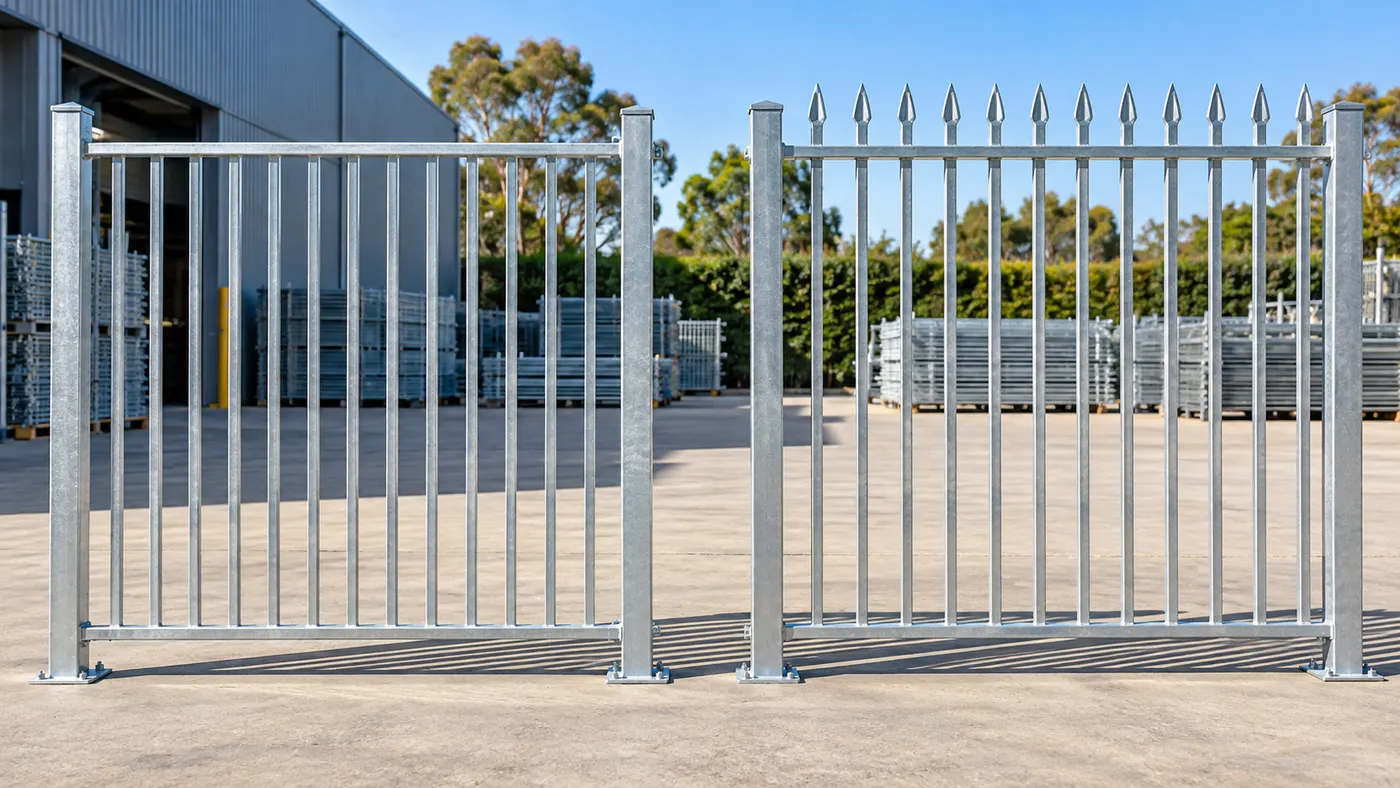
Flat Top vs Spear Top Security Fencing Panels: Which Should You Choose?
2 Nov 2026
Compare Flat Top vs Spear Security Fencing Panels for security, appearance, access control, site use, maintenance, and project needs.
 Security Solutions
Best High Security Fencing Products for Restricted Sites
7 May 2026
Discover the best high security fencing products for restricted sites, including chain link mesh, gates, barbed wire, and fittings.
 Custom Security Gates
When Should Commercial Sites Order Custom Security Gates?
2 Nov 2026
Learn when custom security gates for commercial sites make sense for unusual openings, heavy traffic, access control and perimeter security.
Tell us about the fence.
One business day. That's how fast we come back with pricing once we have your quantity, finish and postcode.
Buying regularly? Apply for a credit account