
Welded Mesh vs Chainwire Fencing: Which Should You Choose?
Compare welded mesh vs chainwire fencing for security, visibility, flexibility, finishes, installation, and commercial applications.
Focus Keyphrase: Welded Mesh vs Chainwire Fencing
Welded Mesh vs Chainwire Fencing: Which Should You Choose?
Introduction
Why the Mesh Type Matters
Mesh is one part of a complete fencing system, but it strongly influences how that system looks and functions.
A long industrial boundary has different requirements from an architectural panel. A sporting facility may prioritise visibility and continuous perimeter coverage, while another project may require rigid panels with a more structured appearance.
The surrounding framework also matters.
Posts, rails, fittings, gates, wire products, and other components must be specified to suit the selected mesh and the conditions of the site. A good fencing decision therefore considers the entire system rather than comparing two mesh products in isolation.
Start With the Application, Not the Appearance
It is easy to look at welded mesh and chainwire and make a decision based entirely on aesthetics.
That approach can overlook practical considerations.
Before choosing a system, consider:
- required fence height
- total perimeter length
- security objectives
- visibility requirements
- panel or roll format
- site contours
- post and rail requirements
- gate locations
- finish
- corrosion exposure
- architectural requirements
- maintenance access
- applicable project specifications
Once these requirements are clear, the differences between the two options become much more useful.
TLDR – Quick Guide
Welded Mesh vs Chainwire Fencing should be compared according to the specific project rather than appearance alone.
Chainwire consists of interlocking steel wires that form a flexible mesh.
Supaguard's chain mesh is available in numerous heights, mesh sizes, wire specifications, finishes, and roll lengths.
Chainwire is well suited to long perimeter fencing.
It can accommodate commercial, industrial, educational, sporting, and infrastructure applications.
Chainwire provides clear visibility through the fence.
Smaller openings and heavier wire can be considered where project security requirements call for them.
Galvanised and PVC-coated chain mesh options are available within Supaguard's range.
Supaguard's current welded mesh product is supplied as pre-made perforated sheets.
The welded mesh sheets have a fixed size of 1220 × 2440 mm.
Welded mesh is available in galvanised or black finishes.
Round and square hole patterns are available.
What Is Chainwire Fencing?
How Chainwire Is Constructed
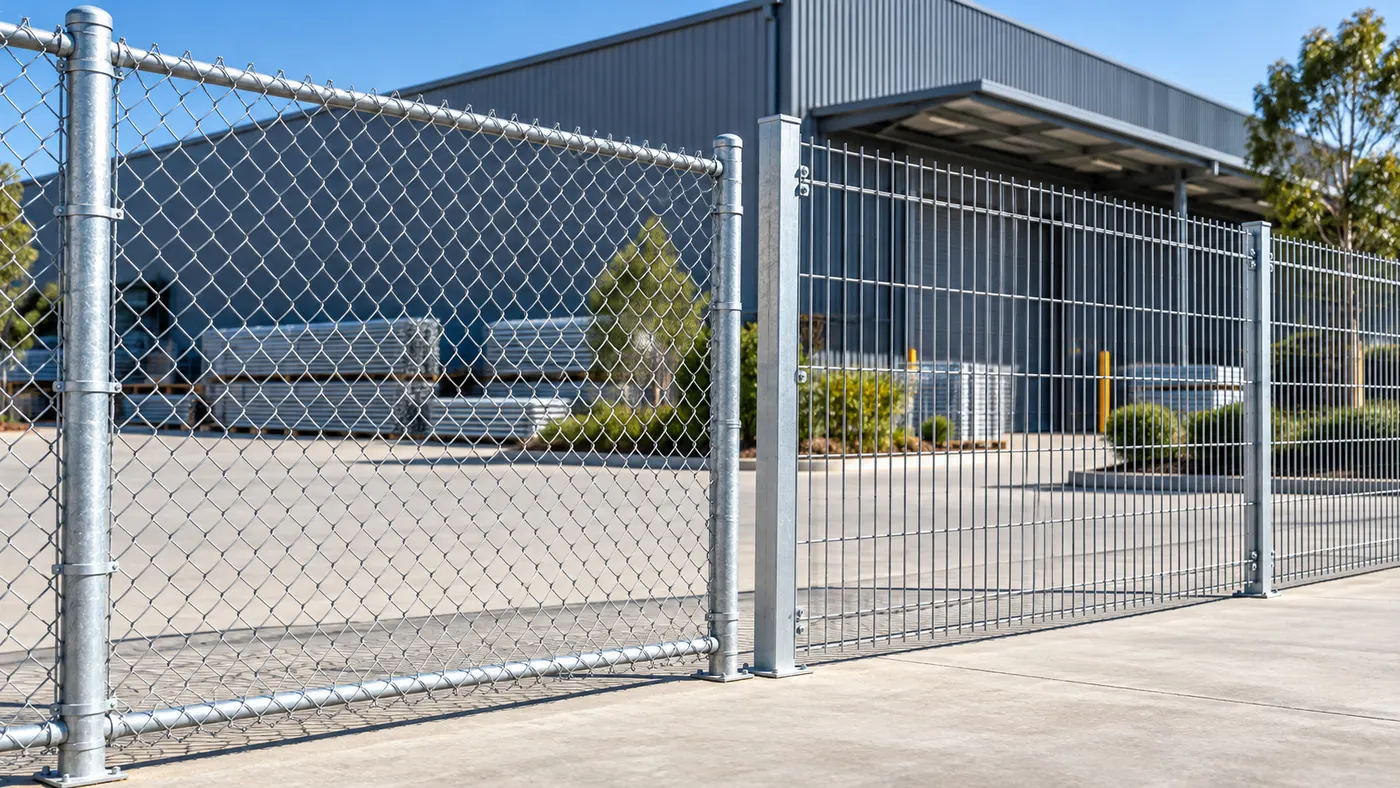
Chainwire fencing uses steel wires woven into an interlocking diamond-shaped pattern.
Because the wires interlock instead of being welded together at every intersection, the resulting mesh has flexibility. During installation, the material is tensioned between appropriately specified posts and supporting framework.
This construction method is one reason chainwire is widely used across long perimeter runs.
Rather than installing individual rigid sheets along the entire boundary, contractors can work with mesh supplied in rolls and integrate it with the project's framework, gates, line wire, fittings, and other components.
Where Is Chainwire Commonly Used?
Chainwire is highly versatile.
Common applications include:
- commercial boundaries
- industrial facilities
- warehouses
- logistics sites
- schools
- sporting facilities
- infrastructure projects
- security perimeters
- recreational facilities
- large property boundaries
- Visibility is another advantage.
Unlike a solid fence, chainwire allows people and surveillance systems to see through the perimeter. That can be useful on sites where maintaining sightlines is an important part of the security or operational plan.
What Is Welded Mesh?
A More Rigid Mesh Format
Welded mesh generally refers to a rigid mesh in which the material maintains a defined sheet or panel form rather than behaving like flexible chainwire.
For Supaguard specifically, the current welded mesh range consists of imported pre-made perforated sheets.
Each sheet is supplied in a standard 1220 × 2440 mm size.
This fixed format immediately distinguishes it from chainwire supplied in rolls and numerous height and mesh configurations.
What Options Does Supaguard Offer?
The current welded mesh range is intentionally straightforward.
Available characteristics include:
- galvanised finish
- black finish
- round hole pattern
- square hole pattern
- fixed 1220 × 2440 mm sheet dimensions
- The sheet dimensions and colours are not customisable within the current range.
Supaguard also states that it does not cut, drill, or weld these sheets in-house. However, sheets can be welded into security posts on request for pool and architectural panel applications.
That distinction is important when planning fabrication.
What Is the Main Difference Between Welded Mesh and Chainwire?
Rigidity vs Flexibility
The most noticeable structural difference is flexibility.
Chainwire is designed to be tensioned as part of a fencing system. Its woven construction gives it enough flexibility to be installed across long runs using the appropriate posts and framework.
Welded or perforated sheet products are much more rigid.
Instead of tensioning a roll of mesh across the fence line, the project is designed around individual sheets or panels.
Neither characteristic is automatically better.
The question is whether the project benefits more from a flexible continuous fencing material or a rigid panel-based format.
Rolls vs Sheets
Material format can have a major effect on project planning.
Supaguard'schainwire fencing range includes numerous combinations of height, mesh opening, wire size, roll length, selvedge, and finish.
The welded mesh product has a much narrower format because the sheets are supplied at the fixed 1220 × 2440 mm size.
For a long perimeter, the flexibility of chainwire can be valuable.
For a project intentionally designed around rigid architectural or security panels, the sheet format may be preferable.
Which Provides Better Security?
Security Depends on the Complete Specification
It is misleading to say that one mesh type is always more secure.
Fence security depends on factors including:
- fence height
- opening size
- wire specification
- structural framework
- posts
- rails
- gates
- fittings
- installation
- access control
- site layout
- visibility
- project-specific security additions
A poorly specified fence does not become high-security merely because it uses a particular type of mesh.
The fence needs to be considered as a complete system.
Chainwire Offers Multiple Security Specifications
One advantage of chainwire is the range of specifications available.
Different mesh openings, wire diameters, heights, and finishes allow the product to be selected according to the site's requirements.
For example, Supaguard's current range includes chain mesh with different opening sizes and wire diameters, including smaller-opening configurations that can be considered for more demanding perimeter applications.
Project teams comparing security options should therefore look beyond the generic term "chainwire."
The actual specification matters.
How Does Mesh Opening Affect Security?
Smaller Openings Change the Fence Characteristics
Mesh opening determines more than appearance.
In chainwire systems, changing the diamond size can affect factors such as visibility, material density, and how easily the fence can provide potential hand or footholds.
Supaguard offers multiple mesh sizes rather than a single universal chainwire specification.
For projects where security is particularly important, thechain link mesh size should be selected alongside wire diameter, fence height, framework, and other security requirements.
Bigger Is Not Automatically Worse
It is important not to treat mesh opening as an isolated security rating.
A project may need larger openings for a particular use, while another may prioritise smaller openings.
Fence height, wire strength, framework, access points, surveillance, and site operations all influence the final decision.
Specifications should therefore be based on the actual project rather than a general assumption that the smallest opening is always the best choice.
Which Is Better for Long Fence Runs?
Chainwire Has a Practical Advantage
For extensive boundaries, chainwire is often particularly practical because it is supplied in rolls.
The mesh can be tensioned along a framework designed for the perimeter.
That makes it useful for sites such as:
- warehouses
- industrial compounds
- logistics facilities
- sporting complexes
- schools
- commercial properties
- infrastructure boundaries
- The exact roll length varies according to specification.
Planning should therefore account for the selected product rather than assuming all chainwire arrives in the same dimensions.
Welded Mesh Requires Panel-Based Planning
Fixed sheets create a different installation approach.
With Supaguard's 1220 × 2440 mm welded mesh sheets, designers need to consider how individual sheets integrate into posts or panels across the required area.
That can work well when the rigid panel appearance is part of the project design.
For very long boundaries, however, the fixed sheet format requires a different material and framework calculation from continuous rolled chainwire.
Which Is Better for Uneven Ground?
Chainwire Can Offer Greater Layout Flexibility
Site contours can significantly affect fencing decisions.
Because chainwire is flexible, it can provide useful adaptability when a fence line follows changes in ground conditions, subject to the project's engineering and installation requirements.
Rigid sheets do not behave in the same way.
A fixed panel retains its shape, so changes in ground level may need to be addressed through the layout of posts, panels, steps, gaps, or other project-specific design decisions.
Survey the Fence Line Before Ordering
Do not select fencing materials before understanding the site.
Check:
- changes in elevation
- slopes
- drainage
- retaining walls
- corners
- access points
- existing structures
- underground services
- gate locations
- total run length
A fence that looks straightforward on a plan may encounter very different conditions on site.
Accurate measurements can prevent costly specification changes after materials have already been ordered.
Which Option Provides Better Visibility?
Both Can Maintain Sightlines
Both chainwire and perforated mesh can preserve visibility compared with solid fencing.
However, the actual degree of visibility depends on the opening pattern, mesh size, wire or sheet dimensions, viewing angle, and finish.
Chainwire is particularly familiar in security applications where clear sightlines across a perimeter are desirable.
This can support visual monitoring without creating an opaque barrier.
Black Finishes Can Change Visual Impact
Finish can influence how noticeable the fence appears.
Black mesh may visually recede against some backgrounds, while galvanised material has a more traditional metallic appearance.
This can matter for sporting, architectural, commercial, and public-facing environments.
The decision should still account for corrosion protection, specification requirements, and availability rather than being based solely on colour.
How Do the Available Finishes Compare?
Chainwire Offers Several Finish Choices
Supaguard's chain mesh range includes heavily galvanised and PVC-coated options.
PVC-coated products are available in colours such as black and green for applicable specifications.
These choices allow contractors to consider both environmental exposure and appearance.
The exact finish available depends on the selected mesh specification, so availability should be confirmed before the project is finalised.
Welded Mesh Has a More Limited Finish Range
Supaguard's welded mesh sheets are currently offered in:
- galvanised
- black
- The sheet colour is not customisable within the standard range.
For projects where a specific finish is essential, this difference can quickly narrow the choice between welded mesh and chainwire.
What About Corrosion Resistance?
Protective Finish Matters
Steel fencing is exposed to weather throughout its service life.
Moisture, coastal conditions, industrial environments, and other site factors can influence corrosion risk.
Galvanising protects steel by providing a zinc-based protective layer.
PVC-coated chainwire adds another layer over the underlying wire for applicable products.
Match the Finish to the Environment
There is no universal finish that should automatically be specified for every site.
A commercial property in a relatively mild inland environment may face different exposure conditions from a coastal or industrial project.
Project teams should consider:
- moisture
- salt exposure
- chemicals
- industrial contaminants
- maintenance expectations
- appearance
- required service life
- project specification
This makes finish selection part of the broader fencing specification rather than a cosmetic afterthought.
What Framework Does Chainwire Need?
Mesh Cannot Perform Without Structural Support
Chainwire is only one component of the fence.
The surrounding framework provides the structural support required to keep the mesh correctly positioned and tensioned.
Depending on the design, the system can include:
- end posts
- intermediate posts
- corner posts
- rails
- line wire
- tie wire
- fittings
- braces
- gates
- gate posts
- Each element needs to suit the dimensions and loads of the project.
- Pipe Selection Should Match the Fence
A taller or more demanding fence may place different loads on its posts and rails than a lower, lighter boundary.
Likewise, large gates create different structural requirements from standard fence runs.
Framework should therefore be selected alongside the mesh.
Treating pipe, fittings, and mesh as unrelated purchases can lead to compatibility and performance problems.
What Should You Consider for Gates?
Access Points Are Part of the Perimeter
A fence can only perform as intended when its gates are properly integrated.
Vehicle access, pedestrian traffic, gate width, opening frequency, security requirements, and locking arrangements all influence gate selection.
A large industrial vehicle gate has very different requirements from a pedestrian access gate.
These decisions should be made during fence planning rather than after the mesh has already been specified.
Maintain Consistency Across the System
Where possible, the gate design should complement the surrounding fence.
That means considering:
- height
- infill
- finish
- posts
- hinges
- fittings
- security level
- access requirements
A consistent system simplifies planning and helps avoid creating an access point that does not match the rest of the perimeter.
Which Is Better for Commercial and Industrial Sites?
Chainwire Is Highly Versatile
Chainwire remains useful across a broad range of commercial and industrial applications because it combines visibility with flexible specification options.
It can be used for warehouse perimeters, logistics facilities, infrastructure projects, industrial compounds, schools, and sporting facilities.
Different mesh sizes, wire specifications, heights, and finishes make it adaptable to varying project requirements.
For contractors specifyingcommercial security fencing, however, mesh should still be evaluated together with gates, framework, fittings, access control, and the site's risk profile.
Welded Mesh Fits More Specific Applications
Supaguard's welded mesh offering has a more focused role.
The fixed sheets are intended for pool, security, and architectural panel applications.
That can make them appropriate when the project calls for a rigid, defined panel format rather than a long tensioned mesh perimeter.
Understanding this distinction prevents welded mesh and chainwire from being treated as interchangeable products when their formats are actually quite different.
Which Option Looks Better?
Appearance Depends on the Project
There is no objective winner for appearance.
Chainwire has an open, functional, industrial character.
Rigid welded or perforated sheets can create a more structured panel appearance.
The surrounding architecture may make one option feel more appropriate than the other.
A utility compound may prioritise function and visibility, while a public-facing architectural project may place greater emphasis on consistent panel geometry.
Finish Influences the Final Look
Galvanised steel creates a distinctly utilitarian appearance.
Black finishes can provide a darker, more subdued visual effect.
Green PVC-coated chainwire can work differently again depending on the environment.
Design teams should therefore compare not just mesh type but also opening pattern, framework, finish, gates, and adjacent buildings or landscaping.
How Should Cost Be Compared?
Compare Complete Systems, Not Mesh Prices
Looking only at the price of the mesh can produce an inaccurate comparison.
A complete fencing budget can include:
- mesh or sheets
- posts
- rails
- line and tie wire
- fittings
- gates
- fabrication
- protective finish
- freight
- labour
- site preparation
- access requirements
A lower-priced mesh does not automatically result in a lower total installed project cost.
The design and installation method matter.
Consider Lifecycle Requirements Too
Initial material price is only one factor.
Maintenance, corrosion exposure, repairs, replacement sections, and expected service conditions can affect long-term value.
For commercial projects, a product that properly matches the application may provide better value than choosing solely according to the lowest initial price.
A detailed material takeoff and project-specific quote are more useful than broad cost assumptions.
How Do You Choose Between Welded Mesh and Chainwire?
Choose Chainwire When Flexibility Is Important
Chainwire may be the more suitable direction when the project requires:
- long continuous perimeter runs
- multiple height choices
- multiple mesh-opening choices
- different wire specifications
- flexible installation
- clear visibility
- galvanised or PVC-coated options
- integration with traditional chainwire gates and framework
Its broad specification range makes it suitable for many commercial and industrial projects.
The exact product still needs to be selected according to the site's requirements.
Consider Welded Mesh for Rigid Panel Applications
Supaguard's welded mesh may be appropriate when the design calls for:
- fixed rigid sheets
- pool panels
- architectural panels
- selected security panels
- round or square perforation patterns
- galvanised or black finish
- Remember that the current sheets are supplied in a fixed 1220 × 2440 mm size.
That limitation should be incorporated into the design before quantities and framework are finalised.
What Should You Check Before Ordering?
Build a Complete Project Specification
Before ordering either system, confirm:
- fence length
- required height
- mesh or opening size
- wire or sheet specification
- finish
- post dimensions
- framework
- gate dimensions
- gate quantity
- fittings
- site conditions
- security requirements
- relevant standards
- delivery location
- project schedule
For chainwire, also confirm the required roll lengths and selvedge configuration where relevant.
For welded mesh, account for the fixed sheet dimensions.
Confirm Current Product Specifications
Fencing ranges and availability can change.
Do not rely solely on an old project specification or a previous order.
Confirm current dimensions, finishes, availability, standards, and other requirements before purchasing.
For larger commercial projects, drawings and a complete material schedule can make this process considerably more accurate.
Key Takeaways
Welded Mesh vs Chainwire Fencing is primarily a choice between different material formats and project applications.
Chainwire uses interlocking steel wire and is flexible.
Supaguard's chainwire is available in numerous specifications.
Chainwire is supplied in rolls rather than fixed sheets.
Different mesh sizes, wire diameters, heights, and finishes are available.
Chainwire works particularly well for long perimeter fencing.
It is widely used across commercial, industrial, educational, sporting, and infrastructure applications.
Supaguard's welded mesh is supplied as rigid pre-made perforated sheets.
Standard welded mesh sheet dimensions are 1220 × 2440 mm.
Welded mesh is currently available in galvanised and black finishes.
Round and square hole patterns are available.
The welded mesh sheets are not custom-sized within the standard range.
Frequently Asked Questions
Is welded mesh stronger than chainwire fencing?
Welded mesh is more rigid, while chainwire has a flexible interlocking construction, so simply describing one as stronger can be misleading. Overall fence performance depends on the mesh specification, wire or sheet dimensions, posts, framework, fittings, installation, and project conditions. The better choice is the product whose complete system matches the site's structural and security requirements.
Is chainwire fencing suitable for commercial security?
Chainwire is commonly used for commercial, industrial, educational, sporting, and infrastructure perimeters because it combines visibility with a wide range of available specifications. Mesh opening, wire diameter, fence height, framework, gates, and other security features should be selected according to the individual site. Higher-security projects require a complete perimeter design rather than relying on chainwire alone.
What size is Supaguard's welded mesh?
Supaguard currently supplies its welded mesh as pre-made perforated sheets measuring 1220 × 2440 mm. The sheets are available with round or square hole patterns and in galvanised or black finishes. The standard sheet size and colour options are not customisable within the current product range.
Is chainwire better for uneven or long fence lines?
Chainwire's flexible rolled construction can make it particularly practical for long perimeter runs and some changing site conditions. The final installation still depends on correctly positioned posts, framework, tensioning, ground conditions, and the project's design requirements. A site assessment should therefore be completed before deciding that chainwire alone solves issues created by slopes or uneven ground.
Should I choose welded mesh or chainwire for my project?
Choose according to the required fence format, perimeter length, security level, visibility, finish, site conditions, framework, and architectural requirements. Chainwire generally provides more specification flexibility for continuous perimeter fencing, while Supaguard's welded mesh is a fixed-sheet product suited to selected security, pool, and architectural panel applications. Confirming the complete project specification before ordering is the best way to determine which option fits the job.
Products and a project to match.
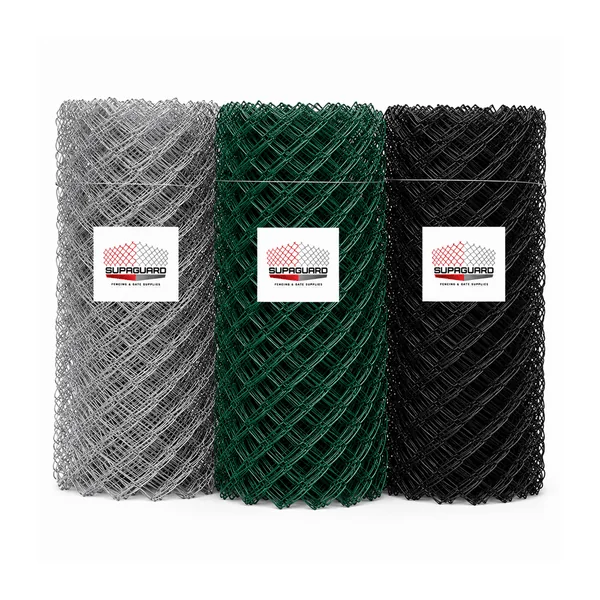
Chain Mesh
Chain link mesh in 25 to 60 mm apertures and 2.24 to 3.15 mm wire for security, temporary, tennis court and golf screen fencing. Galvanised, black or green PVC.
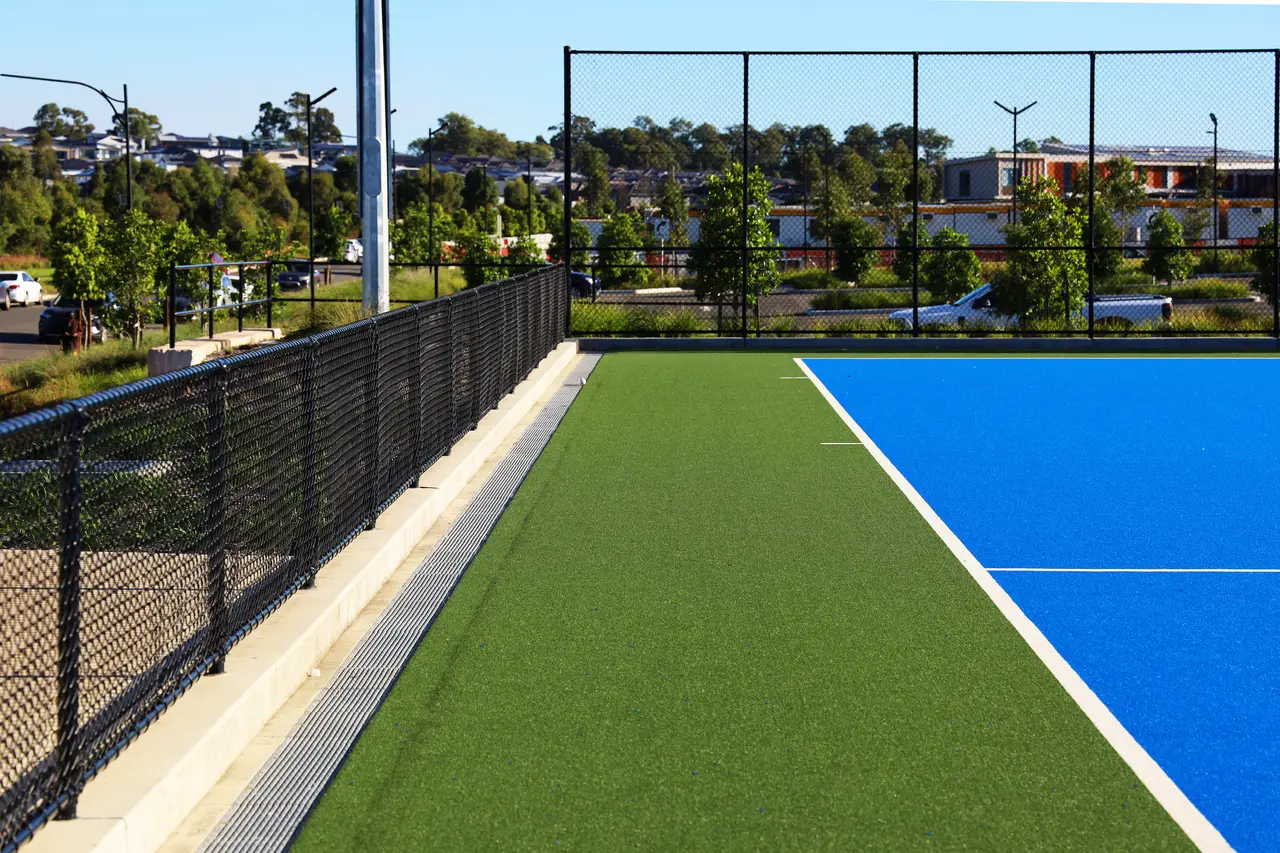 Sport
Ball-stop fencing for a synthetic hockey pitch and sports fields
Australia
High ball-stop chainwire around a synthetic hockey pitch, playing fields and cricket practice nets, black-coated so the fence line disappears against the play.
More from the blog.
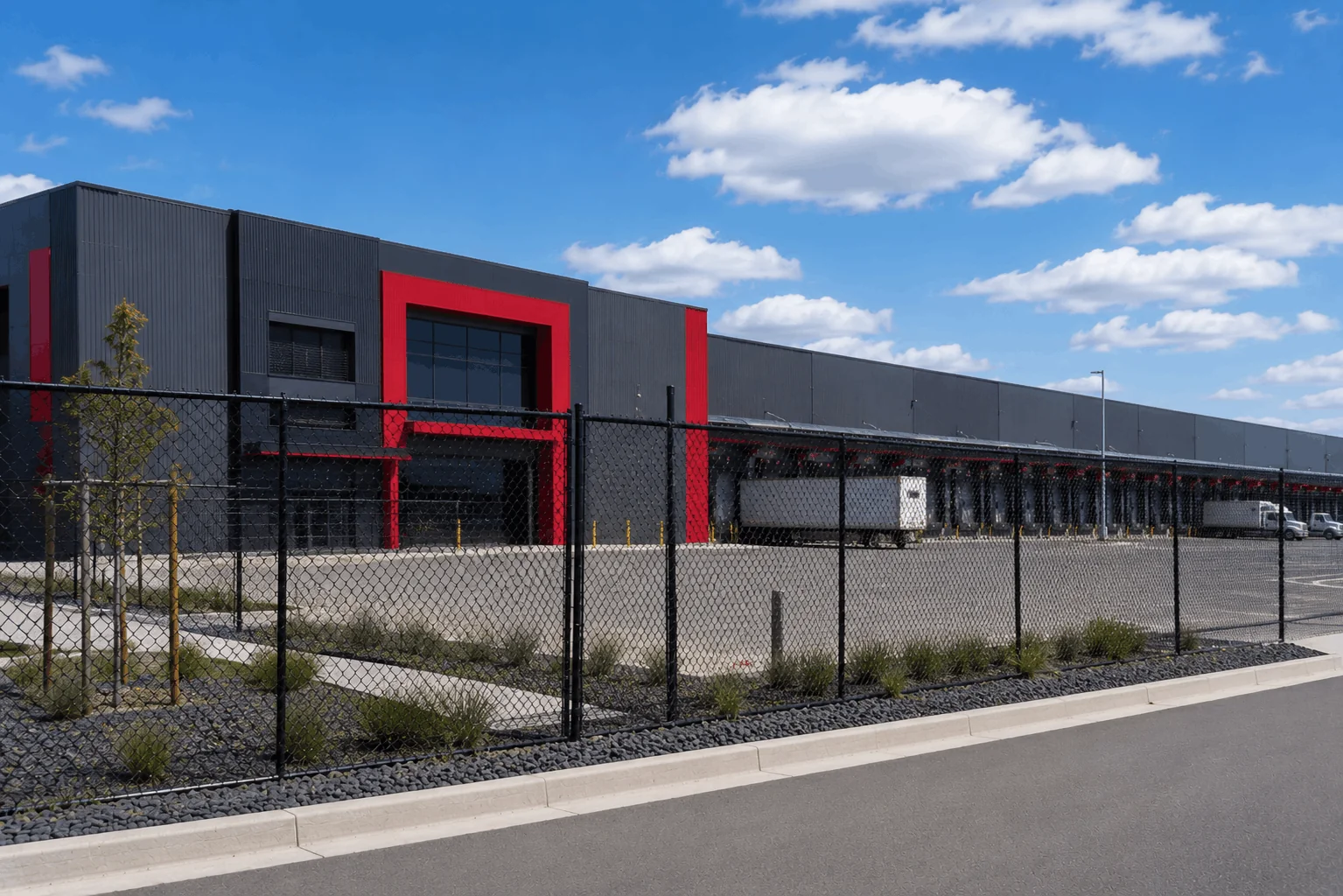 Commercial Applications
Why Logistics Facilities Choose Chain Link Security Fencing
9 July 2026
Discover why logistics facility fencing commonly uses chain link mesh for security, visibility, durability, and access control.
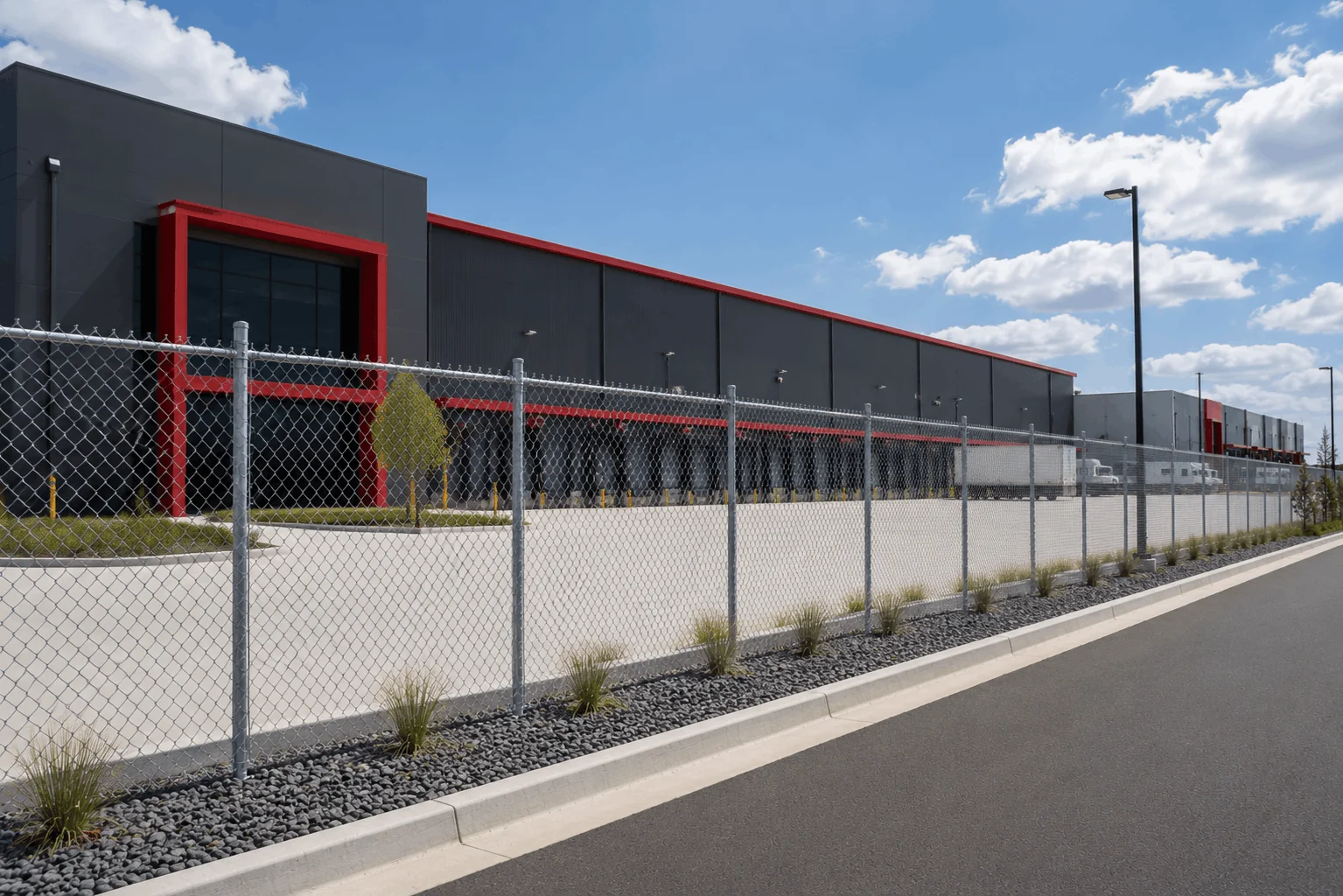 Commercial Applications
Why Warehouse Security Fencing Often Uses Chain Link Mesh
6 July 2026
Discover why warehouse security fencing commonly uses chain link mesh for visibility, durability, access control, and perimeter security.
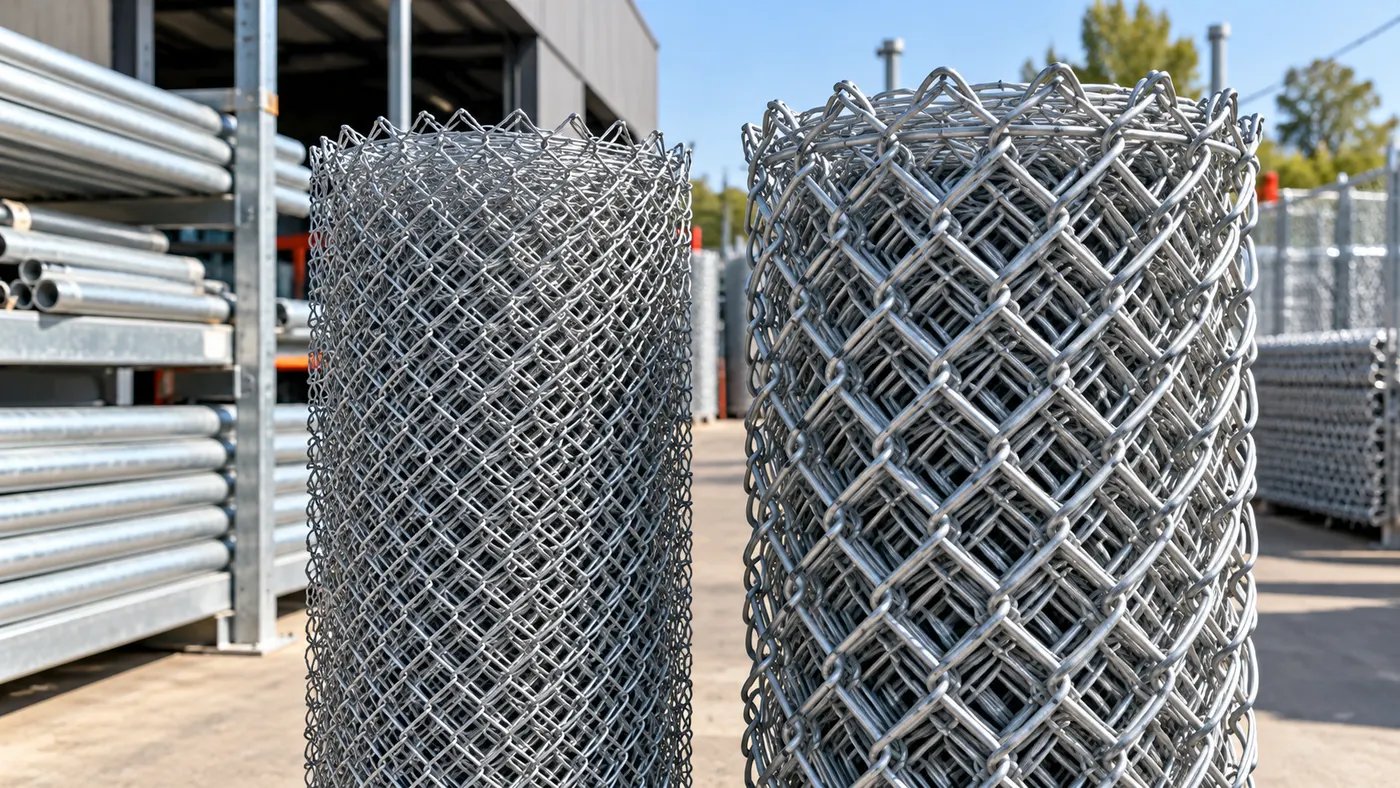 Chainwire Mesh
2.5mm vs 3.15mm Chainwire Mesh: Which Wire Diameter Do You Need?
3 Oct 2026
Compare 2.5mm vs 3.15mm chainwire mesh for strength, weight, security and common applications to choose the right fencing wire diameter.
Tell us about the fence.
One business day. That's how fast we come back with pricing once we have your quantity, finish and postcode.
Buying regularly? Apply for a credit account