
What Are Security Panel Converter Kits Used For?
Learn what Security Panel Converter Kits are used for, how they support security gates, and what to consider when selecting a compatible kit.
Focus Keyphrase: Security Panel Converter Kits
What Are Security Panel Converter Kits Used For?
Introduction
Understanding the Role of Converter Kits in Security Fencing
A security fence is rarely made from panels alone. Posts, gates, fittings, hardware and fabricated components all need to work together so the finished perimeter suits the site's access and security requirements.
That becomes particularly important wherever a pedestrian or vehicle access point must be incorporated into a security-panel fence.
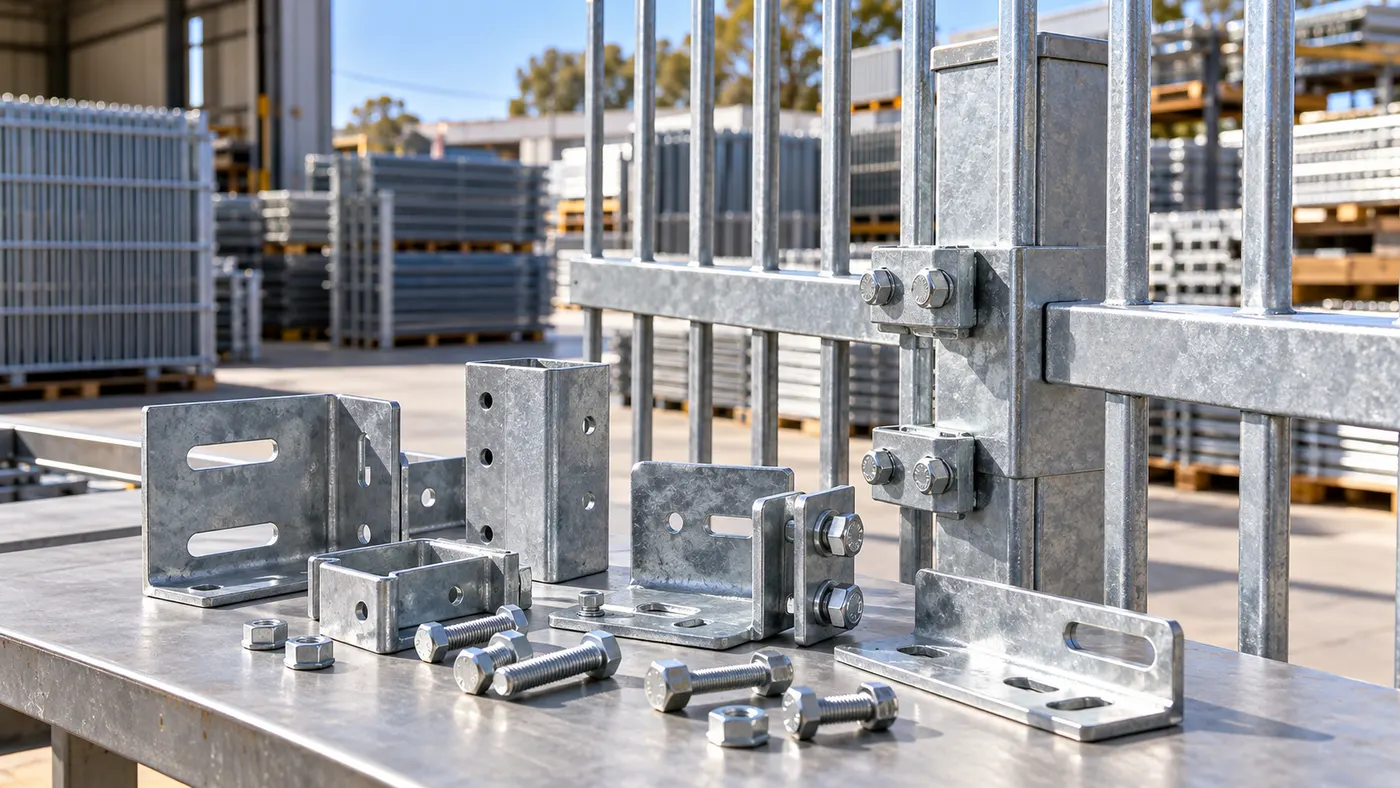
Security Panel Converter Kits—listed by Supaguard as heavy-duty gate converter kits—are components within the company's security-panel range that support the creation of compatible gate configurations. Supaguard currently lists converter-kit options alongside its heavy-duty security panels and gates, with H-frame and C-frame configurations available for different panel and gate-stile dimensions.
Rather than thinking of a converter kit as a general-purpose fence fitting, it is more useful to view it as part of a coordinated security gate system. The correct option depends on factors such as panel height, gate-stile height, frame size, configuration and the specification of the surrounding security fence.
For contractors, fabricators and project buyers, understanding those differences can make it easier to specify the right components before materials arrive on site.
TLDR Quick Guide
Security Panel Converter Kits at a Glance
Security Panel Converter Kits are used within security-panel gate configurations.
Supaguard lists them as heavy-duty gate converter kits in its security-panel range.
They help integrate compatible security-panel components into a gate arrangement.
They should be selected according to the required gate and panel configuration rather than treated as universal accessories.
Supaguard currently lists both H-frame and C-frame converter-kit configurations.
Current H-frame options use 50 x 50 mm square frame sections in the listed specifications.
What Are Security Panel Converter Kits?
They Are Part of a Security Gate Configuration
The term "converter kit" can sound like a component that converts one entire type of fence into another. In Supaguard's current product range, however, the product is specifically identified as a heavy-duty gate converter kit within the security-panel category.
Its role is associated with configuring security-panel components for gate applications.
This distinction is important because a gate behaves differently from a fixed fence panel. A fixed panel remains supported between posts, while a gate must form an opening that can operate while remaining compatible with the surrounding security-fencing system.
A converter kit therefore needs to be considered together with the gate configuration, panel dimensions, gate stile, posts and associated hardware.
They Are Not Universal Fence Connectors
Security Panel Converter Kits should not be confused with ordinary fence connectors.
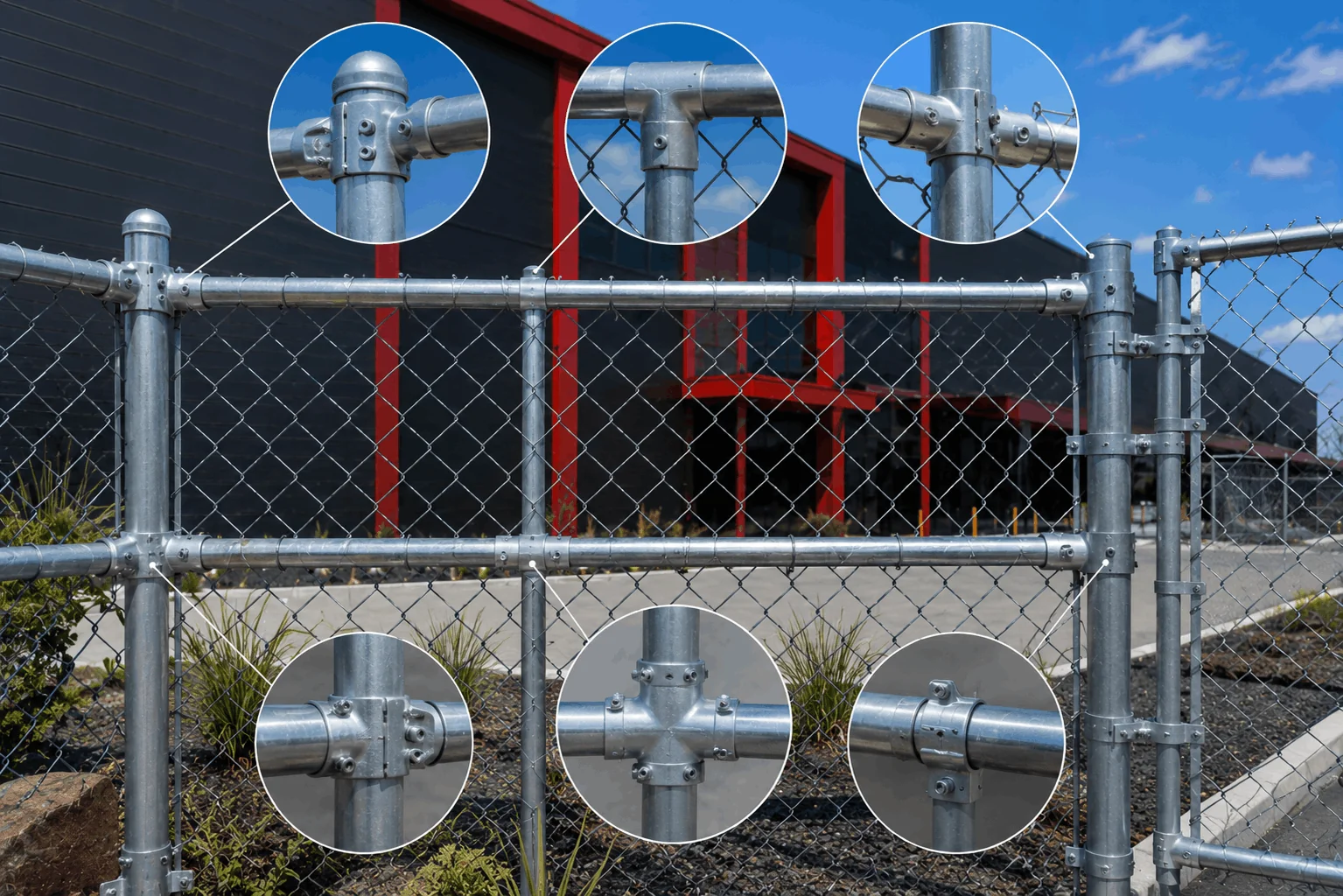
Supaguard's broaderfence fittings range includes components such as adjustable corners, corner fittings, cross fittings, tee fittings, multi-purpose connectors, post caps, rail clamps and post clamps.
Those components serve different purposes within fencing frameworks.
A converter kit belongs to the security-panel and gate side of the system, so substituting a general connector simply because it joins fencing components would not necessarily provide the required gate configuration.
What Are Security Panel Converter Kits Used For?
Their Primary Use Is Supporting Security-Panel Gate Configurations
The fundamental purpose of Security Panel Converter Kits is to support gate arrangements within compatible security-panel fencing.
A commercial or security perimeter may contain long runs of fixed panels, but people, vehicles, maintenance teams and equipment still require designated access points.
Those openings need gates that work with the surrounding fencing.
A converter kit provides a specified component option for that transition from fixed security-panel fencing to a gate configuration.
They Help Maintain a Consistent Security-Fencing System
Using components intended for the same fencing system can make specification more straightforward.
The gate should not be treated as an unrelated object positioned in the middle of a security fence. Its dimensions, frame, hardware, posts and surrounding panels need to work together.
Security Panel Converter Kits help project teams plan the gate as part of that broader system.
This is particularly relevant on commercial, government, infrastructure, education, utility and industrial projects where fencing may be supplied according to detailed drawings or schedules.
Why Do Security Panel Fences Need Gates?
Access Has to Be Designed Into the Perimeter
The purpose of security fencing is to establish and manage a defined perimeter, but most sites still require controlled access.
Depending on the project, access may be needed for:
- Employees
- Contractors
- Maintenance personnel
- Service vehicles
- Deliveries
- Emergency access
- Plant or machinery
- Site operations
- The number, size and type of openings vary substantially between projects.
That means the gate configuration should be determined by the site's actual requirements rather than added as an afterthought once the fence panels have already been ordered.
Gate Requirements Can Affect the Components You Order
A pedestrian access point and a large vehicle opening do not necessarily use the same gate configuration.
Opening dimensions, gate type, posts, hinges, locks, clearances and other requirements can affect the component selection.
This is why project drawings and gate schedules are important.
Before ordering Security Panel Converter Kits, the buyer should understand what gate is being created, how it relates to the adjacent panels and whether the selected components correspond with the project specification.
What Is an H-Frame Security Panel Converter Kit?
H-Frame Is One of Supaguard's Current Configurations
Supaguard currently lists heavy-duty H-frame gate converter kits within its security-panel range.
The current specifications include options where the gate-stile and panel heights correspond at 1.8 metres and 2.1 metres. The listed H-frame converter kits use 50 x 50 mm square frame sections with a 2 mm thickness.
These details matter because the term "converter kit" alone does not identify the dimensions required for a particular project.
A buyer still needs to match the kit to the specified panel and gate configuration.
Check Dimensions Rather Than Selecting by Name Alone
Two components can belong to the same general product family without being interchangeable.
Panel height, gate-stile height and frame dimensions should therefore be checked against the drawings or project requirements.
This approach helps reduce the risk of ordering a product based solely on a broad description.
When specifications are unclear, confirming them with the supplier before fabrication or installation is preferable to assuming that one converter-kit size will suit every security-panel fence.
What Is a C-Frame Security Panel Converter Kit?
C-Frame Provides Another Gate Configuration
Supaguard also lists C-frame heavy-duty gate converter kits.
Its current specifications include configurations involving 1.8 m and 2.1 m panels, with 65 x 65 mm square frame sections and a 2 mm thickness.
This illustrates why buyers should not treat all Security Panel Converter Kits as identical.
The frame configuration and dimensions vary according to the required system.
H-Frame and C-Frame Options Should Follow the Project Specification
Choosing between configurations should not be reduced to a simple preference about appearance.
The correct arrangement depends on the security-panel system, gate design, dimensions and project documentation.
If the job has been designed or specified by an engineer, architect, fencing contractor or other project professional, the relevant drawings and schedules should guide product selection.
Where no standard product matches the required configuration, custom fabrication may need to be considered instead.
What Materials and Finishes Are Used?
Supaguard's Current Converter Kits Use Galvanised Steel
Supaguard's current heavy-duty gate converter kits are listed as being manufactured from AS1450 galvanised steel.
The current product specifications also identify a black powder-coated finish.
Material and finish are important considerations because the gate components should be coordinated with the surrounding security-fencing system.
A project using black security panels, for example, will generally need compatible components specified for that system rather than unrelated parts selected without reference to finish or dimensions.
Finish Is Only One Part of Compatibility
A matching colour does not automatically mean two components are compatible.
Frame dimensions, height, gate type, hardware and the surrounding panel system also matter.
That is why purchasing based only on appearance can create problems.
The full specification should be checked before the converter kit and related components are ordered.
Where Are Security Panel Converter Kits Commonly Relevant?
Commercial and Industrial Perimeters
Commercial and industrial properties often require secure perimeter fencing while maintaining practical access.
A warehouse, logistics facility, manufacturing site or industrial yard may need gates for staff, deliveries, service vehicles or machinery.
Where heavy-duty security panels form the perimeter, compatible gate components help maintain continuity at those openings.
Security Panel Converter Kits may therefore form part of the material schedule for these types of projects when the specified gate system requires them.
Schools and Campuses
Supaguard identifies schools and campuses among the applications for its security-fencing range.
Education sites may require multiple access points for pedestrians, maintenance activities, deliveries and vehicles.
Each opening can have different functional requirements.
The security panels, gate system and associated components therefore need to be specified according to the particular project rather than assuming every school entrance uses the same arrangement.
Government and Infrastructure Projects
Government and infrastructure sites can involve detailed fencing specifications and project documentation.
Security panels may be used to establish boundaries around facilities where controlled access is required.
Converter kits can become relevant wherever compatible security-panel gates form part of that design.
On specification-driven projects, the supplied components should be checked against the required drawings, standards, dimensions and finishes before ordering.
Substations and Utilities
Supaguard also identifies substations and utilities as applications for its security-fencing products.
These environments can have project-specific access, perimeter and operational requirements.
A gate may need to accommodate personnel, maintenance equipment or vehicles while fitting into the specified fencing system.
The correct converter-kit configuration should therefore follow the site's design and access requirements.
Are Converter Kits the Same as Fence Fittings?
The Terms Describe Different Product Functions
It is easy to group every small or fabricated fencing component under the word "fitting," but doing so can make specification confusing.
Pipe and fence fittings can include components that join, support or terminate framework. Examples include tee fittings, corner fittings, adjustable corners, rail clamps, post clamps and caps.
Security Panel Converter Kits have a more specific gate-related role within the security-panel range.
Understanding this difference makes it easier to read product schedules and communicate accurately with suppliers.
A Complete Fence May Need Both
Using a converter kit does not mean a project will not require other fittings or accessories.
The finished fencing system can involve security panels, posts, gate components, hardware and other supporting products.
What is required depends on the design.
Supaguard's guide to selectingsecurity fence fittings can help buyers understand why individual components need to be matched to the fence type and project requirements rather than selected in isolation.
How Do Converter Kits Fit Into a Complete Security Fence?
Think About the Fence as a System
A security fence is assembled from components that perform different jobs.
Panels establish the main barrier. Posts support the fence. Gates provide controlled openings. Hardware and fittings connect or support components according to the system design.
Security Panel Converter Kits sit within this broader arrangement as gate-related components.
Thinking about the whole system helps prevent a common procurement problem: ordering the obvious large components while overlooking smaller pieces needed to complete the installation.
Component Compatibility Matters
A converter kit cannot compensate for incorrectly specified posts, panels or gate hardware.
Similarly, a correctly selected security panel will not resolve a mismatch elsewhere in the gate system.
The components need to be considered together.
Supaguard describes its product range as a complete fencing solution involving security panels and gates, posts, rails, fittings, wire products and other components, reinforcing the importance of matching materials across the job.
What Should You Check Before Ordering a Converter Kit?
Start With Panel and Gate Dimensions
Before selecting a converter kit, establish the relevant dimensions.
Depending on the configuration, these may include:
- Security-panel height
- Gate-stile height
- Required opening
- Frame dimensions
- Post dimensions
- Gate configuration
- Adjacent fence layout
- Do not assume the panel height and gate-stile height will always be identical.
Supaguard's current converter-kit specifications demonstrate that available combinations vary by configuration.
Confirm Whether the Design Uses an H-Frame or C-Frame
The frame type is another key specification.
Supaguard currently lists both H-frame and C-frame heavy-duty gate converter kits, with different square-frame dimensions.
The appropriate option should correspond with the gate and security-panel design.
If the drawings do not clearly identify the required configuration, clarification should be obtained before ordering.
Check the Required Finish
Finish should also be confirmed.
Supaguard's currently listed heavy-duty converter kits are black powder coated over galvanised steel.
Other fencing components may be available in different finishes, so it is important not to assume every product in the broader range has exactly the same finish options.
A coordinated finish can support a consistent completed installation, but structural and dimensional compatibility must still come first.
Review the Gate Hardware
A gate requires more than a frame.
Hinges, locks, posts and associated hardware may all form part of the completed assembly.
Their suitability depends on the gate design and project requirements.
Reviewing the complete gate schedule before ordering helps identify components that might otherwise be missed.
Can Converter Kits Be Used for Custom Security Gates?
Standard Components Do Not Suit Every Opening
Standardised products are useful because they simplify many common installations.
However, real projects frequently include unusual dimensions, site constraints or project-specific gate requirements.
In those situations, selecting the nearest standard component is not necessarily the correct solution.
Custom fabrication may be more appropriate when the required gate cannot be achieved using the standard range.
Custom Fabrication Should Follow Confirmed Dimensions
Supaguard provides custom fabrication for gates, panels and posts based on customer measurements and drawings.
For custom work, accurate information becomes especially important because materials are being fabricated for a particular application.
Site dimensions, drawings and relevant specifications should therefore be confirmed before fabrication begins.
This approach helps ensure that the finished components correspond with the intended installation rather than relying on assumptions made during ordering.
Why Is Correct Specification Important?
Small Dimensional Differences Can Affect the Entire Gate
Security fencing is a coordinated assembly.
A difference in panel height, gate-stile dimensions or frame size can affect how components relate to one another.
That is why product specifications should be treated as functional information rather than simply catalogue details.
Ordering the correct converter kit at the beginning is generally more efficient than discovering a mismatch when the fencing materials are already being installed.
Security Requirements Vary by Project
There is no single converter-kit configuration that should automatically be used for every commercial or security fence.
A school, warehouse, substation and government facility can have very different gate and access requirements.
Project documentation, site conditions and intended use should guide selection.
Where engineering, regulatory or contractual specifications apply, those requirements should take precedence over generic product-selection advice.
When Should You Ask the Supplier for Help?
Ask When the Specification Is Unclear
If you know that a gate is required but cannot confidently identify the compatible converter kit, it is better to clarify the specification before ordering.
Useful information to provide can include:
- Project drawings
- Panel type
- Panel height
- Gate-stile height
- Opening dimensions
- Gate configuration
- Required finish
- Site application
- Relevant specification details
Providing more complete information allows the supplier to understand what the project is trying to achieve.
This is more reliable than asking for a generic "converter kit" without dimensions or context.
Supaguard Can Review the Job Requirements
Supaguard supplies security panels, posts, gates, fittings and related components as coordinated fencing systems.
For projects where the required converter-kit configuration is uncertain, buyers cancontact Supaguard with the job details, dimensions, application and site requirements.
That is particularly useful when a project involves custom fabrication or when the gate arrangement does not clearly correspond with a standard configuration.
The objective is to establish the required parts before materials reach the job site, reducing guesswork during procurement and installation.
Key Takeaways
Understanding Security Panel Converter Kits Before Ordering
Security Panel Converter Kits are gate-related components within a security-panel fencing system.
Supaguard currently refers to these products as heavy-duty gate converter kits.
Their main purpose is to support compatible gate configurations within security-panel fencing.
They are not the same as general-purpose fence connectors, clamps or pipe fittings.
Supaguard currently lists H-frame and C-frame converter-kit configurations.
Current H-frame specifications include 50 x 50 mm square frame sections.
Current C-frame specifications include 65 x 65 mm square frame sections.
The listed frame sections are 2 mm thick.
Supaguard's current converter kits are manufactured from AS1450 galvanised steel and listed with a black powder-coated finish.
Panel height and gate-stile height should be checked before ordering.
Frequently Asked Questions
1. What are Security Panel Converter Kits used for?
Security Panel Converter Kits are used as part of compatible gate configurations within security-panel fencing systems. Supaguard lists them as heavy-duty gate converter kits alongside its security panels and gates. The correct kit depends on factors such as panel height, gate-stile dimensions, frame configuration and the overall project specification.
2. Are Security Panel Converter Kits the same as ordinary fence fittings?
No, Security Panel Converter Kits have a more specific gate-related role within a security-panel system. General fence fittings can include components such as clamps, tees, corners, caps and multi-purpose connectors used elsewhere in a fencing framework. A complete project may require both converter kits and other fittings depending on its design.
3. What is the difference between H-frame and C-frame converter kits?
H-frame and C-frame refer to different gate converter-kit configurations in Supaguard's current security-panel range. The currently listed H-frame kits use 50 x 50 mm square frame sections, while the listed C-frame kits use 65 x 65 mm sections. The appropriate configuration should be selected according to the specified gate, panel dimensions and project requirements.
4. Can a Security Panel Converter Kit be used for any security fence?
No, converter kits should not be treated as universal components for every security fence or gate. Compatibility depends on the security-panel system, dimensions, gate configuration, posts, hardware and project requirements. Checking drawings and product specifications before ordering helps determine whether a standard converter kit is suitable.
5. What information should I provide when ordering a Security Panel Converter Kit?
Provide the security-panel type and height, gate dimensions or opening, required configuration, finish and any relevant project drawings or specifications. Information about the application and surrounding fencing can also help identify the components required for the complete gate arrangement. If the standard range does not suit the project, the supplier can determine whether a custom-fabricated solution needs to be considered.
More from the blog.
 Fittings
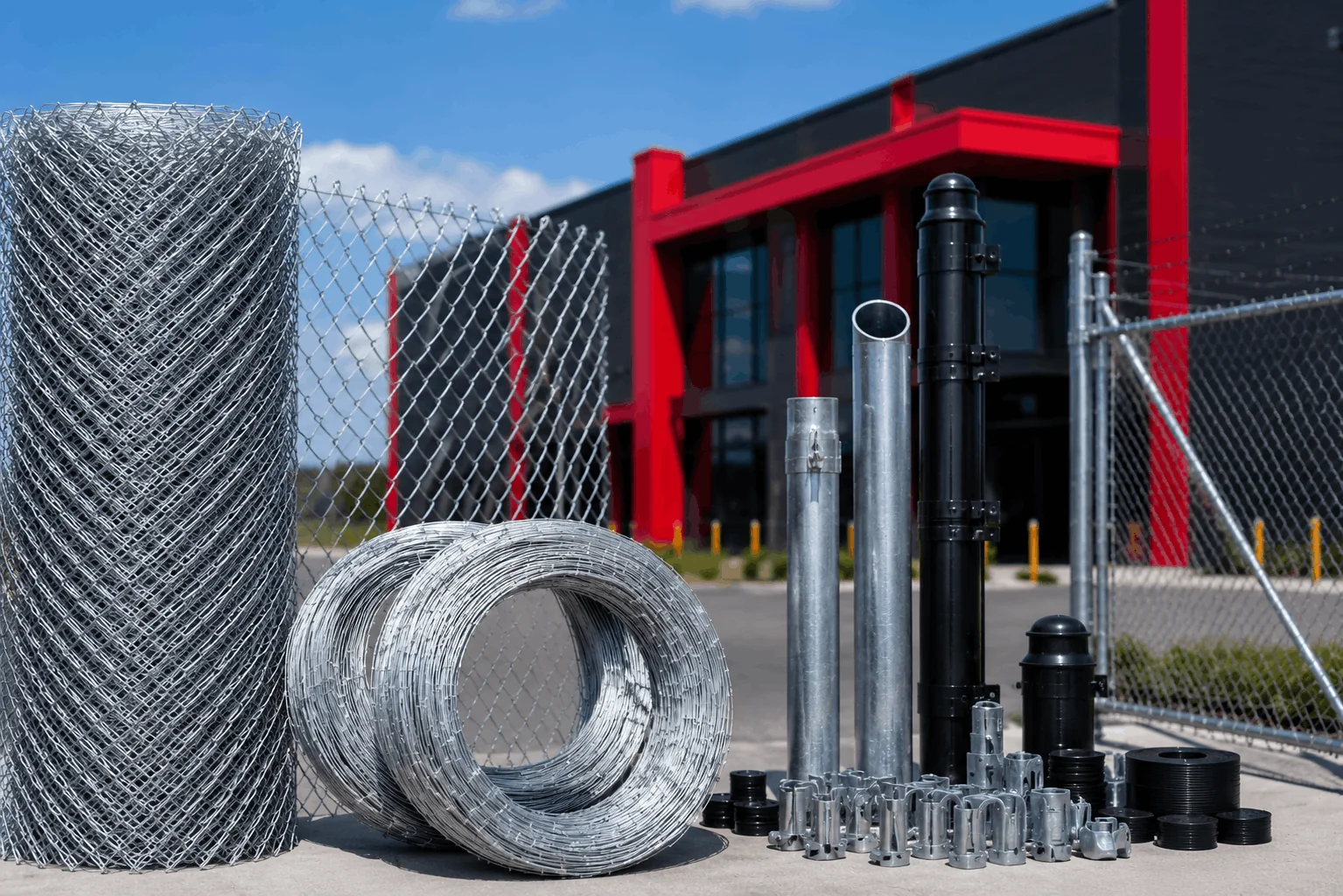
Complete Guide to Chainwire Fence Fittings and Connectors
8 June 2026
Learn about chainwire fence fittings, connectors, clamps, and post accessories that support strong and reliable fencing systems.
 Security Panels
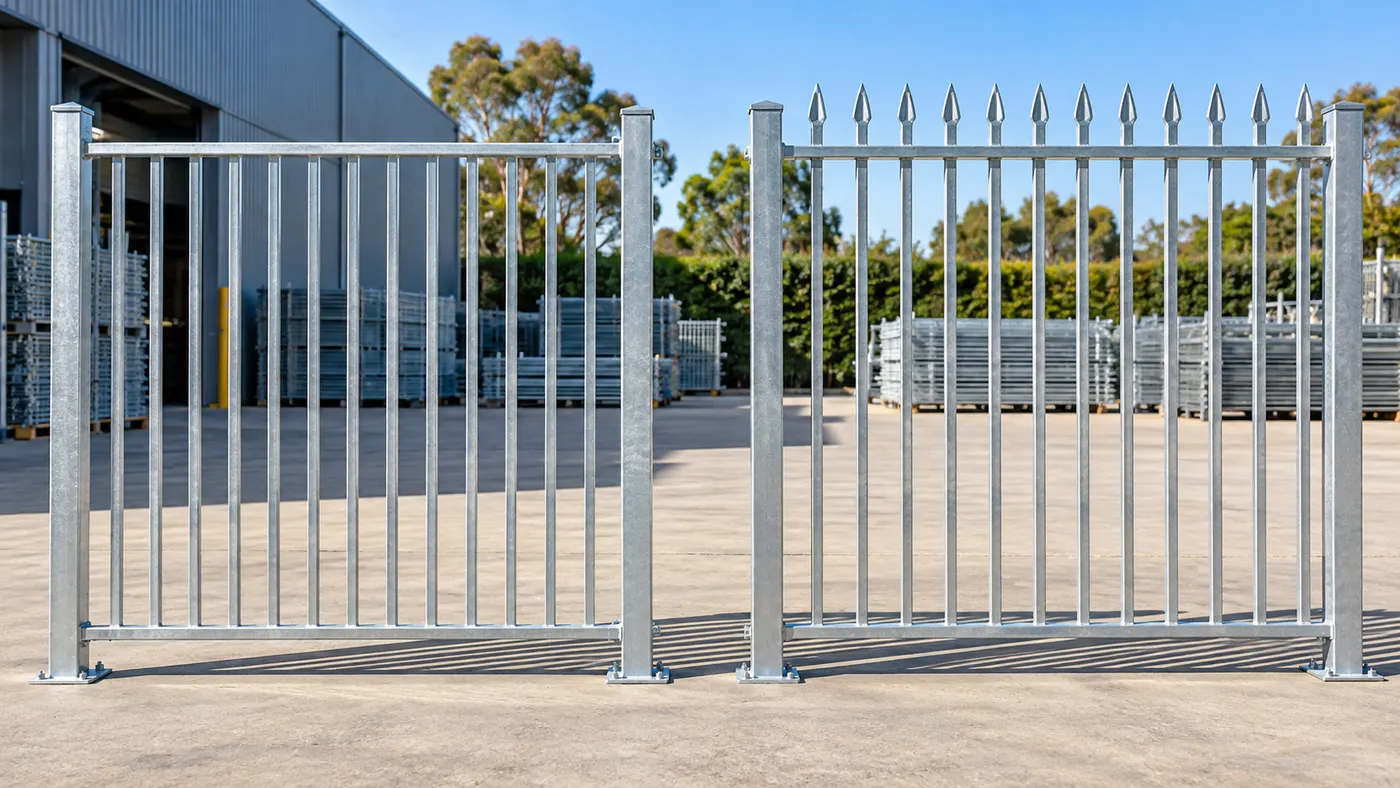
Flat Top vs Spear Top Security Fencing Panels: Which Should You Choose?
2 Nov 2026
Compare Flat Top vs Spear Security Fencing Panels for security, appearance, access control, site use, maintenance, and project needs.
 Wire
Helicoil Wire Explained: Benefits for Security Fencing
5 June 2026
Learn how helicoil wire improves security fencing with enhanced durability, stability, and support for perimeter protection systems.
Tell us about the fence.
One business day. That's how fast we come back with pricing once we have your quantity, finish and postcode.
Buying regularly? Apply for a credit account